Why Is My Credit Score Going Down? What to Do Right Now
Understand the reasons behind a dropping credit score and take immediate, actionable steps to boost it.
6 min. read
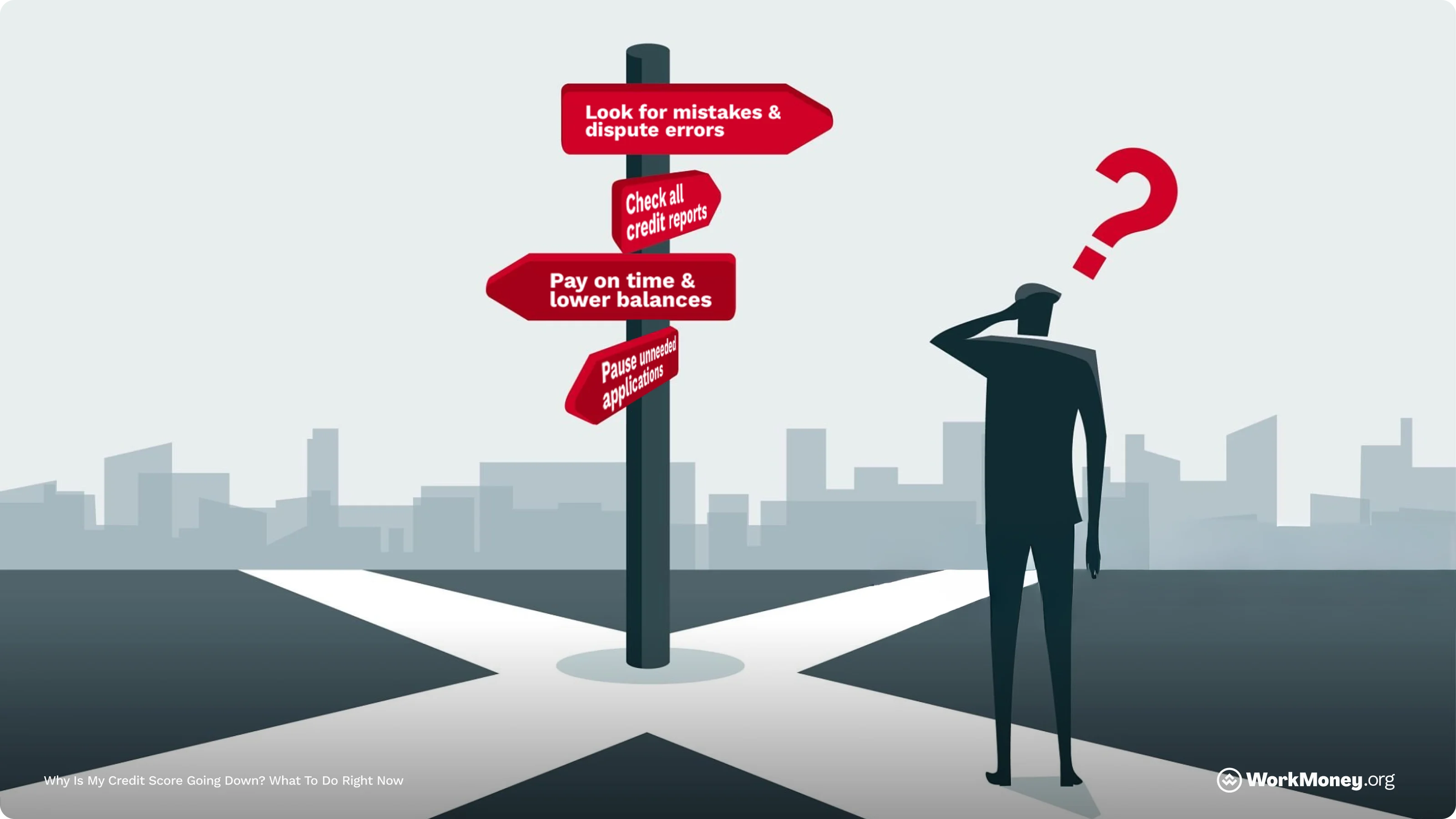
If your credit score is sliding downward, you aren’t alone. After reaching record highs, Americans’ credit scores have started to slip. The average FICO Score fell from 716 in 2024 to 714 in 2025.
A drop can be stressful, but there are plenty of ways to turn it around. This WorkMoney guide explains why credit scores fall, and what you can do right now to bring yours back up.
Why Did My Credit Score Go Down?
Your score can fall for many different reasons, but some hurt your score more than others.
You missed or made a late payment.
Your credit card balances increased.
Your credit utilization went up, even if you didn’t spend more.
You applied for new credit.
A lender closed or reduced one of your credit lines.
You paid off a loan, like your student loans or an auto loan.
Negative information was added to your credit report.
Your report has an error.
What to Do Right Now If Your Credit Score Dropped
If your score has dropped, you can take several steps today to improve it.
Step 1: Check all three credit reports for changes
Three credit bureaus track your credit: Experian, Equifax, and TransUnion. Not all lenders report to all three, so your reports may not be identical across them all.
Carefully review each report for new accounts, late payments, higher balances, or other recent changes that could explain the drop. You can access your reports for free at AnnualCreditReport.com.
Step 2: Look for mistakes and dispute errors immediately
Credit reports tend to have errors. A WorkMoney and Consumer Reports study found that 44% of participants found at least one error, with more than a quarter finding serious ones.
After you pull your reports, go line by line and confirm you recognize each account. Report inaccuracies to each individual bureau.
Step 3: Pay any past-due accounts
A payment that’s more than 30 days late can lower your credit score by 100 points or more, depending on your credit history.
Contact the lenders you owe to ask about a payment plan to make the account current. The longer it goes unpaid, the more damage it can do. Late payments can stay on your credit report for up to seven years.
Step 4: Lower your credit card balances
Large credit card balances can pull your score down, and your utilization can sometimes matter just as much as the dollar amount.
For example, if you have a $2,000 revolving balance on a credit card with a $10,000 credit line, your utilization is 20%. If you have a $4,000 balance on a card with a $40,000 credit line, that’s a 10% utilization.
You have two options: pay your balances down or ask your credit card issuer for a higher credit limit. Either one can help lift your credit score.
Step 5: Pause unnecessary credit applications
Every time you apply for credit, your credit score drops a little, usually 5-10 points each time, according to FICO.
The dip is small, but focus on fixing what’s already hurting your score before adding new inquiries.
How Long Does It Take to Recover Your Credit Score?
How quickly your credit score recovers depends on what caused it to drop. Some changes can improve your score within a few weeks, while more serious negative marks may take years to fully recover from. The key is staying consistent with healthy credit habits.
Credit utilization: 1–2 months
If your score dropped because your credit card balances increased, paying those balances down can help relatively quickly. Most credit card issuers report updated balances to the credit bureaus every month, so you may see your score improve after the next reporting cycle.
Late payments: Several months to years
A late payment can remain on your credit report for several years, but its impact generally lessens over time. Bringing the account current, making every future payment on time, and avoiding additional delinquencies are the best ways to rebuild your score.
Collections and other negative marks: Several years
Collections, charge-offs, bankruptcies, and other serious derogatory marks can affect your credit for years. While their impact gradually fades as they age, the best remedy is to keep making on-time payments, keep balances low, and build a strong recent payment history.
Valuable Resources That Can Help
There are several ways you can start rebuilding your score.
Report rent payments with Esusu
Most renters don’t get credit for paying rent. Only 40% of property managers report rent payments to credit bureaus. That means you may not be getting the credit you deserve.
Esusu can help build your credit score by reporting your rent payments to the credit bureaus. In fact, Esusu reports an average increase of 53 points for active renters.
Get free nonprofit credit counseling through GreenPath
If debt is dragging your score down, GreenPath offers free, certified credit counseling to help you manage and pay down credit card debt.
Use AnnualCreditReport.com to check your credit reports
Federal law gives you the right to free copies of your credit reports. Annualcreditreport.com is the federally authorized website where you can review reports from all three major credit bureaus: Equifax, Experian and TransUnion.
Checking your reports can help you spot inaccurate information, unfamiliar accounts or other issues that may be hurting your credit. If you find an error, you can dispute it directly with the credit bureau reporting the information.
Final thoughts
A lower credit score can feel alarming, but it’s usually the result of one or two specific changes you can fix.
By finding the cause, fixing errors, paying on time, and lowering your balances, you can rebuild your score and get in a stronger financial position over time.
Take the next step
Turn rent payments into credit boosters
Get over a 50% exclusive discount on Esusu rent reporting
Manage your debt with GreenPath
Let GreenPath help you consolidate credit card debt and negotiate rates
Was this information helpful?
About the Author

Brett Holzhauer
Brett Holzhauer is a Certified Personal Finance Counselor (CPFC) who has reported for outlets like CNBC Select, Forbes Advisor, LendingTree, UpgradedPoints, MoneyGeek and more throughout his career. He is an alum of the Walter Cronkite School of Journalism at Arizona State. When he is not reporting, Brett is likely watching college football or traveling.