Credit Score Cleanup: Getting Mortgage-Ready in 6 Months
Simple steps to polish your credit and unlock the door to your own home in just half a year.
7 min. read
Buying a home can feel overwhelming, especially when credit scores come into play. If you’ve ever thought that you aren’t prepared, you’re not alone. Credit requirements are often framed as rigid rules, which can make qualifying feel years away.
The good news is that credit improvement doesn’t have to take forever. With a focused six-month plan, many people can put themselves in a much stronger position to qualify, or at least clearly understand where they stand and what matters most.
At WorkMoney, we skip vague advice like “raise your score.” This guide breaks the process into clear, month-by-month steps, so you’re not guessing what to do next or trying to fix everything at once. Cleaning up your credit isn’t a failure, it’s a powerful act of preparation.
What Credit Score Do You Really Need to Buy a Home?
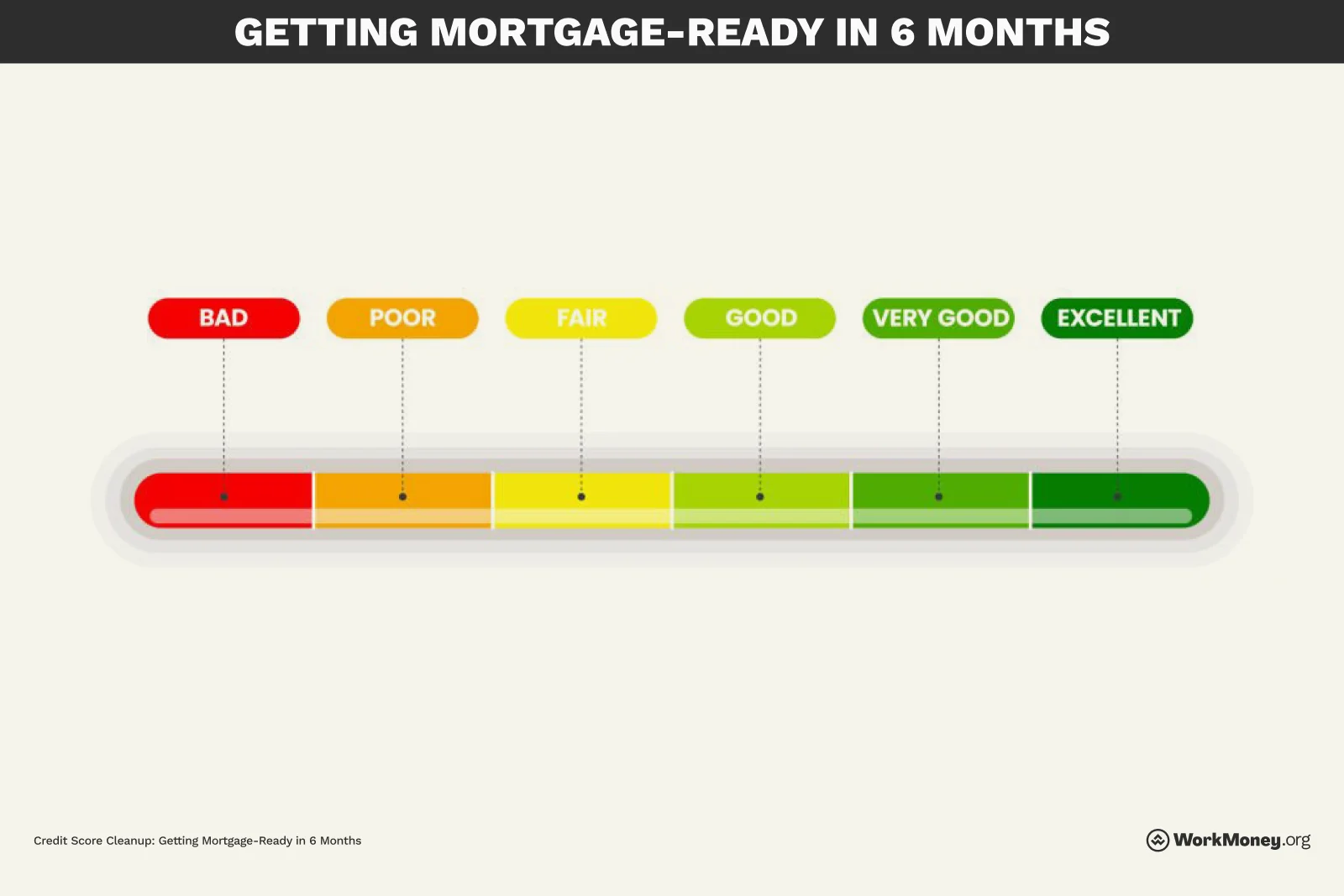
There’s no single “magic number” that guarantees a mortgage approval. Different loan types have different score expectations, and lenders may look at your full financial picture—not just your score.
Here’s a general snapshot of what lenders commonly expect:
Conventional loans: Typically require a minimum credit score of 620 and at least 3% down, depending on the loan type and lender.
FHA loans: Generally allow credit scores as low as 580 with a 3.5% down payment. Borrowers with scores of 579 or below may also qualify, but usually need a 10% down payment.
VA loans: The VA doesn’t set a minimum score, though many lenders prefer around 620, with some flexibility depending on the rest of your financial picture.
That’s why knowing which loan type you’re aiming for matters. It can help you focus on the score range that actually fits your situation. Even a small score bump can help. Higher credit scores generally mean lower interest rates, and more money saved in the long run.
Month 1: Get Clear on Where You’re Starting
Your goal this month: Know exactly what’s on your credit reports and fix anything that doesn’t belong there.
Pull your credit reports safely
You can check your credit reports from Equifax, Experian, and TransUnion for free at AnnualCreditReport.com. These checks are soft inquiries, so they won’t lower your credit score.
Look for errors that may be holding you back
Common issues include:
Accounts you don’t recognize
Incorrectly reported late or delinquent payments
Accounts with incorrect balances or credit limits
Incorrect personal information, like a wrong name or address
If you spot an error, dispute it right away. Credit bureaus generally have 30 days to investigate disputes.
Months 2–3: Go After the Fastest Credit Wins
Your goal these months: Reduce balances and avoid moves that create new risk.
Lower your credit utilization
Credit utilization is the percentage of your available credit you’re using. And it’s one of the most influential parts of your score.
A simple way to check yours:
Add up your total credit limits
Add up your current balances
Divide balances by limits
For example, if your total credit limit is $10,000, keeping balances under $3,000 puts you below 30% utilization.
If you don’t want to do the math, a practical rule of thumb is focusing on paying card balances down to well under one-third of their limits. Even modest reductions can help.
Avoid major credit changes
This is not the time to:
Open new accounts
Close long-standing credit cards
Take on new debt
Stable credit habits can help protect the progress you’ve made as you get closer to applying.
Months 4–5: Strengthen Your Credit Profile
Your goal these months: Stay consistent, even if progress feels slow.
It’s common for credit scores to level off at this stage—and that doesn’t mean your efforts aren’t working. This is often when progress becomes less visible, even though steady habits are still doing their job.
Build positive history where you can
If you consistently pay rent on time and those payments are reported, they can help strengthen your credit history over time, especially if you have few open accounts. Some services allow rent payments to be reported to the credit bureaus, which can be one way renters build credit.
Keep payments boring and automatic
Lenders look closely at your payment history and overall credit behavior to understand how consistently you manage debt and handle credit over time. Automating at least the minimum payments can help you avoid slips while you focus on other steps.
This middle stretch may feel quiet, but it’s often where momentum is built.
Month 6: Get Mortgage-Ready Without Undoing Your Progress
Your goal this month: Get ready to talk to lenders without triggering credit setbacks.
As you get closer to applying, preparation matters. This is about knowing what lenders look at and avoiding changes that could slow things down.
Understand credit checks before you apply
Soft pulls, like checking your own credit or getting pre-screened, don’t affect your score.
Hard pulls, like a formal loan application, may cause a small, temporary dip.
The good news: mortgage rate shopping within a 45-day window is usually treated as one inquiry, so you can compare lenders without hurting your score.
Know what lenders will review
Beyond your credit score, lenders generally look at:
Income stability
Debt-to-income ratio
Recent credit activity
Avoid last-minute financial changes
If possible, hold off on switching jobs, opening new accounts, or financing large purchases until after closing. Staying steady helps protect the progress you’ve already made.
Credit Score Myths That Stop People From Applying
Let’s clear up a few common misconceptions:
“I need perfect credit.” Many buyers qualify with imperfect credit and continue improving after they buy.
“Checking my credit hurts my score.” Checking your own credit doesn’t lower it.
“Lower income means I won’t qualify.” Some loan programs are designed to expand access to homeownership, not restrict it.
Credit isn’t about judgment. It’s a tool meant to measure their risk—and learning how it works puts you back in control.
Other Helpful Resources and Ways to Move Forward
If you’re thinking about next steps, these options can help:
Government-backed home loans: Programs like FHA loans are designed to make homeownership more accessible, including for buyers with lower credit scores or smaller down payments. Many people qualify without realizing it. Explore loan options here.
Rent reporting tools: If rent is your largest monthly bill, tools like Esusu can report on-time payments to major credit bureaus, which may help build your credit history. Visit here to see if rent reporting could work for you.
Free housing guidance: The Consumer Financial Protection Bureau (CFPB) offers plain-language tools to help you prepare for a mortgage, compare options, and understand what lenders look for. Visit here to learn more.
Your 6-Month Mortgage-Ready Checklist and Calendar
Think of this as a simple roadmap to get mortgage-ready without overwhelm.
Month 1: Review and clean up
Pull all three credit reports
Dispute errors
Record balances and due dates
Months 2–3: Reduce balances
Lower card balances
Pay on time
Avoid account changes
Months 4–5: Maintain momentum
Keep payments on time
Prevent balance creep
Add positive history if applicable
Month 6: Get ready to apply
Check credit (soft pull)
Gather documents
Pause financial changes
This plan works best when you treat it like a plan, not a race. Even when progress feels slow, steady follow-through is what keeps you moving forward.
Final Thoughts
Getting mortgage-ready isn’t about fixing everything overnight. It’s about understanding where you stand, making steady improvements, and avoiding the mistakes that slow people down.
A clear six-month plan helps you build momentum without doing too much at once. Even when progress feels slow, consistent habits and smart timing make the biggest difference.
At WorkMoney, we believe you deserve practical guidance that helps you use the systems already available to you. With the right plan, you can move forward with confidence, one intentional step at a time.
Was this information helpful?
About the Author

DeShena Woodard
DeShena Woodard is a Financial Freedom Coach, Certified Life Coach, freelance personal finance writer, and podcast host. Her story, advice, and expertise have been featured in prominent outlets such as CNN Underscored, Business Insider, Yahoo Finance, NerdWallet, and more. Through her platform, Extravagantly Broke, she helps women take control of their finances with simple, stress-free strategies—without sacrificing the joy of everyday life. When she’s not writing or coaching, DeShena enjoys traveling, biking, and spending time with her family.