How to Improve Your Credit Score: A Step-by-Step Guide
Take control of your credit and unlock better financial opportunities
6 min. read
Your credit score is your financial report card, as it tells banks and lenders your reliability to pay back debts. This ranges from 300-850, the higher your score, the better.
However, life happens, and sometimes our credit score can slip downward. Things like missing credit card payments, accumulating debt, using a high amount of credit, and applying for too much credit can drag your score down. But even if your credit score isn’t where you need to be, there are pathways to get your score back to where you want it to be.
WorkMoney has put together a series of Power Moves that you can implement to make a positive impact on your credit score in the short and long term.
Power Move #1: Know Where You Stand
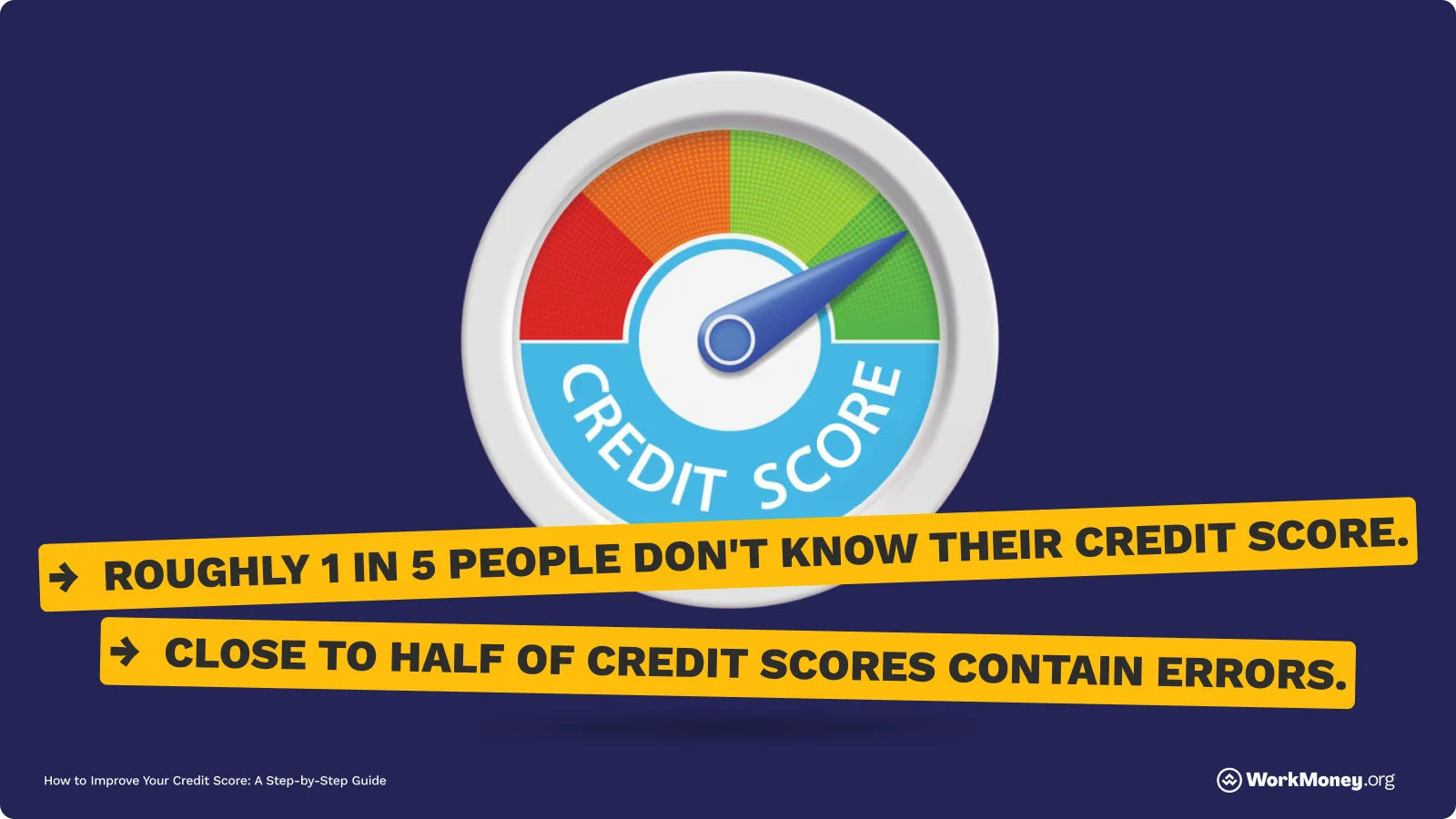
It’s quite okay not to know your credit score. 22% of people either do not know their credit score (13%) or are unsure (9%), according to a recent Marist poll. However, you can find out quickly and understand any potential issues hindering your credit score.
Here’s what you can do today to know where you stand:
Check your free credit reports from AnnualCreditReport.com (you can do this weekly).
When you check your credit score, review for errors. Nearly half of credit reports had errors resulting in credit scores being negatively affected, according to a Consumer Reports study. If you find an error, be sure to dispute it with the correct credit reporting agency.
For remarks that are negatively impacting your credit, contact the company to see if you can set up a payment plan to be on track to eliminate the negative mark.
Avoid credit repair companies. The FTC has warned consumers that credit repair companies can largely be deceptive, and aren’t capable of removing negative marks.
Power Move #2: Focus on On-Time Payments
The second power move is to ensure you pay your debts on time. This is because the largest chunk of your credit score is based on on-time payments. Here’s how it balances out:
Payment history: 35% of your score
Credit utilization: 30% of your score
Length of credit history: 15% of your score
Credit mix: 10% of your score
New credit/hard inquiries: 10% of your score
And here’s how you can ensure you stay on top of your monthly payments:
Automate your payments. Set up autopay for at least the minimum amount due, so you never risk forgetting a bill.
Use reminders and alerts. Many banking apps and credit cards let you schedule push notifications or texts before a bill is due.
Pay early, not just on time. Paying a few days before your statement closes can also help keep your utilization low, giving your score an extra boost.
If you slip, act fast. If you miss a payment by accident, contact your lender right away. Many will forgive a first-time mistake if your history is otherwise clean. And be sure to ask for any late fees to be waived.
Being timely with your payments is the fastest way to ensure your credit score stays where its at. The next power moves can potentially help you elevate it.
Power Move #3: Tame Your Credit Card Balances
The second largest portion of your credit score is your credit utilization. This is a measure of how much credit you’ve been given by banks, and how much you’re actively using. It’s not a bad thing to use credit, but using too much of it can negatively impact your score.
For example, if you have a credit card with a $5,000 credit line and you have a $3,000 balance on it, that is a 60% utilization rate. This is a bit of an alarm for banks, as it shows you need to borrow a large amount of money. The rule of thumb is to keep your utilization under 30%.
Here are a few ways to keep your utilization rate as low as possible:
Pay off balances throughout the month (not just at the due date) to keep your reported balance lower.
Ask your issuer for a credit limit increase. It doesn’t cost anything, and the worst-case scenario is they simply say no.
Combine credit limits. For example, let's say you have two credit cards from the same bank, and one you don’t use. You may be able to ask to consolidate the credit lines into one card.
Power Move #4: Add Positive Credit History
This Power Move is where you can begin to make positive moves forward. Here are several ways you can begin adding positive credit marks to your credit history:
Consider getting a secured credit card. This is an entry-level credit card, where you put money down as a deposit, and you can spend on it.
Credit builder loans are another option. This is where a lender puts money aside for you, and you make monthly payments. This helps prove your ability to pay on time over a long period of time.
You’re likely paying regular monthly bills like rent, home utilities, your cell phone, and streaming services. Tools like Experian Boost can add this data to your credit report to give you “credit” for paying these bills on time.
Power Move #5: Handle Debt Strategically
This Power Move can feel like the most overwhelming, but it can make a big difference in your credit score. Here are a few strategies to consider to tackle your debts:
The Debt Snowball: List out all of your debts from smallest to largest. You will tackle the smallest first, and then work your way towards the largest one. This largely relies on the psychology of getting a small win first, and then using that momentum to make progress–just like a snowball rolling downhill.
Move to 0% APR cards: There are several credit cards where you can move debt from one card to another. This is called a balance transfer. This can help minimize paying high interest rates.
If you’re struggling, a nonprofit like GreenPath Financial Wellness can help you create a realistic payoff plan.
By being strategic about your debt paydown journey, your credit score will surely increase over time.
Final thoughts
It’s never too late to start improving your personal finances, and that includes your credit score. Having a solid credit score can unlock many financial opportunities, including great interest rates on a car loan and even the opportunity to buy a home.
Your credit score may not be perfect, but these few Power Moves can get you going in the right direction.
Take the next step
Turn rent payments into credit boosters
Get over a 50% exclusive discount on Esusu rent reporting
Was this information helpful?
About the Author

Brett Holzhauer
Brett Holzhauer is a Certified Personal Finance Counselor (CPFC) who has reported for outlets like CNBC Select, Forbes Advisor, LendingTree, UpgradedPoints, MoneyGeek and more throughout his career. He is an alum of the Walter Cronkite School of Journalism at Arizona State. When he is not reporting, Brett is likely watching college football or traveling.