How Often Should You Pay Your Credit Card for Better Credit?
Unlock a stronger credit score and save money
3 min. read
Paying your credit card more than once a month can help improve your credit because it lowers your credit utilization, which makes up 30% of your overall score. Even small mid-cycle payments can keep your balance reduced when lenders report to the credit bureaus. However, the more important step is to ensure you pay your credit card on time, and ideally in full, to avoid mounting interest charges.
WorkMoney put together a guide on how credit scores work and how you can use your credit card to potentially improve your credit score along the way.
Understanding How Credit Scores Work
Your credit score is a number given to you by several credit agencies based on your ability to pay back your debts. The score is typically between 300-850. Multiple factors go into this score. Here’s how it breaks down:
Payment history: 35%
Credit utilization, or amount owed: 30%
Length of credit history: 15%
New credit: 10%
Types of credit: 10%
The most important factors include how much debt you have and your ability to pay it back on time. If you rack up too much debt or have missing debt payments on your credit report, it could result in your credit score being negatively affected.
Here’s a way to think about credit utilization: think about a backpack, and your purchases are the items you stuff inside. If you’re only carrying a few light items, your backpack looks manageable and easy to carry — lenders see you as responsible with the space you’ve been given. But if you cram the bag full to the point it’s bursting at the seams, even if you never drop it, others will assume you’re overloaded and more likely to stumble.
How credit card payments influence these factors
Paying down your credit card on time can help bring your credit score up, as well as continue to prove to credit agencies that you’re able to meet your debt obligations. These factors will help your credit score over the long term.
However, there is no concrete evidence that paying your credit card bill more often than is required will increase your credit score. For example, Chase says, “If one or more partial payments occur prior to the end of your billing cycle, it could improve your credit score.” Additionally, Experian says, “Making more than one payment each month on your credit cards won't help increase your credit score.” In my own experience, after having dozens of credit cards, any potential change will likely be a few points – nothing that will tangibly impact your financial life. But there are potential advantages that can help continue your credit journey.
What a good credit score unlocks, and avoids
A good credit score opens the door to better financial opportunities: you’ll qualify for lower interest rates on mortgages and auto loans, which means paying far less over time. It also gives you potential access to larger credit limits, and often reduced or waived security deposits for things like apartments or utility services.
Additionally, a strong credit report can help with insurance premiums, and sometimes even job or background checks, since those parties view credit as a signal of responsibility.
Conversely, a less than ideal credit score can make your financial life much harder. A recent study found consumers with a credit score under 620 are charged nearly $3,400 more than others on average for essential financial products each year.
Payment Frequency Options
Monthly (Once per Month)
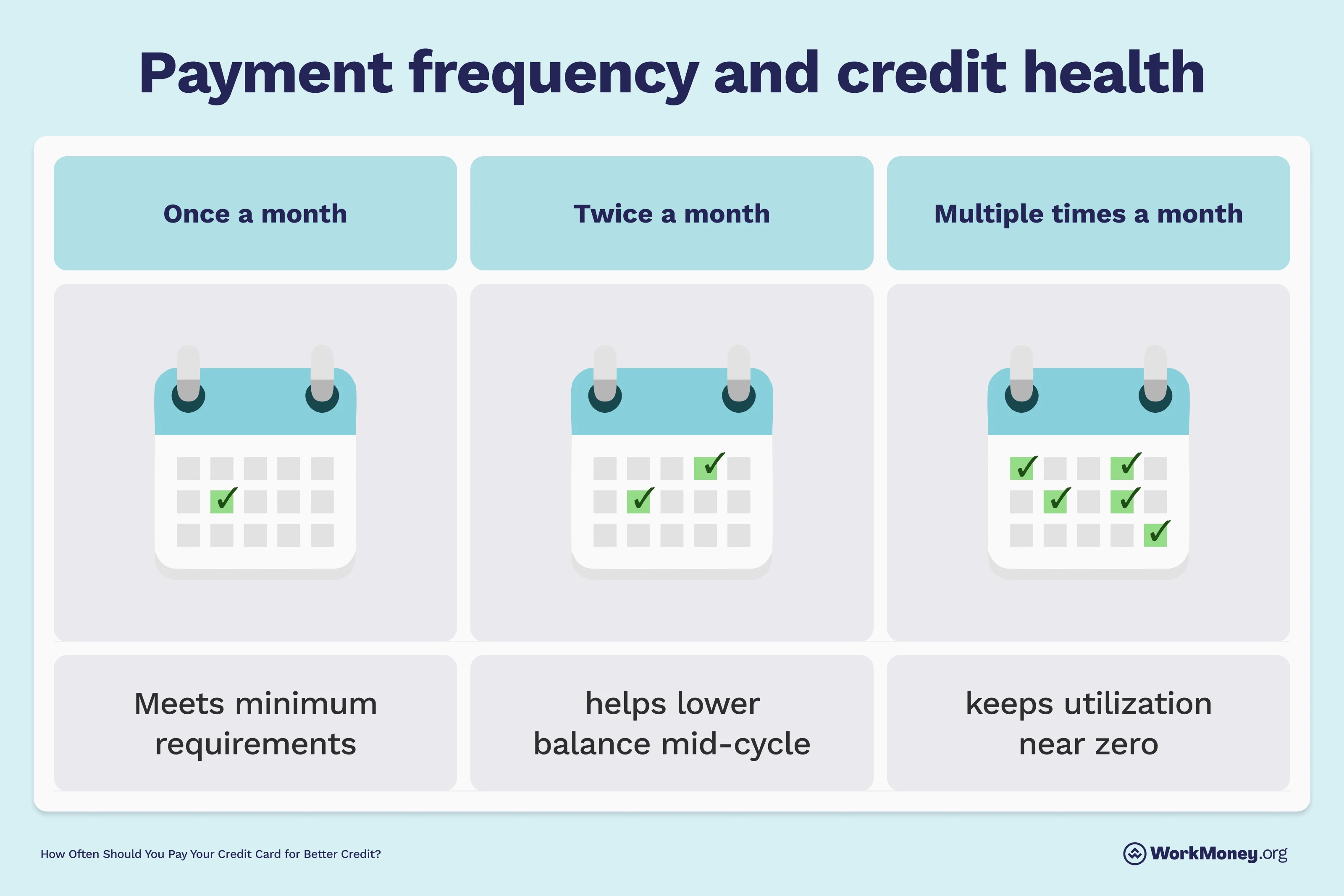
Paying your credit card once a month, usually by the statement due date, is the most common approach. This method ensures you avoid late fees and keeps your account in good standing. While it maintains a healthy credit record, your reported balance may be higher if you make large purchases early in the billing cycle, which can temporarily increase your credit utilization.
Biweekly or Weekly Payments
Making payments every two weeks or once a week can help reduce your average daily balance, keeping your reported utilization lower when lenders check your credit. Smaller, more frequent payments may also be easier to manage financially, spreading out your cash flow and helping you avoid accumulating high balances mid-cycle.
Multiple Times per Month
Paying multiple times per month, or even immediately after each purchase, can keep your credit utilization near zero. This strategy demonstrates consistent repayment behavior and helps prevent large balances from ever being reported.
Keep in mind that there are no restrictions on how often you can pay your credit card bill. Additionally, you can typically adjust your credit card due date as needed, depending on your preference. For example, you can have it changed from the 12th of each month to the 19th of each month by calling our credit card company.
Practical Tips for Better Credit Through Payments
The core focus for credit card users should be paying your monthly statement on time each month. This simple task is an important step to continue your credit journey in the right direction. However, there are several things you can do in addition to make your credit profile even better.
Automate payments to avoid late fees. Most credit card issuers offer autopay to customers to make monthly payments easier.
Monitor statements and due dates carefully. If you have multiple credit cards, you may have multiple due dates throughout the month. Be sure to mark on your calendar when each card is due.
Consider splitting payments if you have high balances. If you’ve made significant purchases one month, it may give you peace of mind to pay multiple times throughout the month to work down the balance.
Use alerts or budgeting apps to track spending. If you need help tracking your spending, downloading a budgeting app like YNAB or Monarch Money could be helpful to track your credit card balances.
Pro tip: If you’re looking for additional financial direction, consider signing for free credit coaching through TrustPlus.
Final thoughts
Your credit score is an essential part of your overall financial health. Part of that credit score is paying off your credit card on time, and hopefully in full to avoid interest charges.
There’s nothing wrong with paying your credit card multiple times per month to reduce your balance, but it may not significantly raise your credit score.
Take the next step
How to Avoid Credit Card Debt
Discover how to use the debt the right way with these six credit card best practices
10 Budgeting Tips for Families
Get budgeting tips from WorkMoney to help your family save money on monthly expenses.
Was this information helpful?
About the Author

Brett Holzhauer
Brett Holzhauer is a Certified Personal Finance Counselor (CPFC) who has reported for outlets like CNBC Select, Forbes Advisor, LendingTree, UpgradedPoints, MoneyGeek and more throughout his career. He is an alum of the Walter Cronkite School of Journalism at Arizona State. When he is not reporting, Brett is likely watching college football or traveling.