When to Use Your Emergency Fund: 3 Rules to Protect Your Cash
Know when to tap into your savings and when to let your money grow
3 min. read
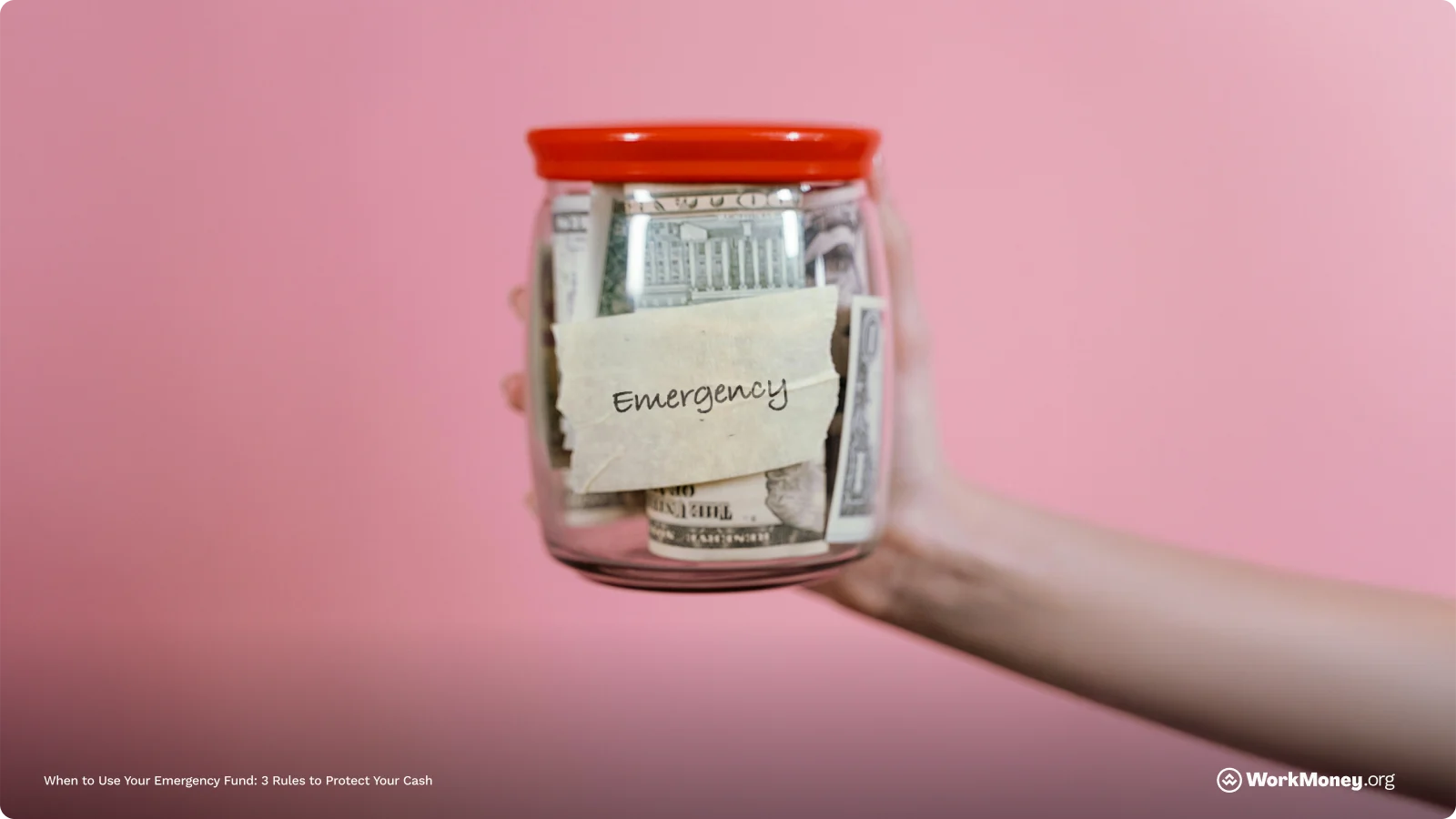
Your emergency fund is only intended to be used in a real emergency. And no, concert tickets for your favorite artist are not an emergency. But when life happens, and you need to dip into those funds, you shouldn’t feel any guilt at all. In fact, you should feel a sense of relief that you have those funds set apart, instead of relying on a credit card or other high-interest financial product.
This WorkMoney guide is built to give savers a way to protect their cash, as well as a set of rules for when you should dip into your emergency fund guilt-free.
What Actually Counts as an Emergency?
A financial emergency can be looked at as something that comes up without expectation and impacts your monthly budget. Ultimately, the definition of an emergency is on you to decide. But here are a few examples of when it could be justified to use your emergency fund:
Medical emergencies – sudden illness, injury, surgery, or urgent dental work not fully covered by insurance.
Car repairs – major breakdowns like engine failure, transmission issues, or repairs needed to get to work.
Home repairs – urgent fixes such as a burst pipe, broken furnace in winter, or roof damage from a storm.
Job loss – covering living expenses during a period of unemployment.
Unexpected travel – emergency trips for a sick family member or a death in the family.
Essential appliance replacement – a fridge, washer/dryer, or heater that stops working suddenly.
Pet emergencies – sudden illness or injury requiring urgent vet care.
Emergency childcare – last-minute daycare, babysitter, or school closures that require paid care.
Identity theft or fraud recovery – costs for legal help, replacing stolen IDs, or securing accounts.
Natural disasters or accidents – temporary housing, urgent repairs, or evacuation costs due to floods, fires, or storms.
The 3 Rules for Using Your Emergency Fund
An emergency fund is your financial safety net, and using it isn’t a bad thing. However, it’s vital to use these funds only in true emergencies. Follow these three rules to make sure your fund is there when you truly need it.
Rule #1: Use It Only When the Expense Threatens Your Stability
Before withdrawing a single dollar, ask yourself: Does this cost affect my health, housing, transportation, or income? If the answer is no, it might be an inconvenient expense—but not a true emergency.
Urgency matters more than inconvenience. A broken phone or a last-minute concert ticket isn’t a reason to drain your savings. But a car repair that prevents you from getting to work, a medical bill you can’t postpone, or rent that’s due tomorrow are exactly the types of situations your emergency fund is meant for.
Rule #2: Reduce the Bill Before You Touch Your Cash
Even in emergencies, a few smart moves can stretch your dollars further. Negotiate medical bills, utilities, rent, and insurance whenever possible. Check whether your employer, local nonprofits, or community programs offer assistance as well.
Every dollar you don’t spend preserves your fund for the truly critical moments. Treat your emergency fund like a last line of defense, not a first resort.
Rule #3: Treat Government Benefits as a Backup Layer
Think of government programs as a layer of protection, not a sign that you mismanaged your money. Unemployment benefits, SNAP, rental assistance, and utility relief exist to protect people during tough times.
Applying for benefits can act as a protective buffer, giving you time to stabilize your finances without sacrificing your long-term safety net.
How to Rebuild After You Use Your Emergency Fund
Using your emergency fund can feel like a setback, but it’s proof that your financial system worked. The goal of an emergency fund is to safeguard you from falling into debt, missing bills, or bigger financial damage when life happens. Still, once you’ve used it, the priority shifts from crisis management to recovery, so you’re not left exposed the next time something goes wrong.
Start by rebuilding slowly and intentionally. Even small, automatic contributions restore momentum and reduce the pressure to “catch up” all at once. A partially rebuilt emergency fund is far safer than waiting for the perfect moment to start again.
Final thoughts
Emergency funds are there to be used when needed. The hope is that you may never have to use it, but the reality is that you will likely have to use it at one point or another.
However, be proud that you have an emergency fund established – millions of Americans don’t. If you need to use those funds for a true emergency, don’t hesitate. But as soon as you weather the storm, be sure to prioritize refilling that emergency fund.
Was this information helpful?
About the Author

Brett Holzhauer
Brett Holzhauer is a Certified Personal Finance Counselor (CPFC) who has reported for outlets like CNBC Select, Forbes Advisor, LendingTree, UpgradedPoints, MoneyGeek and more throughout his career. He is an alum of the Walter Cronkite School of Journalism at Arizona State. When he is not reporting, Brett is likely watching college football or traveling.