How to Buy a Used Car Without Getting Ripped Off
Your step‑by‑step guide to smart, affordable used‑car buying in America
5 min. read

New vehicles have become much more expensive in recent years as inflation and tariffs have hit car dealerships. A simple way to dodge the sticker shock is to opt for a used car, avoiding the immediate depreciation when you drive the car off the lot.
However, buying a used vehicle comes with a bit more due diligence to ensure you get a great vehicle that will last you for years.
WorkMoney put together a comprehensive guide on how to buy a used car without getting ripped off.
Slowed depreciation
Vehicles largely go down in value over time until they are eventually worth very little. However, the first owner of the vehicle experienced the worst of the depreciation. In the first month of ownership, car values drop around 10%. Over the first two years, average depreciation ranges from 30-35%. Every car will have a different rate of depreciation, but by opting for a two-year-old car or older, you can let someone else take the loss in value.
Lower insurance premiums
Used cars are less valuable, making them less risky to insure, leading to lower premiums.
Lower registration costs
Registration fees on used vehicles tend to be lower, since their purchase price is lower.
Consumer feedback
Some cars are fantastic, while some aren’t as great. However, with some time passed from the initial launch, you can quickly gather pros and cons on the internet about the vehicle. For example, if you find a car you’re interested in, there are likely several reviews online to consume to see others' opinions and experiences. And, if there are any significant recalls or issues, you’ll know to avoid that make and model.
Fewer worries
With a brand new car, you will likely be more emotionally invested and stressed out about maintaining the car. But the eventual door ding, scratch, or dent will likely happen. With a used vehicle, the small damages may be a less painful experience.
The Advantages of Buying Used
The advantage of saving money when opting for a used vehicle over a new one is clear. However, there are a few others that can continue to save you money and help you enjoy your vehicle.
Plan Before You Shop
Like any large purchase, it’s vital to have a plan in place. So before you visit the dealership, here’s what you can do to prepare beforehand.
Use a car budgeting rule
There are several ways to consider paying for a vehicle to determine if it’s affordable for you and your budget. First is the 20/3/8 rule. Here’s how it works: 20% down on the car, you should pay off the car in 3 years or less, and your car payment shouldn’t exceed more than 8% of your income. There’s also the 20/4/10 rule.
Whichever rule you pick, stick to it to ensure you buy a car that is affordable for you and your family.
Get prequalified
There’s a new incentive for car dealerships: they are banks that just happen to sell cars. This is because lenders partner with dealerships to offer loans to their customers. If the loan closes, the dealership gets a payout. That isn’t necessarily a bad thing, but the loans offered by the dealership may not be the most competitive.
It’s a great idea to research what kind of loans are available for new and used car loans, including how much you can expect to spend each month. And you can go to a dealership prepared with your own financing and negotiate the price of the vehicle to get the best deal.
If you aren’t satisfied with the loan options given, you can always consider refinancing your auto loan later. Caribou helps borrowers find better loan terms for their car loans.
Pick Where to Buy
There are two options for purchasing a used vehicle: buying from a dealership or a private seller.
Buying a used car from a dealership often comes with peace of mind, but that typically comes with a price hike. Dealerships typically inspect and recondition their vehicles, and many offer warranties that provide added protection on used vehicles. However, those protections come at a cost—dealers usually charge more than a private seller for the same car. You may also encounter extra fees that can push the final price higher than expected.
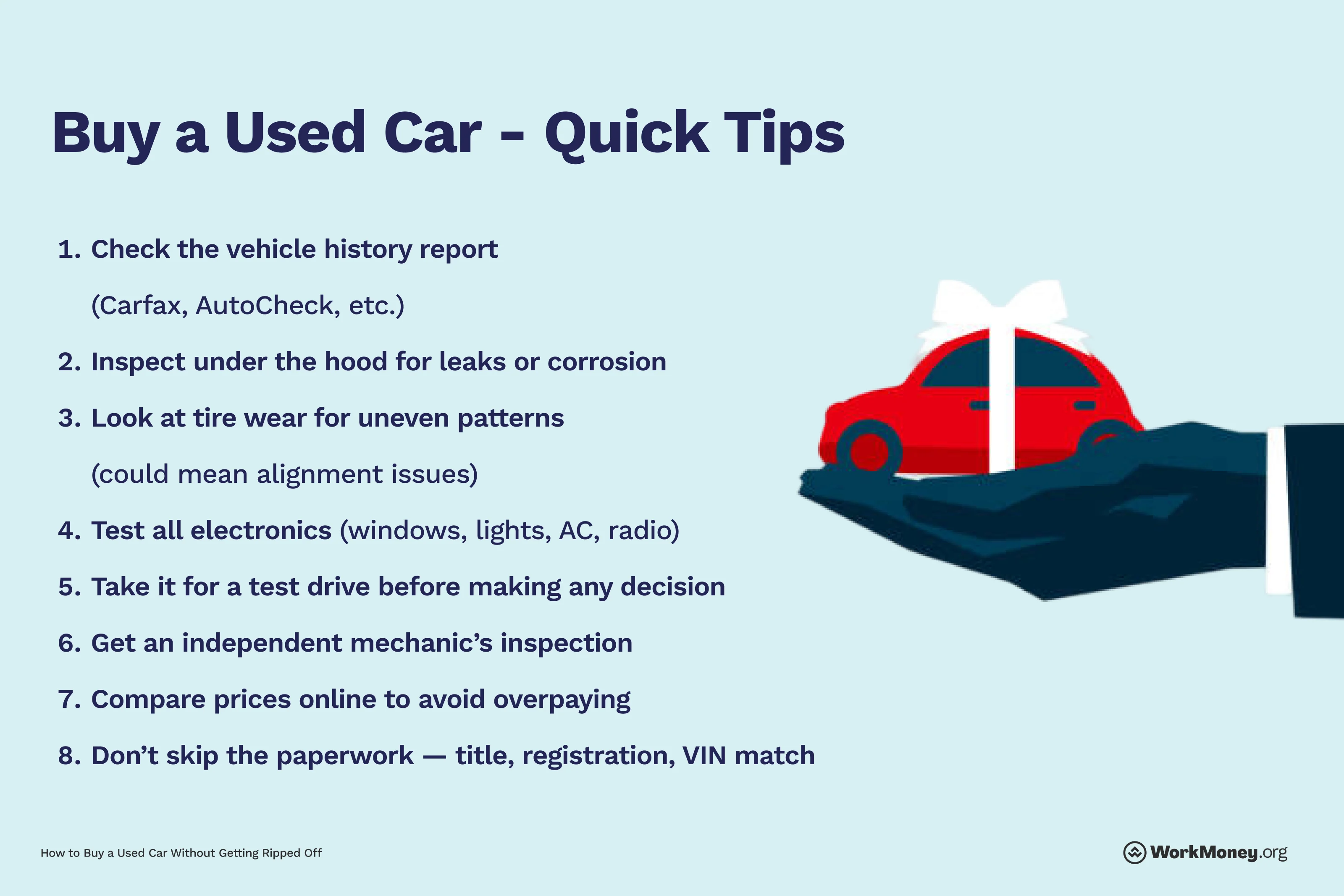
Buying from a private party can save you money, since there’s no dealership overhead or profit margin baked into the price. You might also have more room to negotiate, especially if the seller needs to move the car quickly. That said, buying privately is a more “buyer beware” situation. Be sure to run the VIN number through Carfax to get a detailed history of the vehicle. Additionally, if you find the perfect car, it would be wise to have a mechanic inspect the vehicle before agreeing to the purchase.
Make the Deal
Whether you buy a vehicle from a private party or a dealership, always try to negotiate the price of the car.
The best thing you can do is arm yourself with documentation of similar vehicles with similar mileage, along with the Kelley Blue Book value of the vehicle, to get the best price possible.
If the dealership or seller isn’t willing to budge on the price, it’s okay to walk away. The right car and seller will come.
Final thoughts
A vehicle is a large purchase, and it’s important to take your time and do your research. You don’t want to end up regretting your purchase, especially something that only goes down in value.
Take the next step
Slash your car insurance premiums
Save up to $1,100 a year on your vehicle with Insurify
Easily lower your car loan payments
See if you can save over $1,900 a year by refinancing your auto loan through Caribou.
Was this information helpful?
About the Author

Brett Holzhauer
Brett Holzhauer is a Certified Personal Finance Counselor (CPFC) who has reported for outlets like CNBC Select, Forbes Advisor, LendingTree, UpgradedPoints, MoneyGeek and more throughout his career. He is an alum of the Walter Cronkite School of Journalism at Arizona State. When he is not reporting, Brett is likely watching college football or traveling.