When to Refinance Your Car Loan for Maximum Savings
Understand the best moments to refinance your car loan and save money
4 min. read

Car payments are one of the biggest monthly expenses for many families. But what if you could lower those payments—and the total amount you pay over time—just by refinancing your car loan?
Refinancing can be a powerful tool to free up cash, reduce financial stress, and stretch your budget, but timing is everything. When done right, refinancing your auto loan can lower your interest rate, shrink your monthly bill, and save hundreds or even thousands over the life of your loan. To ensure you’re getting the right end of the deal when refinancing, we’re going to break down when it makes sense to refinance a car loan, how it works, and common pitfalls to avoid.
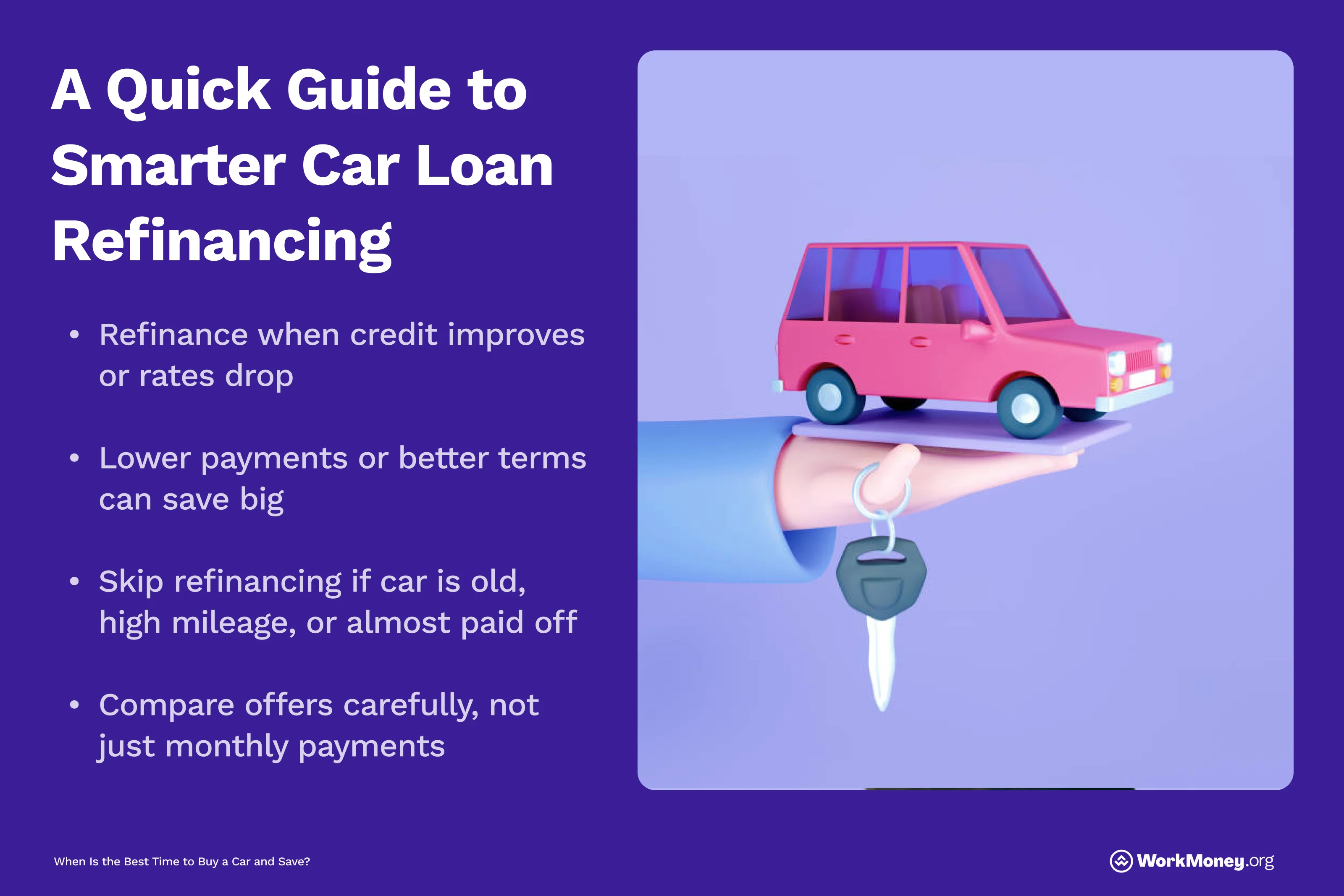
What Does It Mean to Refinance Your Car Loan?
Refinancing means replacing your current auto loan with a new one—ideally with better terms and a lower interest rate. The way refinance works is that you use your new loan to pay off your old one. From there, you start making payments under the new agreement. Typically, consumers only refinance if they can achieve a lower interest rate or lower monthly payments. When you refinance, you may qualify for a different interest rate or loan term. If refinancing won’t help you save money or make your payments more manageable, it’s generally best to stick with your original loan.
Signs It’s the Right Time to Refinance Your Car Loan
Refinancing can help consumers save money and pay off their debt faster, but only if the stars align. These are the signs you should look for when considering refinancing an auto loan.
When Not to Refinance
While refinancing often saves money, it isn’t always the best move. Consider holding off on seeking out a new auto loan if:
Your car is old or has high mileage—many lenders won’t refinance cars over 10 years old or with more than 100,000 miles (Experian)
You owe more than the car’s worth (you’re “underwater” on the loan) (Navy Federal Credit Union)
You’re near the end of your loan—refinancing late in the term offers little savings and may add fees
You have a prepayment penalty on your current loan (Equifax)
New loan origination fees are too high
There is required GAP insurance or warranties bundled into the refinance offer
Always read the fine print to ensure refinancing truly saves you money, because sneaky fees and fine print may eat up your savings.
How Refinancing Saves Money
To make it easier to visualize how refinancing can save you money on a car loan, let’s break down how this process works with a simple scenario*:
Loan Amount | Terms | Interest Rate | Monthly Payment | Total Interest Paid | |
|---|---|---|---|---|---|
Original Loan | $20,000 | 60-month | 10% | $425 | $5,496 |
New Loan (refinanced after one year) | $17,500 (remaining balance) | 48-month | 5% | $402 | $1,841 |
*The example above is for illustrative purposes only.
The total savings? Nearly $3,600 saved in interest and lower monthly payments, freeing up over $20 per month immediately in your budget.
Refinancing Readiness Checklist
Not sure if refinancing is the right move for you? Here’s a quick checklist to help determine your readiness:
Your credit score improved
Interest rates are lower than your current loan rate
You’ve made at least six to 12 months of on-time payments
Your car is in good condition, under lender mileage limits
You plan to keep the car long enough to recoup any refinancing fees
If you check off all of these boxes, it’s likely a good time to explore refinancing offers.
How to Refinance in 3 Simple Steps
Refinancing may sound intimidating, but the process is actually quite simple. Here’s what you can expect:
Compare rates. Use trusted platforms like Caribou to get pre-qualified without hurting your credit score. Aim for at least three quotes to find the best deal.
Review terms carefully. Look beyond the monthly payment. Compare interest rates, total interest costs, loan term length, and fees or penalties.
Complete the refinance process. Once you accept an offer, your new lender pays off your old loan, you begin payments under the new agreement, and you keep making payments until the switch is finalized to avoid late fees
It’s important to remember that when you want to refinance any type of loan, timing matters. Pay attention to your credit, interest rate trends, and your car’s value to decide the best moment to refinance.
Was this information helpful?
About the Author

Jacqueline DeMarco
Jacqueline DeMarco is a seasoned personal finance writer with over seven years of expertise covering important financial topics like credit cards, budgeting, banking, and insurance. Her work has been featured by top financial brands and publications, including Newsweek, Fortune, USA TODAY Blueprint, Bankrate, CreditCards.com, SoFi, and Northwestern Mutual.