Motivation vs. Discipline: How Finding Your "Why" Keeps You Saving
Move beyond willpower and build a savings habit that sticks by connecting with your true purpose
3 min. read
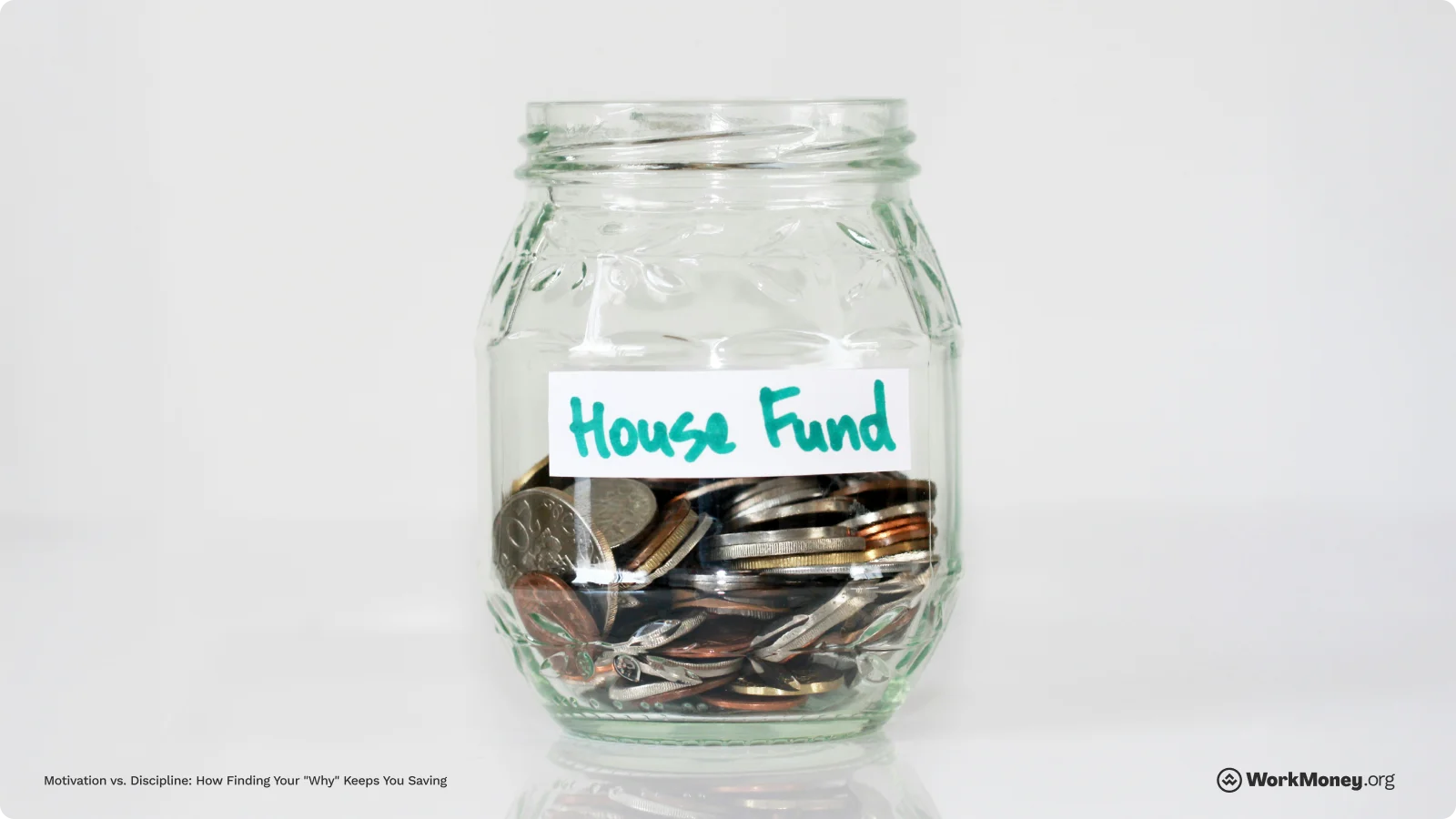
Saving money sounds simple. You earn, you set some aside, and you move on. The reality is that sticking to a savings habit can feel exhausting—especially when you’re managing bills, work stress, and higher prices for everyday purchases. And when money is tight, saving can feel almost impossible.
If you’ve ever felt motivated to save one week and completely over it the next, you’re not doing anything wrong. That’s normal. Motivation doesn’t last forever. Discipline is what helps you keep going when life gets busy, expensive, or overwhelming.
At WorkMoney, we look at discipline differently. We’re here to help you keep more of your own money and use it in ways that support your life—not sell financial products or push quick fixes. That starts with understanding why saving feels hard and how to make it easier in the real world.
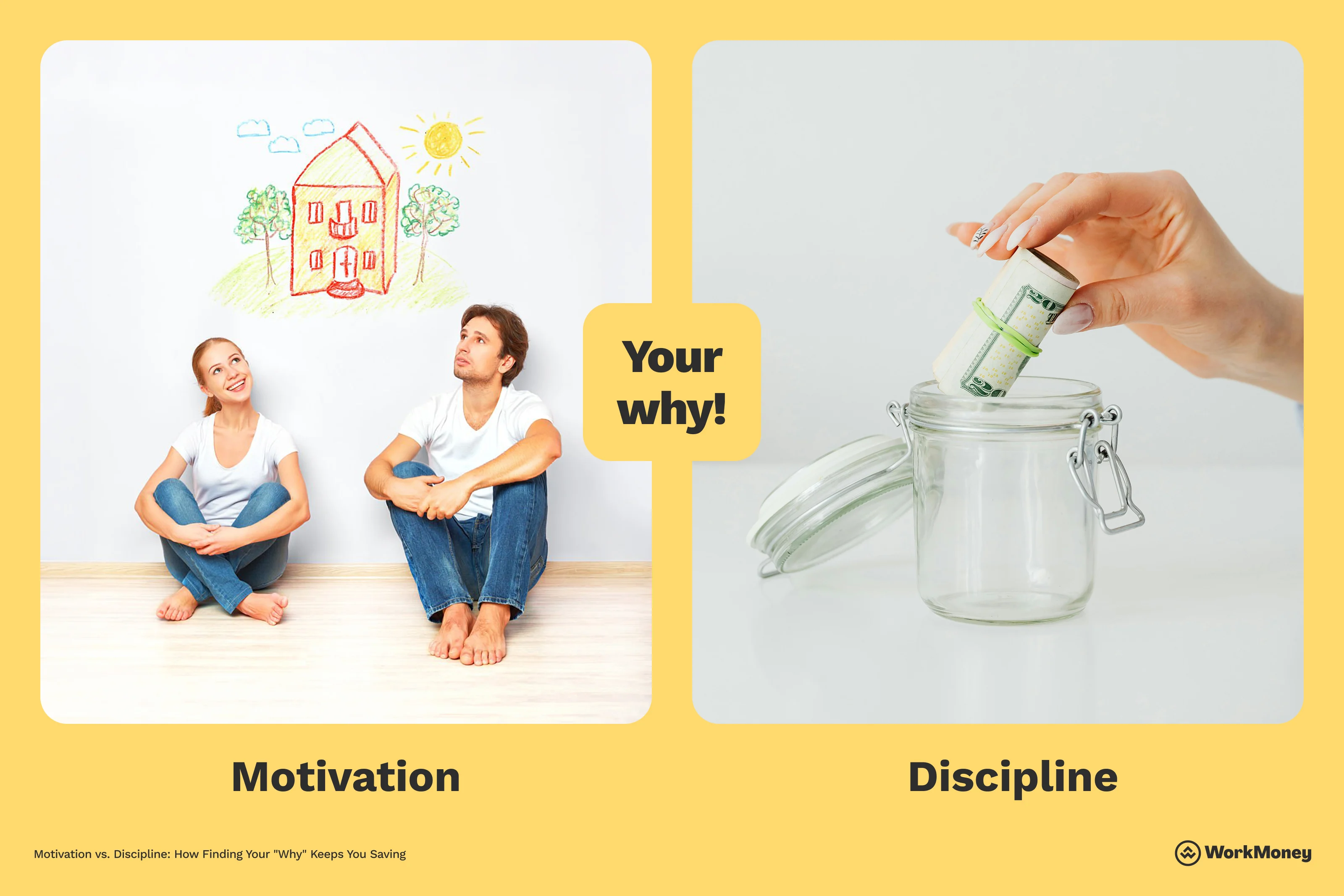
Motivation Fades. Discipline Is What Actually Works.
Motivation is emotional. It can show up after a raise, a fresh paycheck, or a moment of inspiration.
But it can fade quickly when you’re tired, stressed, or dealing with the daily pressures of real life.
That’s why you can’t rely on motivation alone, it doesn’t always last. When you’re under stress, it’s easier to fall back on old habits, even when you know better.
When money feels too restrictive, it can lead to “revenge spending,” which is spending to make up for missing out, even though you know saving is important.
Discipline works differently. It’s not about trying harder every day. It’s more about setting your routines and environment, so that sticking to your goal becomes easier.
Think of discipline as a muscle. The more you use it in small, manageable ways, the stronger it gets over time.
Your “Why” Turns Saving Into Something You Want to Do
Saving is much easier to maintain when you know why you’re doing it.
A strong “why” shouldn’t be vague, like “I want to be better with money.” It’s personal and emotionally grounded. It might look more like wanting to:
Sleep better at night
Stop living paycheck to paycheck
Take a trip without guilt
Feel secure knowing you can handle an emergency
When saving is connected to something that matters to you, it stops feeling like deprivation. Instead, it feels more like self-care.
Small wins matter here. Consistent progress—even $20 or $50 at a time—triggers a dopamine response that makes sticking with the habit feel more rewarding. That’s how discipline builds momentum, especially when money is tight.
Plus, every time you say no to a short-term purchase, you’re really saying yes to the bigger life your “why” represents.
Why Systems Matter More Than Willpower
One common myth about saving is that it takes constant self-control. In reality, the more decisions you have to make, the harder saving becomes—especially when you’re already stretched thin.
Systems help reduce friction by cutting down on daily decisions. So instead of relying on motivation or willpower, they make the right choice easier by default—even on days when motivation is gone.
Helpful systems might include:
Automatically moving money into savings as soon as you get paid
Keeping savings and checking accounts at different banks so spending is harder
Setting small, realistic goals, like saving $20 each payday instead of aiming for huge amounts
This matters because stress affects decision-making. The American Psychological Association notes that ongoing stress can make it harder to stay focused and follow through on your goals—especially when life feels overwhelming.
When Saving Isn’t Possible Yet, Discipline Still Counts
If you’re struggling to cover basic expenses, saving may not be realistic every month—and that doesn’t mean you’re doing anything wrong.
Discipline doesn’t always start with saving. Sometimes it looks more like:
Staying on top of your monthly expenses
Reducing fixed costs
Creating breathing room so that saving becomes possible later
You’ll know you’re making progress when you have fewer surprise expenses, more available cash, or less stress—not just a growing savings balance.
This is where discipline and systems matter most. They help you move forward without requiring perfection.
The Real Cost of Waiting for Motivation
Waiting to feel “ready” to save can cost you more than you realize.
For example, putting off saving just $50 a month for one year adds up to $600 that never gets the chance to support your goals—whether that’s building an emergency cushion or creating a buffer for unexpected expenses.
Starting small, and soon, matters. You can use this calculator to see how even modest contributions can grow over time thanks to compound interest.
The bottom line: starting small now beats waiting for the perfect time and leaving money on the table.
Other Ways to Save and Reduce Monthly Pressure
Saving becomes much easier when your fixed expenses are lower. That’s where existing tools and benefits like the following can help reduce pressure, without adding more to your plate.
Lifeline
Lifeline provides a monthly discount on phone or internet service for eligible households. Lowering a fixed bill like this can free up cash for essentials or savings. You can check eligibility and apply here.
Final Thoughts
Saving isn’t about having endless motivation or getting everything right all the time. It’s about building habits and routines that work even when life feels busy, stressful, or unpredictable.
When saving is tied to something that matters to you—and supported by simple, realistic systems—it becomes easier to stick with. Progress doesn’t have to be perfect to be meaningful. Small, consistent steps can still move you forward.
At WorkMoney, we focus on practical, people-first methods that help you keep more of what you earn and use it in ways that support financial stability, peace of mind, and real choice—one step at a time.
Was this information helpful?
About the Author

DeShena Woodard
DeShena Woodard is a Financial Freedom Coach, Certified Life Coach, freelance personal finance writer, and podcast host. Her story, advice, and expertise have been featured in prominent outlets such as CNN Underscored, Business Insider, Yahoo Finance, NerdWallet, and more. Through her platform, Extravagantly Broke, she helps women take control of their finances with simple, stress-free strategies—without sacrificing the joy of everyday life. When she’s not writing or coaching, DeShena enjoys traveling, biking, and spending time with her family.