Forced Retirement: How to Handle an Unexpected Shift
Navigate the financial and emotional challenges of an unexpected early retirement
By Dori Zinn
6 min. read
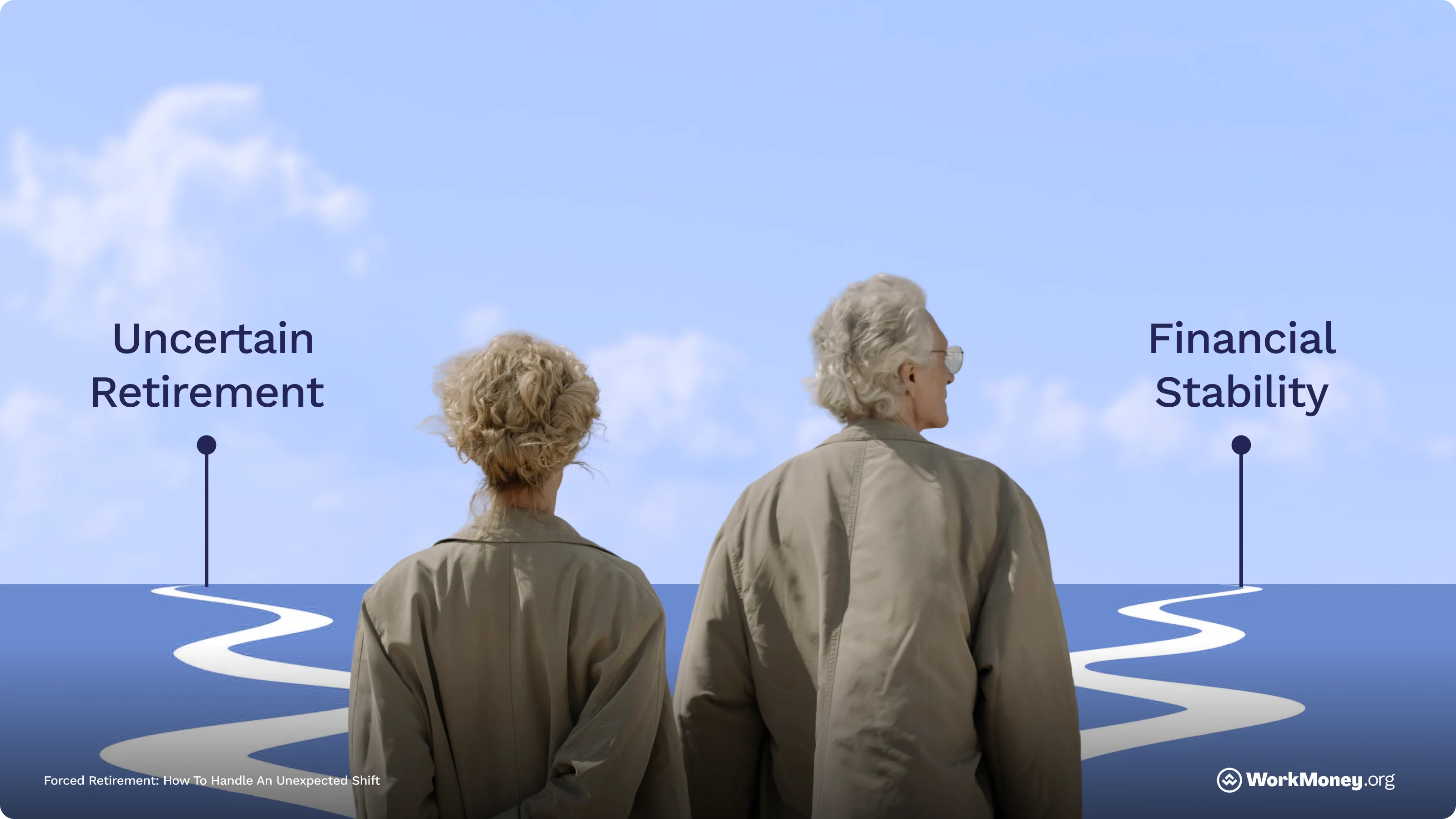
You planned to retire on your own terms. But then someone else chose for you, like a layoff dressed up as retirement, a buyout you felt pushed to take, or a job that quietly disappeared.
If this is where you are, you aren’t alone, and you aren’t a failure. One study followed workers starting at age 50 and found that about 56% were pushed out of a longtime job at least once before they were ready to retire. Forced retirement happens to millions of people, and WorkMoney has your guide to the steps you can take to steady the ground under you.
Is Forced Retirement Legal?
In many cases, forced retirement isn’t legal. The Age Discrimination in Employment Act is a federal law that protects workers 40 and makes it illegal for covered employers to discharge or push out workers because of their age. The law covers employers with 20 or more workers, though there are a couple of exceptions, such as certain senior executive and public-safety roles. But for most people, being pushed out because of your age may be illegal.
There’s a difference between a real choice and a forced one. If your employer made your job so hard that leaving felt like the only option, that can count as being forced out, not quitting.
If you think age played a part, you may need to act fast. In most cases, you have 180 days to file a charge with the Equal Employment Opportunity Commission, and up to 300 days in states with their own age-discrimination laws. Before you sign any severance or early-retirement paperwork, think about having a lawyer or a free legal-aid service look it over. Signing can give up your right to complain later.
What Should I Do First?
You can take a few steps in the first 1-2 weeks to protect yourself.
Closely read your severance. Know how much you’re getting, whether it comes in a lump sum or over time, and how it might affect other benefits.
File for unemployment. Many people who are forced out may qualify, so apply even if you aren’t sure. Your state office can tell you where you stand.
Map your must-pay bills. List the essentials first, such as housing, utilities, food, insurance, and medicine. Once you see the gap between what comes in and what must go out, you can make some concrete decisions.
Freeze your credit. During a stressful time, a credit freeze is a free, quick way to block someone from opening accounts in your name. Federal law makes it free to place and lift at all three credit bureaus.
Handle Your Retirement Savings and Benefits
Know the Rule of 55
Normally, taking money from a retirement account before age 59½ triggers a 10% penalty. But if you left your job in or after the year you turned 55, you can take money from that employer’s 401(k) or 403(b) without facing a penalty. You still owe income tax on what you withdraw, and the rule doesn’t cover money you roll into an IRA, so plan before you pull.
Think Before Claiming Social Security Early
You can start claiming Social Security benefits at 62, but the monthly check will be smaller than it would be if you wait until your full retirement age, which is 67 for anyone born in 1960 or later. It’s a trade-off: some money now, or more money later. Only you can weigh which your situation needs.
Mind the Health-Insurance Gap
Medicare kicks in at age 65, so losing employer coverage before then can be one of the most difficult parts of the transition. But you have a couple of options. COBRA lets you keep your old plan for up to 18 months, but you’re on the hook to pay the full premium yourself. You could get coverage through a spouse’s plan, or you can buy a Marketplace plan, since losing job coverage opens a 60-day window to sign up outside the usual season.
Before making any big changes, consider talking with a financial counselor who can walk you through each option and help you decide what's best for where you are right now.
Bring in Income Again
You may need to replace some income, and you have more paths than one full-time job.
Use your existing skills. Consulting, part-time, or seasonal work in your old field can bring cash in faster than starting fresh somewhere new.
Consider gig or flexible work. It can help your cash flow while you look for something steady, even if it doesn’t replace your old paycheck on its own.
Find free or low-cost retraining. Local workforce boards and community colleges can give you more opportunities without piling on debt.
If you’re experiencing an unsteady income, take advantage of programs that can help. LIHEAP helps with heating and cooling bills, and Lifeline lowers the cost of phone and internet, which can be vital to your job hunt. These are earned benefits, not charity, so anyone who qualifies can take advantage of them.
Protect Your Well-Being, Too
Losing a job you didn’t choose to leave can leave you feeling vulnerable and helpless. Even though it’s unsettling, it’s normal.
As you’re trying to find your new normal, give your days some shape. This could be regular contact with people you like and time spent on something that matters to you. A loose routine can help provide a bit of structure in an otherwise chaotic season.
If You Still Have Your Job, Watch for the Signs
There’s a chance that you haven’t experienced forced retirement, but you can watch for the warning signs. Reorganizations, being left off projects, or steady pressure toward a buyout can all point to potentially big changes.
Before any major changes, build up your savings so a shock doesn’t force you into high-interest debt or penalties. Keep a record of your work and your reviews, learn your company’s policies, and keep your skills and network fresh while you’re still getting a steady paycheck.
The bottom line
Forced retirement can be a difficult, unfair change that many folks didn’t sign up for. But you can navigate this or plan for what might become a possibility. Know your rights, build your savings, protect your health coverage, and guard your peace of mind. Give your lifetime of hard work the retirement it deserves.
About the Author

Dori Zinn
Dori Zinn is a longtime personal finance journalist with nearly 20 years of experience in digital media. Her work has been featured in the New York Times, Wall Street Journal, CBS News, Yahoo, CNN, USA Today, and more. She loves helping folks learn about money. If she isn’t writing, she’s reading, baking, or watching football.