Zombie Debt: How to Dispute Old Collections That Reappear
Don’t let old ghosts haunt your finances. Here’s how to spot, dispute, and bury zombie debt for good
5 min. read
Getting a call or letter about a debt you don’t recognize, or thought you handled years ago, can be unsettling. It’s common to feel anxious, embarrassed, or caught off guard in that moment.
However, being contacted about old debt doesn’t mean you’re in trouble, and it doesn’t automatically mean you have to pay.
This situation is often called zombie debt — old accounts that resurface after years of silence. In many cases, these debts are inaccurate, already paid, outside the legal time limit for collection, or not yours at all. Collectors tend to rely on fear and urgency to push people into quick payments.
This guide walks you through how to tell whether a debt is real, what not to say or do, and the steps you can take to stop the calls and protect yourself — without panic and without paying something you don’t owe.
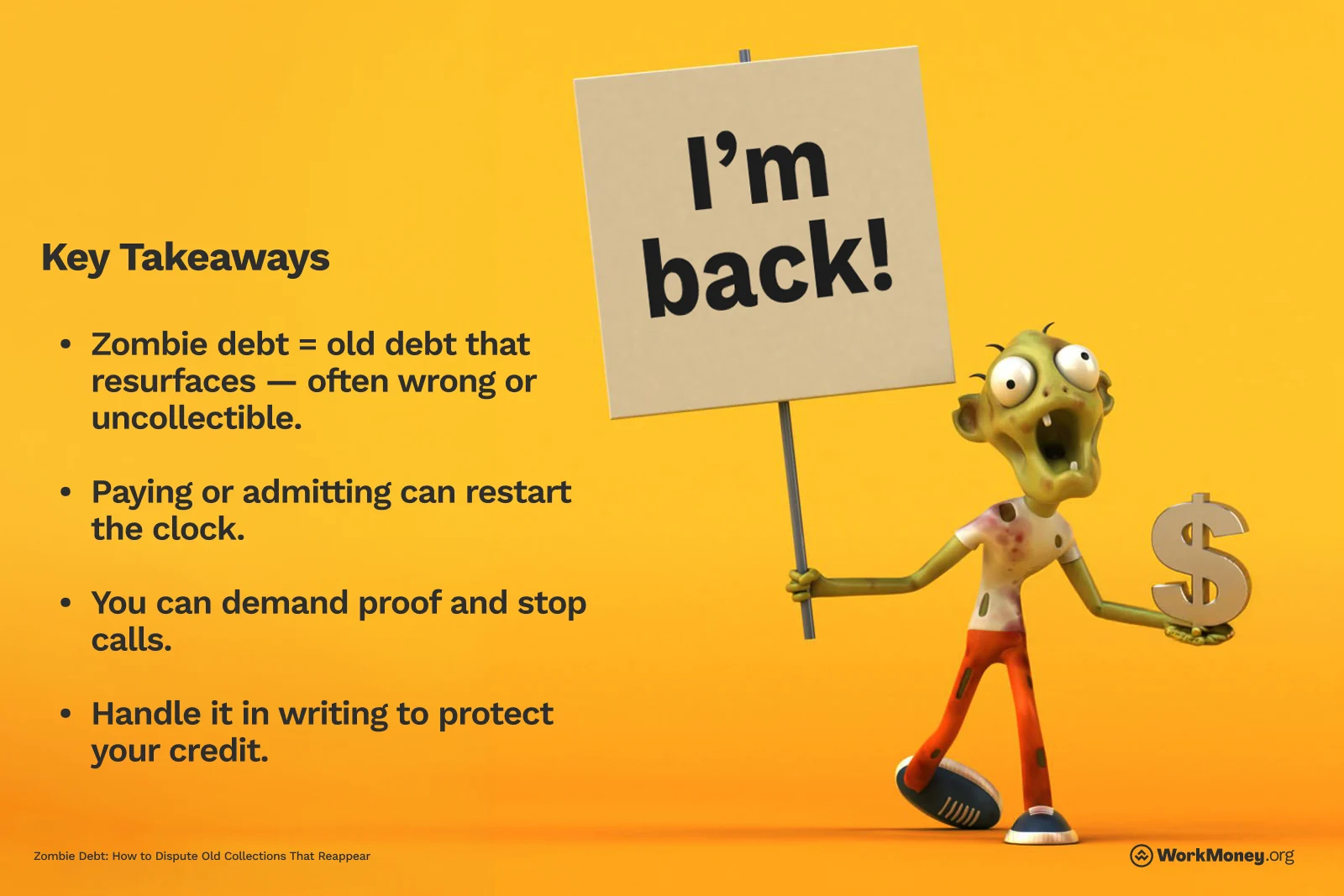
What Zombie Debt Is, and Why It Comes Back
Zombie debt isn’t one specific type of bill. It’s a catch-all term for old or questionable debts that collectors bring up long after you thought they were gone.
Zombie debt usually falls into one of these categories:
Old credit card balances
Medical or utility bills
Debts that were already paid or settled
Time-barred debt that’s past the statute of limitations
Accounts that don’t belong to you
So why does it keep coming back?
Debt buyers often purchase old accounts in bulk, sometimes for pennies on the dollar, and attempt to collect whatever they can. Even if only a small number of people pay out of fear or confusion, the strategy can still be profitable.
Knowing your rights here isn’t about being difficult; it’s financial self-defense.
The Biggest Mistake to Avoid When a Collector Contacts You
Here are two things many people aren’t warned about, and it’s where real financial damage can happen.
1. Don’t restart the clock by accident
Every state has a statute of limitations on debt. That’s the time limit on how long a creditor can sue you to collect.
Once that window closes, the debt is considered time-barred, which means the deadline to sue you for it has passed. Collectors may still try to contact you, but they generally can’t legally sue to force payment.
But here’s the trap: in some states, making even a small payment, or saying the debt is yours, can restart that clock and make the debt legally collectible again.
2. Keep conversations short
You don’t have to explain yourself to a debt collector. And you don’t have to discuss the debt over the phone.
If you’re caught off guard by a call, it’s okay to keep the conversation brief. You can ask basic questions without admitting the debt is yours or agreeing to pay anything.
For example, you can ask:
Who they are
Who they say you owe
How to get the information in writing
You can also say:
“I don’t recognize this debt. Please send validation in writing.”
Federal law gives you the right to ask for debt details in writing and limit how collectors contact you. Handling it in writing gives you time to review the information and protect yourself.
How to Check Whether a Zombie Debt Is Real
Before you take any action, it’s important to confirm whether the debt is real, and if the collector has the right to collect it.
Step 1: Ask for a debt validation letter
Under the Fair Debt Collection Practices Act (FDCPA), you have the right to ask for written proof of a debt. This should include:
The name of the original creditor
The amount claimed
Information showing the collector is authorized to collect
If a collector can’t provide this information, they generally can’t continue collection efforts.
Step 2: Review your credit reports
Check your credit reports from all three bureaus at AnnualCreditReport.com, the only federally authorized free source.
Some zombie debts never appear on credit reports. Others may show errors, outdated balances, or incorrect dates. Reviewing all three reports matters because they don’t always match.
A common worry is: “Will this hurt my credit if I don’t pay?”
Time-barred debts typically only affect your credit report for up to seven years. After that, they generally fall off and shouldn’t continue to impact your credit.
Step 3: Confirm your state’s statute of limitations
Statutes of limitations vary by state and by debt type. Knowing whether a debt is time-barred helps you decide whether responding could help or create risk.
What to Say and Send to Protect Yourself
If a collector is pressuring you right now, these are the exact kinds of statements that can protect you and help you end the call safely. You don’t need legal language. Calm and clear is enough.
If you don’t recognize the debt: “I am requesting written validation of this debt. I do not acknowledge responsibility.”
If the debt appears time-barred: “This debt appears to be outside the statute of limitations. I am disputing it and request no further contact.”
If you want collection calls to stop: “Please cease communication with me except as permitted by law.”
If you send letters, do so by certified mail and keep copies to maintain your own written proof.
A Special Warning for Homeowners: Zombie Mortgages
Zombie debt isn’t always small. Some homeowners could be contacted about old second mortgages, also known as zombie mortgages. This is more likely with loans taken out before the 2008 housing crisis that haven’t been actively serviced or discussed for years.
In some cases, these silent second liens resurface when homeowners refinance, sell, or fall behind on property taxes. Mishandling them can create foreclosure risk.
If you’re contacted about an old mortgage or lien:
Don’t ignore it
Don’t agree to payments right away
Get everything in writing
Seek professional review before responding
Slowing down here can help protect your home.
Other Helpful Resources and Ways to Get Support
Federal consumer protections exist because people earned them, and you have the right to use them. Many people qualify for help without realizing it. Here are some options to consider:
Consumer Financial Protection Bureau (CFPB): Learn your rights, file a complaint if a collector breaks the law, and get plain-language guidance on debt collection rules.
Free, nonprofit credit counseling: If you’re feeling overwhelmed or want help reviewing a collector notice or your credit report, you can get confidential support by visiting GreenPath Financial Wellness here.
Medical debt support: If a zombie debt turns out to be legitimate medical debt, you may have options to reduce or resolve it. Explore Relief options here to see what help may be available.
These resources are designed to help you protect money you’ve already earned — not rush you into decisions.
More on Credit Counseling
in The Joy of Money Book
Carrie Joy, the CEO of WorkMoney, explains when credit counseling can help you reset and rebuild in her new book, The Joy of Money. Learn more
Final thoughts
Zombie debt survives on fear, urgency, and silence. But once you understand how it works, you’re no longer stuck reacting — you’re choosing your next step.
By slowing down, keeping everything in writing, and knowing your rights, you can stop harassment and avoid reviving old problems that should have stayed buried.
At WorkMoney, we focus on giving you clear, practical tools to stand up to systems that count on confusion — so old debts don’t get a second chance to control your life.
Take the next step
Cut past-due debt up to 50%
WorkMoney members save an additional 25% when reducing debt through Relief.
The Joy of Money Debt Calculator
Let’s make your debt a little easier to understand. The first step to kicking it is calculating it.
Manage your debt with GreenPath
Let GreenPath help you consolidate credit card debt and negotiate rates
Was this information helpful?
About the Author

DeShena Woodard
DeShena Woodard is a Financial Freedom Coach, Certified Life Coach, freelance personal finance writer, and podcast host. Her story, advice, and expertise have been featured in prominent outlets such as CNN Underscored, Business Insider, Yahoo Finance, NerdWallet, and more. Through her platform, Extravagantly Broke, she helps women take control of their finances with simple, stress-free strategies—without sacrificing the joy of everyday life. When she’s not writing or coaching, DeShena enjoys traveling, biking, and spending time with her family.