5 Easy DIY Home Repairs That Prevent Expensive Bills Later
Simple maintenance tasks you can do this weekend to avoid costly repairs down the road
3 min. read
Home repairs can be a significant expense for homeowners. The numbers on what homeowners spend each year vary widely, but the standard rule many have adopted is assuming 1% of their home value each year in repairs.
In Q4 2025, the average home price was just over $534,000. For someone who buys at that price, they should ideally be socking away $5,100 each year into a high-yield savings account for repairs.
The good news is that you can prevent many of these repairs with a few simple maintenance tasks — many of which you can do yourself. It can be easy to put off or ignore, but by doing this, you’re protecting both your wallet and your largest investment.
WorkMoney put together a guide for you to ensure your home is taken care of and running efficiently.
Fix Leaky Faucets and Dripping Pipes
Leaky faucets and pipes with occasional drips can not only be annoying, but also potentially cost you big. They can lead to mold, water damage, and even potentially high utility bills. If you’ve noticed any constant dripping, water stains under your sinks, or your water bill has been increasing, you may have an issue.
If you’re a renter, you’re likely in the clear of potential financial issues, but be sure to report this quickly to your landlord to avoid personal liability.
If you’re a homeowner, you can take these steps to potentially fix the issue yourself:
Tighten/replace washers and piping under sinks
Replace older fixtures with more water-efficient ones (If you made improvements before Dec. 31, 2025, you may qualify for the Energy Efficient Home Improvement Credit)
These solutions could potentially be under $100 if you do it yourself, or just a few hundred if you hire a plumber. However, these issues can cost much more over the long term if unaddressed.
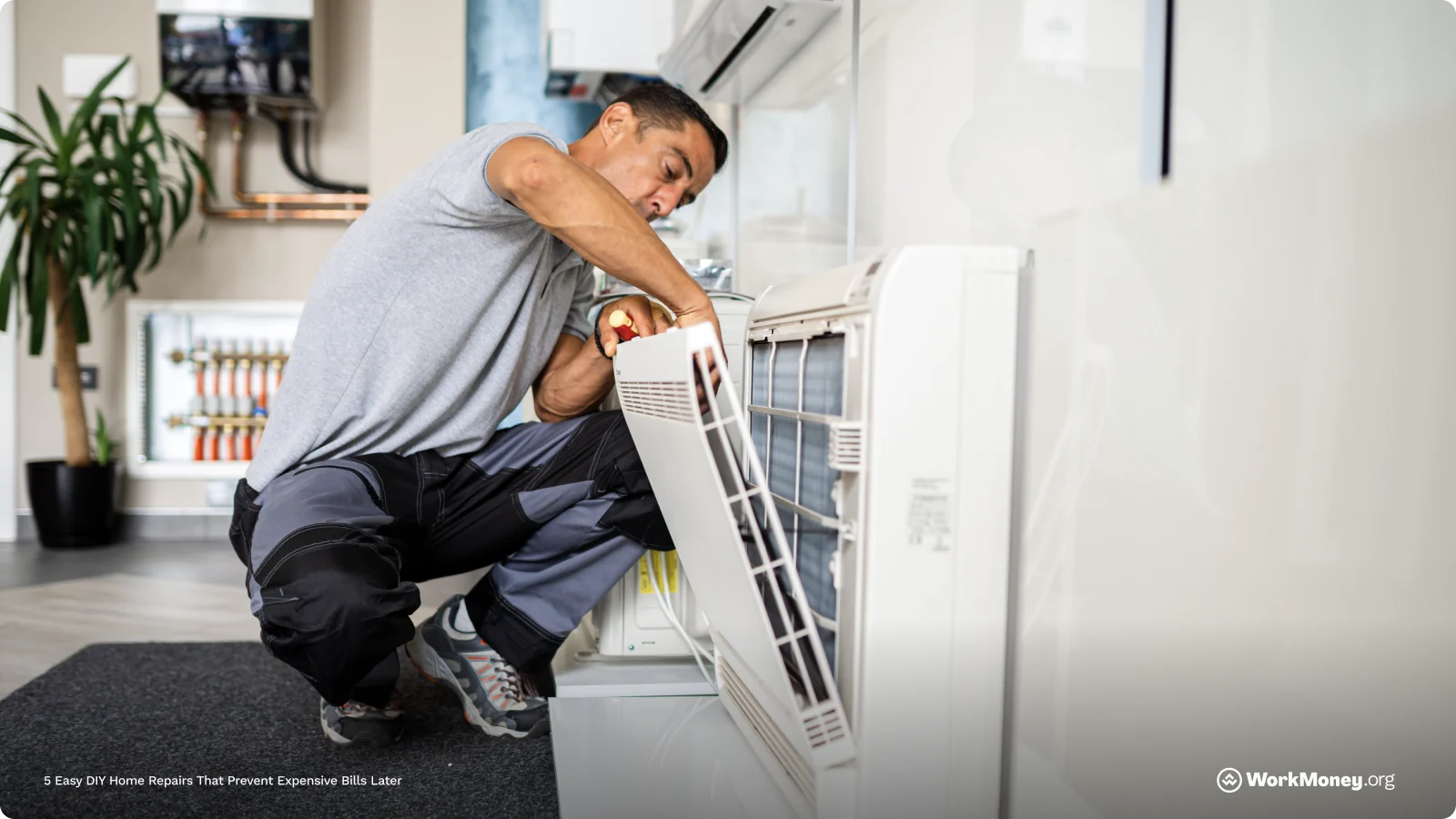
Clean or Replace HVAC Filters
Your HVAC filters are extremely important to your home running efficiently. If your filter isn’t being replaced regularly (every three months is suggested), your system has to work harder to pump clean air. When it works harder, it lessens the life span of the machine and uses more energy simultaneously.
Thankfully, this repair is extremely easy and only takes a few seconds.
Locate your HVAC system inside your home, and find where the filter is. Note the size of the filter; you must use the exact size. You can purchase HVAC filters from any big box retailer, typically costing around ~$20 each. All you need to do is take the old one out, and place the new one in. The old filter can be thrown away.
If you’re a renter, be sure to communicate with your landlord to ensure they are replacing your filter regularly.
If your HVAC system isn’t energy efficient, you may consider replacing your old system with government incentives to help offset the cost.
Seal Windows and Doors
Sealing windows and doors is one of the simplest ways to keep your home comfortable and cut down on energy costs. Gaps around frames let warm air escape in the winter and cool air escape in the summer, which makes your heating and cooling systems work harder—and your bills higher. By sealing your windows, you could save anywhere from 10-20% on your energy bills, according to the U.S. Department of Energy.
You can tackle this yourself by checking weatherstripping and caulking for wear and tear, sealing small cracks, and installing door sweeps to block drafts. Keep an eye out for warning signs like noticeable drafts, condensation on windows, or rooms that never seem to reach the right temperature—these are all clues that air is slipping out.
The cost of sealing up your home is surprisingly low, often just $15–$50 if you do it yourself, compared with hundreds of dollars in wasted energy each year if you ignore the problem. Renters should notify their landlords if gaps are extreme, as they may be responsible for repairs.
If your windows aren’t energy-efficient, programs like HOMES renovation rebates may cover part of the cost for sealing or even upgrading.
Clean Gutters and Downspouts
When gutters are blocked with leaves, dirt, and debris, rainwater can overflow, causing damage to your roof, siding, and even your foundation. A simple DIY approach—wearing gloves, using a sturdy ladder, scooping out debris, and flushing the gutters with water to ensure proper flow—can prevent big problems down the line. Keep an eye out for warning signs like overflowing water during storms, sagging gutters, or water stains on your siding, all of which indicate your gutters aren’t doing their job.
The cost of keeping your gutters clear is low, often just $20–$50 if you do it yourself. But ignoring the problem can be far more expensive, with foundation repairs and water damage costing thousands of dollars.
Renters should report gutter issues promptly, as water damage can affect safety and potentially impact security deposits. Regular maintenance may seem small, but it’s a simple step that protects your home—or rental unit—from costly repairs and long-term headaches.
Inspect Roof and Attic for Leaks
Inspecting your roof and attic for leaks is one of the most important steps in preventing costly home damage. Even a small leak can compromise insulation, damage ceilings, and create electrical hazards. A simple DIY inspection can go a long way: check for missing or damaged shingles, water stains on the underside of your roof, or signs of mold in the attic. Minor issues, like small cracks or loose shingles, can often be patched or sealed before they turn into a bigger problem. Watch for warning signs such as stains on your ceilings, damp insulation, or a sudden increase in energy bills from heat or cool air escaping—these are clear indicators that water is getting in where it shouldn’t.
The cost of a basic DIY roof and attic inspection is modest. However, repairs or full roof replacements can quickly balloon into thousands of dollars. Renters should report any signs of leaks to their landlord immediately, as roof damage can affect habitability.
For homeowners, energy-efficient roofing upgrades may also qualify for tax credits, making it easier to invest in long-term protection. Regular inspections not only safeguard your home but also give you peace of mind knowing you’ve caught small problems before they become disasters.
Final thoughts
Like most things in life, a little effort now can prevent a financial nightmare and larger issues in the future. If you haven’t done maintenance in a while, take an hour this week to go around your home and inspect everything to ensure it’s working properly.
Was this information helpful?
About the Author

Brett Holzhauer
Brett Holzhauer is a Certified Personal Finance Counselor (CPFC) who has reported for outlets like CNBC Select, Forbes Advisor, LendingTree, UpgradedPoints, MoneyGeek and more throughout his career. He is an alum of the Walter Cronkite School of Journalism at Arizona State. When he is not reporting, Brett is likely watching college football or traveling.