Is It a Good Idea to Unfreeze Credit for Big Purchases?
Learn when and how to lift a credit freeze safely to manage your major financial milestones
5 min. read
Introduction
If you’re preparing to buy a car, apply for a mortgage, or finance another big purchase, a credit freeze can feel like both a blessing and a barrier—especially when timing matters.
You may be wondering: Is it actually a good idea to unfreeze my credit just to make one purchase?
The short answer is yes. Unfreezing your credit can be a smart move for a big purchase, as long as it’s done temporarily, intentionally, and with a plan in place. You don’t have to give up the protection a credit freeze provides to move forward.
At WorkMoney, we take a safety-first approach to credit. We’re not here to push more borrowing—we’re here to help you protect what you’ve already earned, especially when big financial decisions are on the line.
What a Credit Freeze Really Does (and Why It’s Worth Keeping)
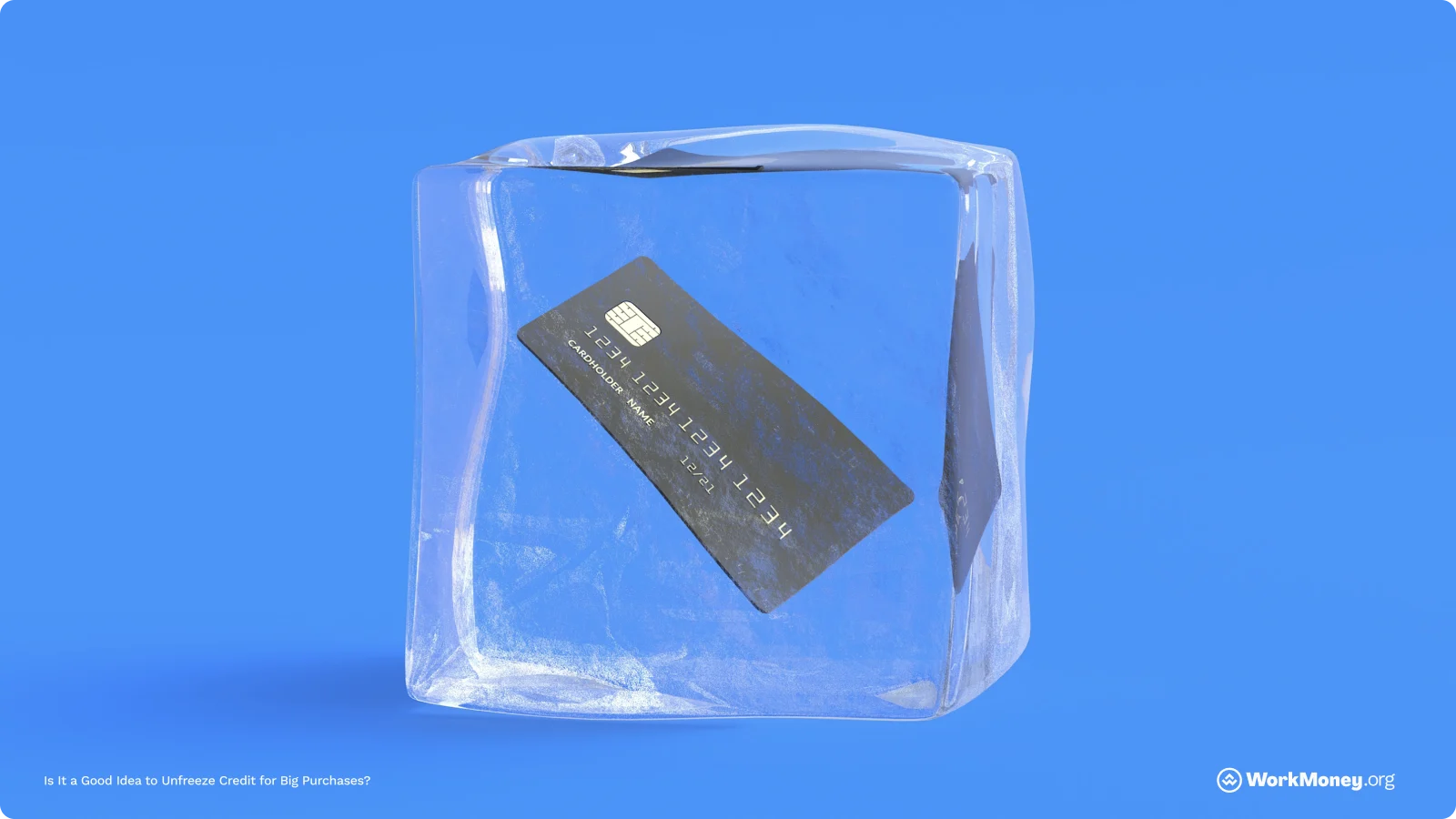
A credit freeze, also called a security freeze, restricts access to your credit report so new accounts can’t be opened in your name without your permission.
That matters because identity thieves often try to open new accounts using stolen information. A credit freeze makes it that much harder.
Here’s what many people may not realize:
Credit freezes are free by law
You can lift or pause them whenever you need to
According to the Federal Trade Commission (FTC), credit freezes are an effective way to prevent new credit accounts from being opened in your name.
It may help to think of a credit freeze as ongoing protection you can adjust when needed—instead of a hassle.
When It Makes Sense to Unfreeze Your Credit
You usually only need to unfreeze your credit when a lender needs to check your report. Common examples include:
Buying or leasing a car
Applying for a mortgage or refinancing
Opening a new credit card or
Taking out a loan
Renting an apartment
Unfreezing your credit for these moments isn’t risky by itself. The real risk is leaving your credit unprotected longer than necessary.
Temporary Thaw vs. Permanent Unfreeze
You have more control over freezing and unfreezing your credit than you may realize.
A temporary thaw lets you open access for a specific lender or for a set period of time. Once that window ends, your credit automatically refreezes—no reminder required.
A permanent unfreeze removes the freeze entirely until you turn it back on yourself.
For most big purchases, a temporary thaw is often the easier choice. Once it ends, your credit refreezes automatically, so your protection stays in place without extra steps.
How Fast Can You Unfreeze Your Credit?
If timing is a concern, here’s the good news.
By law, credit bureaus must process:
Freeze or unfreeze requests by mail within three business days
You can think of near-instant access as a “one-hour rule,” which is what makes credit freezes easier to manage today than they likely were in the past.
A Smarter Way to Unfreeze (and Refreeze)
One step that often gets overlooked: you don’t always need to unfreeze all three credit bureaus.
Before applying, ask the lender: “Which credit bureau do you pull from?”
Many lenders only check one. If you know which one, you can thaw just that report and leave the others frozen.
This approach:
Limits unnecessary exposure
Saves time
Reduces the chance of forgetting to refreeze later
Once your application is complete, log back into the credit bureau’s site to confirm your freeze is active again. Don’t assume it happened automatically—verification is an important final step.
A Simple Big-Purchase Credit Checklist
Before applying, take a moment to check the basics:
Ask which credit bureau the lender uses
Ask how long the lender will need access to your credit report
Choose a temporary thaw instead of a permanent unfreeze
Set thaw dates that cover pre-approval through final paperwork
Confirm your credit has refrozen once the process is complete
These small steps can prevent delays, denials, and lingering risk.
Applying With a Partner or Spouse? Plan Ahead
If you’re applying jointly—for example, with a spouse—both credit reports usually need to be accessible.
That means:
Both of you may need to thaw your credit
Make sure both thaws are active at the same time
Talking this through ahead of time can help you avoid last-minute surprises or a delayed application due to a frozen credit file.
Other Resources and Ways to Save
Managing a credit freeze can be simple, thanks to protections that already exist and tools that can help during a big financial moment.
Your Credit Freeze Rights
The FTC and CFPB outline your rights, including how quickly freezes must be lifted and reinstated, and how to place them for free.
Helpful resources include:
FTC credit freeze guidance: https://www.identitytheft.gov
CFPB credit freeze FAQs: https://www.consumerfinance.gov
These aren’t special programs or handouts. They’re rights you’ve already earned, even if no one ever told you about them.
Additional Support During Big Credit Decisions
Unfreezing your credit is just one piece of a larger financial moment. Big purchases often bring new monthly payments, tighter budgets, or added pressure on existing debt.
This is where outside support can be helpful.
GreenPath Financial Wellness offers free, confidential counseling to help you understand how a new loan fits into your overall financial plan. If you want guidance before or during a big credit decision, you can explore free support options here.
Once new credit is in place, Relief can help people explore ways to reduce high-interest credit card debt and free up cash flow. If you’re carrying credit card debt and want to see what options might be available, you can learn more here.
Final thoughts
Unfreezing your credit doesn’t mean giving up control, it means using it thoughtfully. A credit freeze remains one of the strongest tools you have to protect your financial life, and temporarily lifting it for a specific purpose is a sign of planning—not risk-taking.
With clear timing, the right questions, and a plan to refreeze, you can move forward with confidence, knowing you’re protecting what you’ve worked hard to build. At WorkMoney, our goal is to help you protect your finances so you can make big financial decisions without unnecessary risk or stress.
Take the next step
Does Freezing Credit Hurt Your Score? Mythbusting the Freeze
Learn why a credit freeze protects your identity without lowering your credit score
Was this information helpful?
About the Author

DeShena Woodard
DeShena Woodard is a Financial Freedom Coach, Certified Life Coach, freelance personal finance writer, and podcast host. Her story, advice, and expertise have been featured in prominent outlets such as CNN Underscored, Business Insider, Yahoo Finance, NerdWallet, and more. Through her platform, Extravagantly Broke, she helps women take control of their finances with simple, stress-free strategies—without sacrificing the joy of everyday life. When she’s not writing or coaching, DeShena enjoys traveling, biking, and spending time with her family.