Credit Freeze vs. Credit Lock: Which Is Free and Which Is Better?
Protect your identity without paying fees by knowing the difference
By Dori Zinn
3 min. read
Keeping your data safe is no easy feat. According to the Identity Theft Resource Center (ITRC), there were 1.35 billion victim notices from data breaches, with financial services as the top industry with the most compromises.
Freezing your credit and locking your credit can both help you keep your credit and identity safe. But a credit freeze and a credit lock are not the same thing. Which one is safer? Which one is free? WorkMoney has your guide showing you how to figure out the difference and which one is right for you.
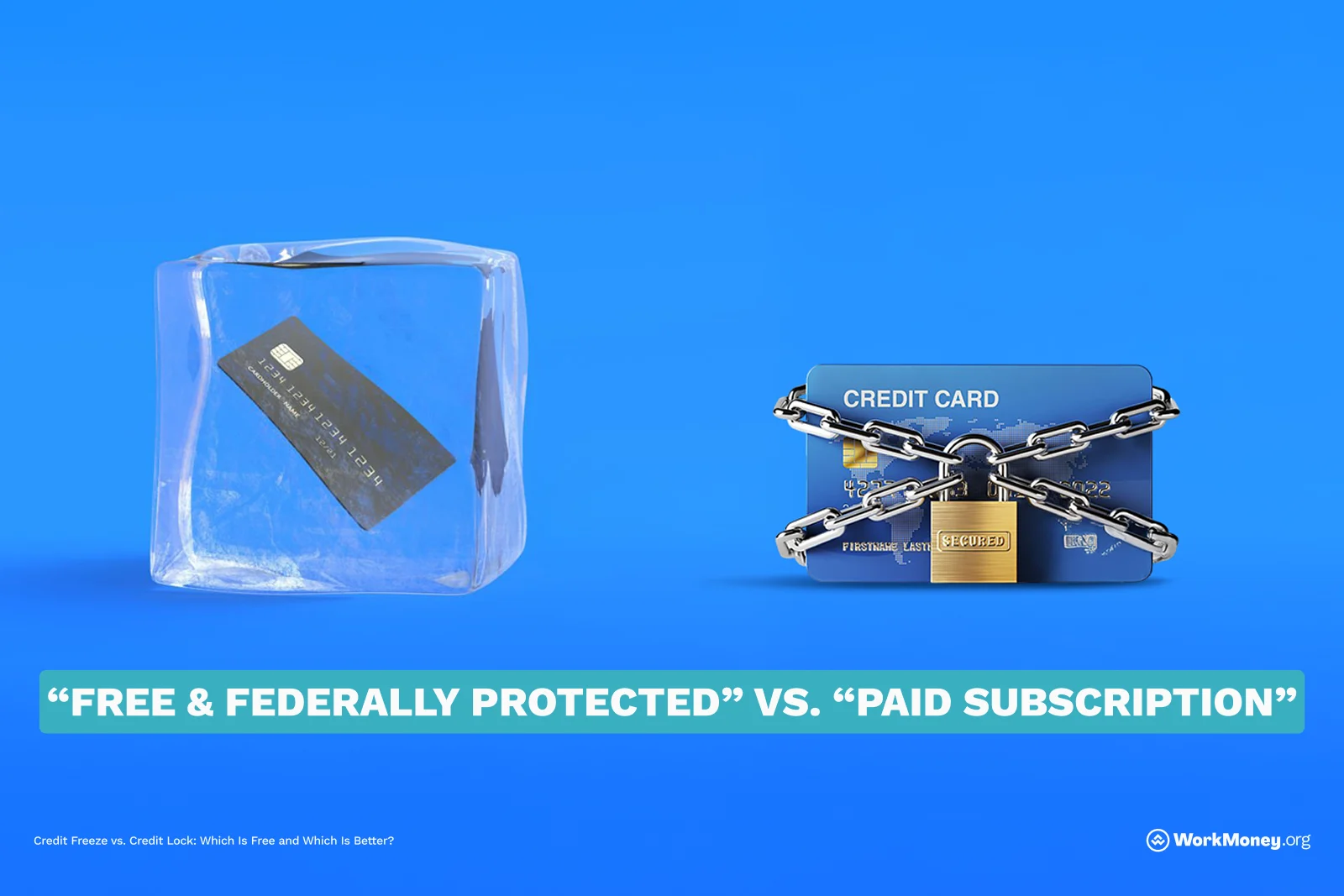
What Is A Credit Freeze?
A credit freeze stops someone from accessing your credit report. When you freeze your credit report, no one can access it — that includes creditors, lenders, and those you would normally approve to give access to your report.
Most lenders check your credit report to view your credit score and history any time you open a new line of credit or take out a loan. A frozen credit report stops fraudsters from opening an account in your name. If potential lenders can’t access your credit, it tells them that the person opening an account on your behalf isn’t you and doesn’t know your account is frozen.
Current creditors and lenders still have access to view your credit report, as well as government agents and debt collectors. But potential creditors won’t have access to it.
How To Freeze Your Credit Report
Since there is no way to universally freeze your credit, you’ll need to contact each of the three major credit bureaus: Experian, Equifax, and TransUnion. You’ll need to open an account and add a credit report freeze at each bureau. Once you put in your request, bureaus are required to freeze your report within a day.
Credit freezes don’t impact your credit score, and this federally mandated free tool allows you to freeze your report at any time. If you want to open an account that will check your credit score, you can unfreeze your report by logging into each account.
What Is A Credit Lock?
A credit lock also stops folks from accessing your credit report, but it’s usually an extra feature offered by credit bureaus and typically requires a fee to activate. For instance, Experian offers CreditLock, which locks your Experian credit report with a paid subscription. It doesn’t extend to other credit bureaus.
Because it’s a service at each bureau, you’ll need to pay an ongoing subscription fee at each bureau you want to lock your credit at. If you cancel your subscription, your credit lock will also end.
Most services let you monitor your credit lock in a mobile app, allowing you to lock and unlock as you see fit, just as you can freeze and unfreeze a credit report. Some subscriptions may include additional features, but the bureau determines which you get.
Credit Freeze Vs. Credit Lock: What’s The Difference?
Since credit freezes and credit locks have so many similarities, it’s easy to get them confused. Here’s how they stand out.
Credit freeze | Credit lock |
|---|---|
Prevents others from accessing your credit report | Prevents others from accessing your credit report, but sometimes with additional features |
Free | Usually an ongoing fee for services |
Usually activates right away, but within a day when frozen online | Activates right away |
Remains active until unfrozen | Remains active until unlocked or service is cancelled |
Federally mandated and available through all three major credit bureaus | Available at major credit bureaus but not federally regulated |
Doesn’t impact credit score | Doesn’t impact credit score |
If you’re struggling with managing your credit, you may want to get professional help. Greenpath is a national nonprofit helping folks consolidate and eliminate credit card debt. With trusted guidance and support, you can get a hold of your debt, bringing you closer to financial freedom.
Credit Freeze Vs. Credit Lock: Which One Is Right For You?
Both credit freezes and credit locks take action to stop potential creditors and lenders from accessing your credit report. The better option is the one that works best for you, which isn’t the same for everyone.
If you want to keep your information safe from scammers and fraudsters trying to steal your identity. For others, credit locks add additional alerts and protections that make them feel safer.
If you want to keep your information safe from scammers and fraudsters trying to steal your identity, you can freeze or lock your credit.
You may want to freeze your credit if:
You’ve recently experienced identity theft or fraud and want to take extra precautions to protect yourself.
You don’t plan on opening a credit card, line of credit, or loan anytime soon.
You don’t want to pay for credit monitoring or potential fraud threats.
You like that your credit freeze is federally regulated.
You want to take preventive measures for your minor child or a vulnerable older adult.
You want the freedom to freeze and unfreeze your account as you see fit.
You should skip freezing your credit if you plan on applying for credit or a loan soon and need lenders to have access to your credit report.
You may want to lock your credit if:
You want to freeze your account and also take advantage of additional protections offered by the credit bureau, like access to regular credit scores and potential fraud alerts.
You don’t mind paying for additional services, even though services and costs vary by credit bureau.
You should skip locking your credit if you plan to open a line of credit or take out a loan soon, and if creditors need access to your credit report. You may want to skip a credit lock if a credit freeze covers all your security needs.
Final thoughts
Taking preventative measures to stop scammers from stealing your identity is a great way to avoid falling victim to identity theft and fraud. While you can get a credit freeze for free at each of the three major credit bureaus, you can get additional alerts and protections with a credit lock.
These protections vary by credit bureau and usually come with a fee. You don’t have to sign up for these services if you want to freeze your credit, so don’t feel pressured into buying something that doesn’t give you the service you need.
Take the next step
Child Identity Theft Protection: Why You Should Freeze Your Kid's Credit
Secure your child's financial future by taking control of their credit today
Was this information helpful?
About the Author

Dori Zinn
Dori Zinn is a longtime personal finance journalist with nearly 20 years of experience in digital media. Her work has been featured in the New York Times, Wall Street Journal, CBS News, Yahoo, CNN, USA Today, and more. She loves helping folks learn about money. If she isn’t writing, she’s reading, baking, or watching football.