Child Identity Theft Protection: Why You Should Freeze Your Kid's Credit
Secure your child's financial future by taking control of their credit today
5 min. read
If you’re a parent, your child’s personal information gets shared in more places than you may realize. This can include schools, doctors’ offices, childcare forms, sports registrations, and online portals.
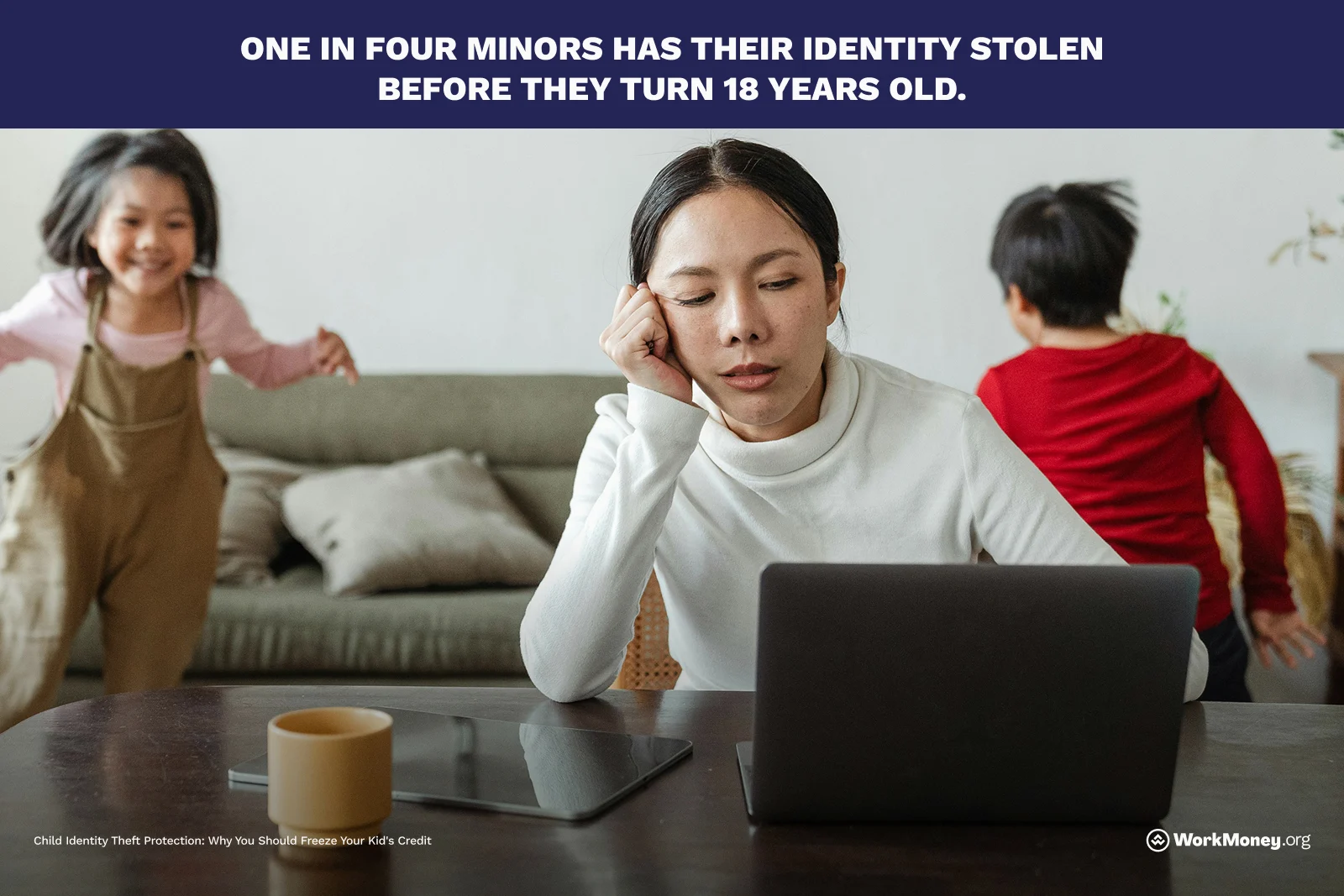
While most parents focus on physical and online safety, there’s another risk that’s often overlooked: identity theft. According to TransUnion,children are a popular target for identity thieves because they often lack credit monitoring, which means the fraud can go unnoticed for years. And this isn’t a niche issue either, with one in four minors having their identities stolen before they turn 18 years old.
The good news is that placing a credit freeze on your child’s credit is a free, powerful step you can take right now to protect them. In this guide, you’ll learn how to freeze your child’s credit, what you’ll need to do it, and how to lift the freeze later. Plus, a few other smart moves to protect your child’s identity long-term.
What Is Child Identity Theft?
Child identity theft happens when someone uses your child’s personal information, such as their name, Social Security number, or date of birth, to open accounts or apply for services.
That could include:
Credit cards
Loans
Utility accounts
Phone plans
Other financial accounts
This can be a huge headache to fix. It may take phone calls, letters, forms, and follow-ups with multiple companies and credit bureaus—often while you’re already juggling work, parenting, and everything else.
And because most kids aren’t using credit yet, identity theft can stay hidden for years—until they try to rent an apartment, apply for student loans, or open their first credit card.
Signs Your Child’s Identity May Have Been Stolen
Here are some red flags to watch for:
Suspicious mail, bills, or collection calls in your child’s name
Benefits get denied because the child already has a record on file
Being told your child has a credit history (when they shouldn’t)
If you notice any of these, don’t panic—but don’t ignore it, either. The sooner you take action, the better.
Why Freezing Your Child’s Credit Is One of the Best Protections
A credit freeze restricts access to a credit report. That matters because most lenders won’t open a new credit account without checking someone’s credit first. This makes it much harder for criminals to open new accounts using your child’s Social Security number.
Freeze vs. monitoring (quick comparison)
Some parents look into paid identity protection or credit monitoring services and assume that’s the best solution. Monitoring can help, but it’s important to understand the difference:
Credit freeze = prevention (blocks most new accounts from being opened)
Monitoring = alerts (tells you after something happens)
If you can only do one, start with the free credit freeze, which will remain in place until you lift it.
Quick Prep Checklist (What To Gather First)
Freezing your child’s credit isn’t difficult, but it does require some paperwork on your end. The biggest time-saver is having documents ready before you start.
You may need:
Your child’s birth certificate
Your child’s Social Security card (or official document showing the SSN)
Your government-issued photo ID
Proof of address (utility bill, bank statement, etc.)
Proof of guardianship (if applicable)
Simple tip: Create a folder on your computer (or Google Drive) called “Kid Credit Freeze” and store copies of your documents, confirmation letters, and reference numbers there.
How To Freeze Your Child’s Credit (Step-By-Step)
To place a freeze, you typically need to contact all three major credit bureaus:
Equifax
Experian
TransUnion
For a child under age 16, this is known as a protected consumer freeze.
Step 1: Check if your child has a credit file
Many children won’t have one.
During the freeze process, the bureaus can confirm whether a file exists. If a credit file exists for your child and you didn’t create one intentionally (for example, by adding them as an authorized user), treat it as a warning sign and consider taking identity theft recovery steps.
Step 2: Request the freeze at each bureau
Each credit bureau has its own process. For minor children, the request often involves submitting documentation.
Helpful bureau resources:
Experian: Requesting a Security Freeze for a Minor Child’s Credit Report
TransUnion: Freeze Credit for a Minor FAQ
TransUnion also notes that, in some cases, a bureau may create a credit file for a child and then freeze it when a freeze request is made.
Step 3: Save your confirmations
This step is easy to skip, but it matters.
After you freeze your child’s credit, save:
Confirmation letters or emails
Reference numbers
PINs (if provided)
You’ll need these later if you lift the freeze.
How To Lift (“Thaw”) Your Child’s Credit Later
Once your child’s credit is frozen, it stays frozen until someone lifts it.
For most minors, the protected consumer freeze remains in place until a parent or guardian removes it. In many cases, the child can request removal once they’re 16, or age 14 with Experian.
You may need to lift the freeze if your child needs to apply for student loans, rent an apartment, or open their first credit card.
How to lift the freeze
The process depends on the credit bureau. Even if you start online, you’ll still need documentation to verify identity and guardianship for minors.
Here’s the typical process:
Decide whether you need to temporarily lift (thaw) the freeze or remove it completely
Go to the credit bureau’s freeze page and follow their instructions
Submit the required documents (this often means mailing paperwork, even if the request starts online)
Save any confirmation details you receive, in case you need to lift it again later
This may sound like a hassle, but it’s worth it to keep your child’s identity protected.
If Your Child’s Identity Has Already Been Stolen: What To Do
If you suspect fraud has already happened, your priorities are:
Stop it from getting worse
Document what happened
Start recovery steps
Here’s the simplest action plan:
Freeze your child’s credit
Report identity theft and follow the recovery steps through IdentityTheft.gov
Keep a log of every call, letter, and contact
This process can be stressful, but it’s manageable—and taking action quickly can prevent the problem from growing.
The School and Doctor Audit (A Simple Script)
Most identity theft advice focuses on online threats, but kids’ personal data is also collected in everyday places.
Schools, childcare centers, sports organizations, and medical offices often store sensitive information. It’s okay to ask how your child’s information is handled.
Here’s a simple script you can use:
“Do you collect Social Security numbers for my child?”
“Is it required? If not, can we leave it blank?”
“Who has access to this information?”
“How is it stored and protected?”
“How long do you keep it?”
“How do you dispose of old records?”
You’re not being overprotective. You’re being responsible.
Quick Digital Habits That Protect Your Child’s Identity
Another gap most parents don’t think about: identity thieves may piece together information from publicly shared online content.
You don’t need to stop posting family memories. But it’s smart to avoid sharing identifying details that can be combined.
A few easy habits:
Don’t post photos of forms that show personal details (report cards, school documents, medical paperwork)
Avoid posting your child’s full name and date of birth together
Be cautious about sharing the school name, the teacher name, or location details
Use privacy settings and keep your audience limited
Small choices like these can reduce your risk long-term.
Other Resources (Free help + Long-term planning)
A credit freeze does a lot on its own—but if you want more support, there are free government resources and a few planning tools that can help families stay protected.
Free government resources
FTC guide: How to protect your child from identity theft
IdentityTheft.gov: Report identity theft and get a step-by-step recovery plan
FTC credit freeze guide: How freezes and fraud alerts work
One important reminder: these consumer protections exist for a reason. When the government provides tools like IdentityTheft.gov and credit freeze rights, they’re not “extra help.” They’re protections families have a right to use.
Final Thoughts
Freezing your child’s credit is one of those rare protection moves that checks every box: it’s free, effective, and can prevent a future mess no family wants to deal with. If you’ve been meaning to “get around to it,” this is your sign.
Freeze your child’s credit, save your confirmation information, and give yourself the peace of mind of knowing you’ve protected your child’s financial future. At WorkMoney, we believe protecting your family shouldn’t require buying another subscription—just the right information and a few smart moves.
Was this information helpful?
About the Author

DeShena Woodard
DeShena Woodard is a Financial Freedom Coach, Certified Life Coach, freelance personal finance writer, and podcast host. Her story, advice, and expertise have been featured in prominent outlets such as CNN Underscored, Business Insider, Yahoo Finance, NerdWallet, and more. Through her platform, Extravagantly Broke, she helps women take control of their finances with simple, stress-free strategies—without sacrificing the joy of everyday life. When she’s not writing or coaching, DeShena enjoys traveling, biking, and spending time with her family.