Renting Is Not "Throwing Money Away": The Value of Flexibility
Why renting is a smart financial strategy for flexibility, freedom, and long term peace of mind
By Dori Zinn
4 min. read
Renting vs. buying is a regular, ongoing debate. Buying a home has long been perceived as the American dream. In reality, it puts many Americans in a high-pressure financial position.
According to the Federal Reserve, income is the main reason more adults rent rather than own a home. More than one-third of adults earning $50,000 or less own their home, while 85% of adults earning $100,000 or more are homeowners.
But buying a home isn’t always the best investment for everyone. Renting gives you flexibility and a predictable monthly budget, with fewer unexpected expenses. WorkMoney has your guide to why renting might be better for you.
The Hidden Costs of Home Ownership
The average sale price of homes sold in October 2025 was $498,000, according to the latest data available from the U.S. Census and the Department of Housing and Urban Development. But the cost of buying a home is more than just the sales price.
When you take out a home loan, you’ll make monthly payments back to your lender. These payments include the principal amount you borrowed, broken down by the number of years of the loan. Your lender also sets the interest rate. But there are also a few other costs that come with that payment, including:
Property taxes
Homeowners insurance
Private mortgage insurance
Homeowners association (HOA) fees
These fees can change your monthly payment, going up (or down) based on the rates set by your local government, insurance company, and homeowners association.
While you might expect to pay your principal and interest rate every month, extra fees could balloon your payments beyond affordability. Let’s say you buy a $450,000 home with a 5% down payment, a 6% interest rate, and a 30-year term. Here’s what your monthly payment could look like:
Principal and Interest | $2,563 |
Property tax | $281 |
Homeowners insurance | $469 |
Private mortgage insurance | $221 |
Homeowners association fees | $94 |
Total monthly payment: | $3,628 |
Aside from your principal balance and interest, you’re on the hook for more than $1,000 in taxes and fees. Keep in mind, these costs vary widely based on where you live.
These costs don’t include regular maintenance and repairs on your home, which could run you up to $22,000 per year, according to HomeGuide.
The Perks of Renting
Owning a home might still be the American dream for many, but renting offers several advantages.
Freedom and Flexibility
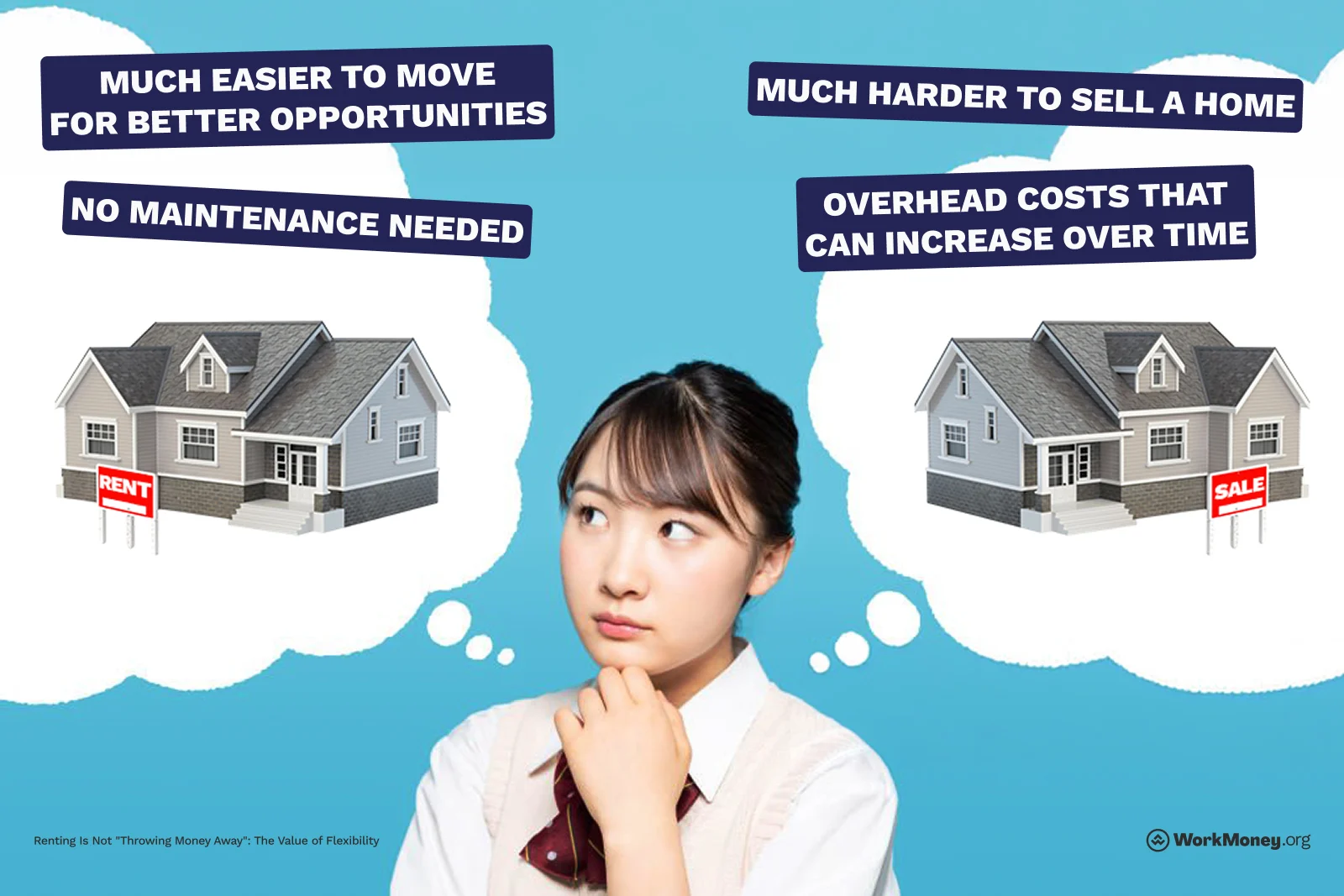
If you don’t want to be tied down to one spot or location, you don’t need to buy a home. What if you find a great opportunity in another state? It’s much harder to sell a house than it is to end a lease.
Rental terms allow you the chance to move if you aren’t happy with where you are. Whether rents go up or you have a change of heart, you can leave that place behind once your terms are up.
Budget Stability
Whether you’re on a fixed income or you don’t have much room in your budget for other expenses, renting provides a lot of stability, especially for month-to-month costs. Renting means you don’t have to pay for property taxes, homeowners' insurance, or unexpected maintenance and repairs for your place.
Fewer Upfront Fees
The upfront cost of buying a home includes a down payment and closing costs. Down payments vary — 20% is ideal, but many folks put down 3% to 5%. Closing costs are usually around 2% to 5% of your home loan amount.
Renters don’t have to shell out these high fees. While some places require a security deposit as well as the first and last month’s payments, that’s not the case for every property. Sometimes you can negotiate those costs, depending on where you live, your credit history, and who owns the property.
Lower Monthly Costs
According to Redfin, the average rent price is $1,785 a month right now. Bankrate says on average, renting is cheaper in all 50 states, with average monthly mortgage payments costing 38% more than the average rent. Rent and home prices vary widely by location, size, and many other factors.
Potential Savings and Investing Opportunities
Paying less for your home means you have more money to put towards other needs, whether that’s in the immediate future or long-term. For instance, if you know you want to build up your emergency fund or save money for a car, you might have an easier time as a renter compared to someone paying more as a homeowner.
You’ll also have a chance to earn more through investments. The average home appreciation is 3% to 5% a year, according to Redfin. The average return on the S&P 500 is around 10%. Putting your monthly savings into investments could pay off in the long run.
Built-in Amenities
Homeowners who want a pool or gym need to build out those amenities or pay extra to use a pool or gym, while renters usually get them as part of a package. Ditching the additional cost for these amenities gives you access and affordability that many homeowners don’t get.
Final thoughts
Renting gets a bad reputation, as if it’s something that’s a temporary situation until you’re ready to buy a home. But renting can be a cost-effective strategy regardless of income, family status, or career path.
While home ownership is one way to invest in your future, it isn’t the only way. You don’t have to buy a home to feel financially secure. Instead, take the savings you earn by not buying a house and put it toward the future you want through saving and investing. Rather than feel like you’re failing by not buying a home by a certain age, remember you’re doing your best with what you have, and you have other options to build wealth that don’t include buying a home.
Take the next step
Turn rent payments into credit boosters
Get over a 50% exclusive discount on Esusu rent reporting
Was this information helpful?
About the Author

Dori Zinn
Dori Zinn is a longtime personal finance journalist with nearly 20 years of experience in digital media. Her work has been featured in the New York Times, Wall Street Journal, CBS News, Yahoo, CNN, USA Today, and more. She loves helping folks learn about money. If she isn’t writing, she’s reading, baking, or watching football.