Emergency Funds for Homeowners: Why You Need a Bigger Cushion
Why standard savings goals fall short for homeowners and how a Life Happens Fund protects your home
By Dori Zinn
3 min. read
While homeownership can offer a great sense of security, it also brings costly surprises. According to the Census, the homeownership rate is nearly 66%. But homeowner savings aren’t keeping up with the same rate. Having a financial cushion could be the difference-maker between affording major home emergencies and borrowing money and building up debt. WorkMoney details why homeowners need larger emergency funds and how to bulk up savings.
What Is an Emergency Fund? You Need More Than One
Savings accounts don’t have to be all-encompassing. Rather than keep all your savings in one main account, separate accounts for different purposes.
Emergency fund
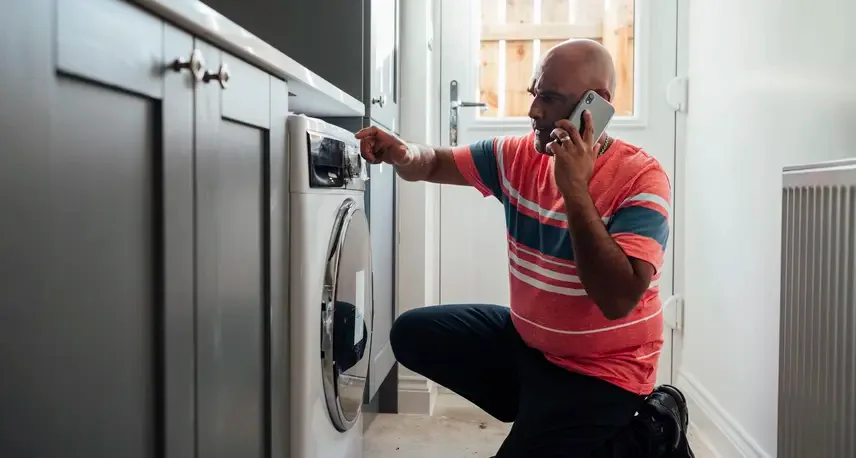
An emergency fund is a cash reserve specifically earmarked for financial emergencies or unexpected expenses. For homeowners, this could be a burst pipe, blown A/C unit, or leaky roof. But it could also cover other non-home costs, such as an ER visit, car repairs, or regular expenses due to a job loss.
How much you keep in your emergency fund depends on your monthly expenses. The general rule of thumb is three to six months worth of living expenses.
Rainy day fund
A rainy day fund is for smaller, unexpected expenses that aren’t part of your regular monthly bills. Think regular car maintenance, upgrading phones or computers, or replacing appliances.
Rainy day funds aren’t necessarily emergencies, but aren’t typically covered in your monthly budget. These are smaller than emergency funds, ranging from $500 to $5,000.
Life happens fund
Emergency funds can cover sudden financial needs, but a “life happens” fund covers expected — but expensive — life transitions. These can be job transitions, preparing for a family addition, finally replacing a major home appliance that’s been acting up, or renovating part of your home that’s in dire need of an upgrade.
This amount varies a lot depending on your expectations, both in the short- and long-term. It may not be as prominent as other types of savings, but contributing to it helps your future self when life happens.
More on Emergency Funds
in The Joy of Money Book
Carrie Joy, the CEO of WorkMoney, highlights why an emergency fund is the foundation of financial stability in her new book, The Joy of Money. Learn more

Why Homeowners Need More Savings Than They Think
Saving can feel like a burden, especially if you’re already living paycheck to paycheck. But homeowners could face large, lump-sum expenses that can be detrimental to their finances. You’ll need to save even more than you already think you need to cover all of the “what if” possibilities, like:
Roof replacements: Upwards of $16,000
HVAC replacement: Around $14,100
Termite damage repair: $15,000 or more
Electrical panel replacement: Nearly $2,200
Water heater replacement: $1,800 for tanks; up to $3,500 for tankless systems
Even though these are estimates, actual prices depend on where you live, the type of repair, and the cost of materials.
You should plan for the possibility of needing to cover several major expenses at once. Say you need to replace your roof and electrical panel, which can cost roughly $15,000. Or you have to replace your water heater while you’re between jobs. Having a bigger cushion for added insurance saves you from borrowing a loan for projects or putting off repairs and paying even more down the road.
How Much Should Homeowners Actually Save?
There are a few general rules you can follow to have the right amount of money set aside for unexpected home expenses.
The 1% to 3% (or 4%) rule
For this rule, you’ll set aside 1% of your home’s value for expected maintenance and repairs. If your home is valued at $200,000, you’ll set aside at least $2,000. If your home is valued at $450,000, you’ll set aside $4,500.
Consider saving up to 3% or 4%, which might give you more cushion as supply and labor costs rise. So if your home is valued at $200,000, you should save $6,000 or $8,000. For a $450,000 home, you should have close to $13,500 or $18,000.
Home value changes regularly, so adjust your savings percentage at least annually.
Square foot rule
This rule says you should save $1 per square foot of your home. So a 1,500 sq. ft. home means you’d save $1,500 for maintenance and repairs. For a 2,000 sq. ft. home, you’ll need at least $2,000.
While this works based on size, the rule doesn’t consider labor and materials. If you have $2,000 saved but need a roof replacement, you’re going to pay four times your savings. Instead, use it as a starting point, not an end goal.
How to Build Your Emergency Fund
Regardless of where you are in the savings process, you can start building up your homeowners emergency fund right now in deliberate, incremental steps.
1. Open a savings account
You can open as many savings accounts as you need to meet your goals, but you should be able to access your money when you need it. Remember, it could be an emergency. Explore options like:
Traditional savings account: Easy to open, but earnings are very low.
High-yield savings account (HYSA): High-yield means you earn much more in interest compared to traditional savings accounts. They are simple to open, manage, set up automatic deposits, and move money into your checking account.
Certificates of deposit (CDs) offer higher interest rates and earnings, but don’t put your emergency savings in one. Non-essential savings, like taking a big trip or making a large purchase, would be better in CDs.
2. Create a starter fund
Take a moment to set your final goal, but then set smaller goals to hit along the way. So if you need to save $10,000, try to plan out the first $1,000 or $5,000. Make a list of your first five goals, like:
Make first deposit
Hit $100
Save $500
Get to $1,000
Celebrate $2,500
Tailor these based on your needs and what you think would make you feel good about yourself. If you plan to micro-save, shift mini-goals to match. Set up automatic deposits, even if it’s a tiny amount. Make larger deposits when you can. Celebrating early wins motivates you to keep going.
3. Adjust for growth
Meeting those first few goals makes all the difference to your mindset. Start shifting your goals once you make them so you’re always looking ahead to the next three, five, or 10 mini-goals.
Once you’re past that starter fund phase, you can focus on growth. For instance, moving towards saving up to 4% of your home’s value. Or you may want to increase your savings as your home systems age. Your savings accounts change as necessary, so the goals you set a year ago might be different today.
Final thoughts
Emergency funds are practical savings accounts, especially for homeowners who need to cover large expenses, sometimes many at once. Since owning a home means preparing for unpredictable costs, you’ll need an emergency fund, a rainy-day fund, and a “life happens” fund to protect your home and give you peace of mind.
Was this information helpful?
About the Author

Dori Zinn
Dori Zinn is a longtime personal finance journalist with nearly 20 years of experience in digital media. Her work has been featured in the New York Times, Wall Street Journal, CBS News, Yahoo, CNN, USA Today, and more. She loves helping folks learn about money. If she isn’t writing, she’s reading, baking, or watching football.