A Simple Emergency Fund Size Rule
A realistic guide to saving what you actually need for life's unexpected turns
2 min. read
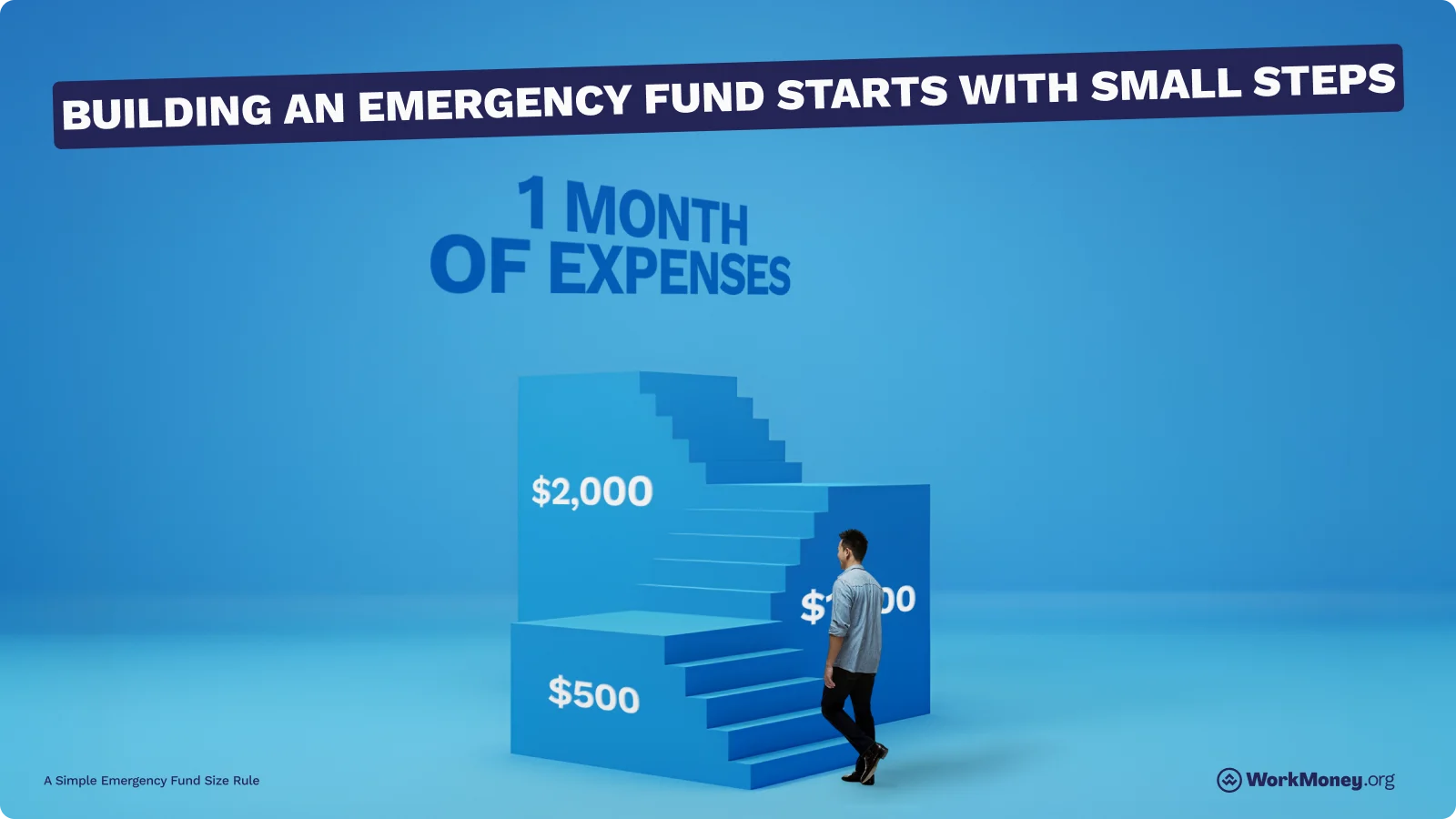
The widely accepted rule for emergency funds is to have between three and six months' worth of living expenses. This sounds practical, but achieving that feat can be far out of reach for many. We prefer to start small.
Our structure may be better suited for most: aim to have a $1,000 emergency fund first. This will help catch you in the case of emergencies like an unexpected car repair or home repair. After that, build a separate “life happens fund” with several months of life expenses socked away.
WorkMoney put together a guide on how to fill your two buckets of emergency funds, without feeling overwhelmed.
The Problem With Traditional Emergency Fund Advice
For years, personal finance advice has repeated the same rule: build an emergency fund that covers three to six months of living expenses. That guidance is meant to protect households from job loss, medical emergencies, or unexpected expenses like home repairs. But in practice, the rule assumes a level of financial stability that many don’t have.
Millions of households are juggling rising rent, high-interest debt, childcare costs, or irregular income from freelance and gig work. When someone is living paycheck to paycheck, hearing that they need to save $10,000 or more can feel impossible. When the goal feels unattainable, it’s easier to do nothing than to start small. But even a modest financial cushion can make a meaningful difference. A few hundred dollars in savings can help cover a car repair, a medical copay, or a utility bill.
An emergency fund doesn’t need to start with months of expenses. It can begin with $50, $100, then $500, then $1,000. The goal isn’t the number, it’s giving yourself financial protection. Small savings can still provide breathing room when life throws the unexpected your way.
If You Have Debt and No Savings: What Comes First?
A common financial dilemma looks like this: you have credit card debt, but you also have no savings. For example, someone might have $1,000 in credit card debt and $0 set aside for emergencies. In this situation, it can be tempting to put every extra dollar toward debt, but that approach can sometimes backfire.
A balanced strategy often works better. Start by building a small starter emergency fund of $1,000. This small cushion can cover minor unexpected costs like a car repair, a medical copay, or a higher-than-usual utility bill. Without that safety net, even a small emergency can force someone to rely on credit again.
Once that starter fund is in place, the focus can shift to aggressively paying down high-interest debt. Additionally, there are strategies to consider to bring that debt burden down:
Call your credit card company and ask for a lower interest rate: If you’re up to date with your payments, your credit card issuer may lower your rate if you simply ask.
Look into balance transfers: There are several credit cards available where you can move your revolving balance to another card with a promotional 0% APR rate. By doing this, you can temporarily freeze interest payments and focus on eliminating the principal balance.
From there, the next goal can be to get a second emergency fund with three months of living expenses socked away. This means that if it costs you $4,000 per month to live, aim to have $12,000 put away for life’s unexpected events. By doing this, you save yourself the unnecessary stress in case something goes awry.
Where to Keep Your Emergency Fund
It’s never a good idea to keep your emergency fund under your mattress or in a piggy bank at home. Rather, there are ways to earn interest on the money you have stowed away for emergencies. Here are a few places to consider:
High-yield savings accounts
High-yield savings accounts are one of the most common places to store an emergency fund. They typically offer higher interest rates than traditional savings accounts while keeping your money safe and easily accessible. Funds can usually be transferred to your checking account within a day or two.
Money market accounts
Money market accounts are another low-risk option offered by many banks and credit unions. They often pay competitive interest rates and may come with limited check-writing or debit card access, making it easy to withdraw money when an emergency happens.
Other liquid, low-risk options
Some savers also keep emergency funds in short-term Treasury funds or Treasury bills. These options can offer slightly higher yields, but the key requirement is that the money remains stable and easy to access when unexpected expenses arise. Keep in mind that options like CDs also have a time component where your funds may need to be locked away.
The goal of an emergency fund isn’t to maximize returns. The priority is keeping your money safe, stable, and available quickly when you need it.
Final thoughts
Building an emergency fund doesn’t have to start with a five-figure target, leaving many feeling overwhelmed by the process.
What matters most is starting with a simple rule and small, achievable milestones. Focus on building your first $500, then work toward saving one full month of essential expenses. Even a modest cushion can provide peace of mind when unexpected costs appear.
Was this information helpful?
About the Author

Brett Holzhauer
Brett Holzhauer is a Certified Personal Finance Counselor (CPFC) who has reported for outlets like CNBC Select, Forbes Advisor, LendingTree, UpgradedPoints, MoneyGeek and more throughout his career. He is an alum of the Walter Cronkite School of Journalism at Arizona State. When he is not reporting, Brett is likely watching college football or traveling.