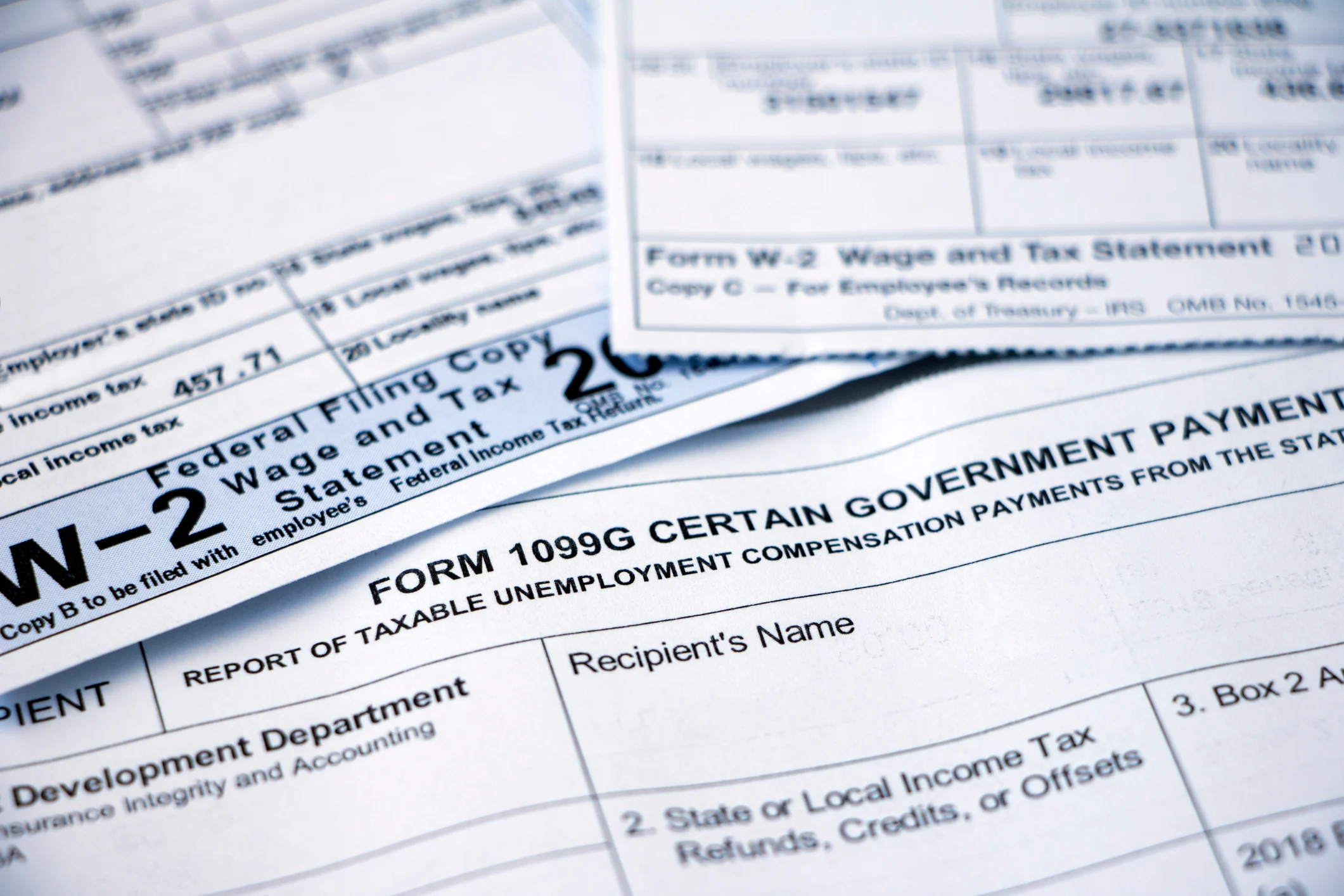
What are the 2025 - 2026 Tax Law Changes to Consider When Filing Your Taxes?
Prepare for the sunset of the Tax Cuts and Jobs Act and what it means for your wallet in 2026.
4 min. read
For millions of Americans, 2026 could feel like hitting a “tax cliff.” The new One Big Beautiful Bill (OBBB), also known as the Working Families Tax Cut, is set to reshape take-home pay, deductions, and credits. These changes could directly affect your paycheck, the deductions you claim, and the credits that put money back in your pocket. For families balancing bills, even small shifts can have a noticeable impact.
WorkMoney breaks down the upcoming changes, showing you which benefits are expanding, which are shrinking, and practical steps you can take now to prepare.
For the 2025 tax year, generally filled in early 2026Starting in 2026, some key tax breaks and limits will change under the Working Families Tax Cut. This means certain credits may shrink, deductions may shift, and tax rates could adjust. Knowing this now gives families the chance to plan, avoid surprises, and make the most of the benefits they still qualify for.
Changes to Tax Brackets and Standard Deductions
One of the most significant changes for families in 2026 is the adjustment of tax brackets and the standard deduction under the Working Families Tax Cut. These shifts could affect your take-home pay more than you might expect, so it helps to see the numbers in plain terms.
Standard Deduction Shifts
The standard deduction is the amount of income you can automatically shield from taxation. The majority of Americans opt for this deduction, and it is slightly higher for the 2025 tax year. Here are the figures:
Single filer: $15,750
Married filing jointly: $31,500
Itemizing deductions, like mortgage interest, state taxes, and charitable donations, might be worth revisiting if your expenses qualify. For many families, the standard deduction will remain the simplest way to reduce taxable income.
Filing Status | Standard Deduction 2025 | Standard Deduction 2026 |
|---|---|---|
Single | $15,750 | $16,100 |
Married Filing Jointly | $31,500 | $32,200 |
Head of Household | $23,675 | $24,150 |
Child and Dependent Tax Benefits
Child Tax Credit (CTC)
In 2026, the enhanced Child Tax Credit will change compared with recent years. Families may see the credit decrease from $3,600 per child under 6 and $3,000 per child 6–17 to around $2,200 per child, putting a few hundred dollars less in many households’ pockets.
Child and Dependent Care Credit (CDCC)
The CDCC will also adjust.
The credit is generally worth between 20% to 35%, up to $3,000 (for one qualifying dependent) or $6,000 (for two or more qualifying dependents). This means that the maximum child and dependent care credit is $1,050 for one dependent or $2,100 for two or more dependents.
However, what you’re eligible for is dependent on your adjusted gross income. The higher your adjusted gross income is, the lower your credit amount will be.
Adoption Tax Credit
The adoption credit will see a similar changes. Families could claim up to $17,280 per child, for covering adoption-related expenses. Additionally, a portion of the credit is refundable up to $5,000.
Tip: Even if you thought you didn’t qualify for some credits before, 2026’s rules may make you eligible. Check early and claim what’s yours—it’s money you’ve already earned.
Other Key Credits and Deductions
Education & 529 Plan Expansions
In 2026, contributions to 529 college savings plans may grow tax-free, and more education expenses, like tutoring or specialized programs, could now qualify. This makes it easier for families to save for school without losing tax benefits.
Retirement & “Trump” Accounts
Certain retirement and education accounts are expanding, letting more families contribute pre-tax dollars or claim deductions. If you save for college or retirement, this could lower your taxable income now and in the future.
“No Tax on Tips” & Overtime
Starting in 2026, some tips and overtime pay may no longer count as taxable income. For workers who earn extra money through side jobs or overtime, this could mean hundreds of extra dollars in take-home pay each month. To see if you qualify, visit the IRS website for guidance.
NOTE: If tips are received in the course of certain specified trades or businesses -- including the fields of health, performing arts, and athletics then they will not qualify.
Car Loan Interest Deduction
Families with car loans might now deduct interest on qualifying vehicles. Depending on loan size, this could save $200–$600 per year for many borrowers.
Final thoughts
The 2026 tax changes are here, and understanding them now can make all the difference. Planning gives you control over your future tax obligation.
Take action today: review your credits, track deductions, and adjust your budget so you’re ready for a smoother 2026 tax season. Every step you take now can help prevent surprises and protect your hard-earned money.
Free Tax Filing With Real Human Support
GetYourRefund has IRS-certified volunteers to help households earning $89,000 or less file their taxes at no cost.
Was this information helpful?
About the Author

Brett Holzhauer
Brett Holzhauer is a Certified Personal Finance Counselor (CPFC) who has reported for outlets like CNBC Select, Forbes Advisor, LendingTree, UpgradedPoints, MoneyGeek and more throughout his career. He is an alum of the Walter Cronkite School of Journalism at Arizona State. When he is not reporting, Brett is likely watching college football or traveling.