WorkMoney
  • Save MoneyOn food, bills, and everyday expenses
    Save MoneyOn food, bills, and everyday expensesExplore
    • Food
    • Utilities
    • Housing
    • Healthcare
    • Transportation
  • Take ControlCreate budgets, pay debt & build your safety net
    Take ControlCreate budgets, pay debt & build your safety netExplore
    • Budgeting
    • Credit
    • Debt
    • Savings
    • Work
    • Taxes
  • Plan AheadFor retirement, big purchases, and your goals
    Plan AheadFor retirement, big purchases, and your goalsExplore
    • Insurance
    • Homeownership
    • Investing
    • Retirement
    • Life Events
  • Member Benefits
  • About Us

Searching…

Sign up
DonateSign up

Searching…

  • Save MoneyOn food, bills, and everyday expenses
    Save MoneyOn food, bills, and everyday expensesExplore
    • Food
    • Utilities
    • Housing
    • Healthcare
    • Transportation
  • Take ControlCreate budgets, pay debt & build your safety net
    Take ControlCreate budgets, pay debt & build your safety netExplore
    • Budgeting
    • Credit
    • Debt
    • Savings
    • Work
    • Taxes
  • Plan AheadFor retirement, big purchases, and your goals
    Plan AheadFor retirement, big purchases, and your goalsExplore
    • Insurance
    • Homeownership
    • Investing
    • Retirement
    • Life Events
  • Member Benefits
  • About Us
DonateSign up
  1. Home
  2. Pros and Cons of Consolidating Debt

Pros and Cons of Consolidating Debt

Is Debt Consolidation Right for You? Discover the Benefits and Watchouts Before You Decide

Published on 9/11/25

5 min. read

Mailbox Full of Letters That Are Piling Out

Tired of seeing your hard-earned money disappear on minimum payments every month? You're not alone. If you’re stuck making minimum payments each month or have missed a payment or two, those late fees and rising interest rates can make it feel impossible to catch up. 

One option that might help is debt consolidation. Think of it like gathering all your bills into one tidy pile. Instead of juggling multiple payments, you combine all your balances together, into one single monthly payment. It can make it easier for you to manage and even lower your interest rate. 

Tackle Your Credit Card Debt with WorkMoney

When you're drowning in a sea of credit card debt, WorkMoney is here to make financial freedom a reality by teaming up with resources like GreenPath.

GreenPath, a trusted WorkMoney partner, can help you lower interest rates, combine multiple payments into one, and create a personalized plan to pay off debt. As a national nonprofit, GreenPath offers judgment-free support and even free financial tools—so you can get help no matter where you're at financially. 

Need more help? WorkMoney members save big on everyday essentials like groceries, gas, and medications. Join today, and make your money go farther and work harder.

Was this information helpful?

The Joy of Money book by Carrie Joy Grimes

You don’t have to figure money out alone

Get clear, practical guidance and real-life insights from our CEO, Carrie Joy Grimes, in her new bestseller, The Joy of Money.

Learn more
WorkMoney

About Us

  • Careers
  • Contact Us
  • Frequently Asked Questions
  • In the News

Save Money

  • Food
  • Utilities
  • Housing
  • Healthcare
  • Transportation

Take Control

  • Budgeting
  • Credit
  • Debt Management
  • Savings
  • Work & Income
  • Taxes

Plan Ahead

  • Insurance
  • Home Ownership
  • Investing
  • Retirement
  • Major Life Events

Resources

  • Articles
  • The Joy of Money

Membership

  • Member Benefits
  • Member Testimonials
  • Member Login
  • Sign Up

  • Privacy Policy
  • Terms
  • SMS Terms of Service
  • Product Terms
  • Site Map

  • English
  • Español
© 2026– WorkMoney
  • Perks of Consolidating Your Credit Card Debt

    Debt consolidation can be a game changer especially if you’re feeling overwhelmed by multiple due dates, high interest charges, or late fees.

    One Monthly Payment.
    When you consolidate your debt, you're combining everything into one single payment. Whether it’s a line of credit or a personal loan from a single lender. Think of it as a "one-stop shop" for your debt. Instead of keeping track of different due dates and paying multiple lenders, you’ll just have one bill and one due date. This makes is easier to stay on top of things and helps avoid late fees or missed payments. 

    Pay Debt Off Quicker.
    Freedom from multiple credit payments, or shifting your high-interest balance to a lower-interest consolidation loan, can help you become debt-free sooner. When you have too many cards, you may be picking and choosing which bill to pay each month, letting fees and interest pile up on the other cards. With debt consolidation, you pay off your original credit card balances right away. With one monthly payment and a lower interest rate, you can stay on track and knock out your debt faster.

    Lower Interest Rate.
    Here’s the deal: There's no federal law that limit how high credit card interest rates can go up (although individual states have their own rules). That means that credit card companies can charge sky-high interest rates that can make your balance grow fast, even if you’re only using the card a little. 

    Let’s say you owe $10,000 in credit card debt with a steep 25% interest rate. Over just one year, you could rack up nearly $2,500 in interest alone—and that’s before you’ve even made a dent in the original balance. That’s why making minimum payments can feel like you’re going nowhere.

    With debt consolidation, you could score a lower interest rate, which means more of your payment goes toward actually paying off your debt—not just the interest.

    💡 Pro tip: It’s smart to consolidate before missing too many payments. Why? Because your consolidation loan rate depends on your credit score, and rates can range from 6% to 36%. The better your credit, the better the deal you’ll get.

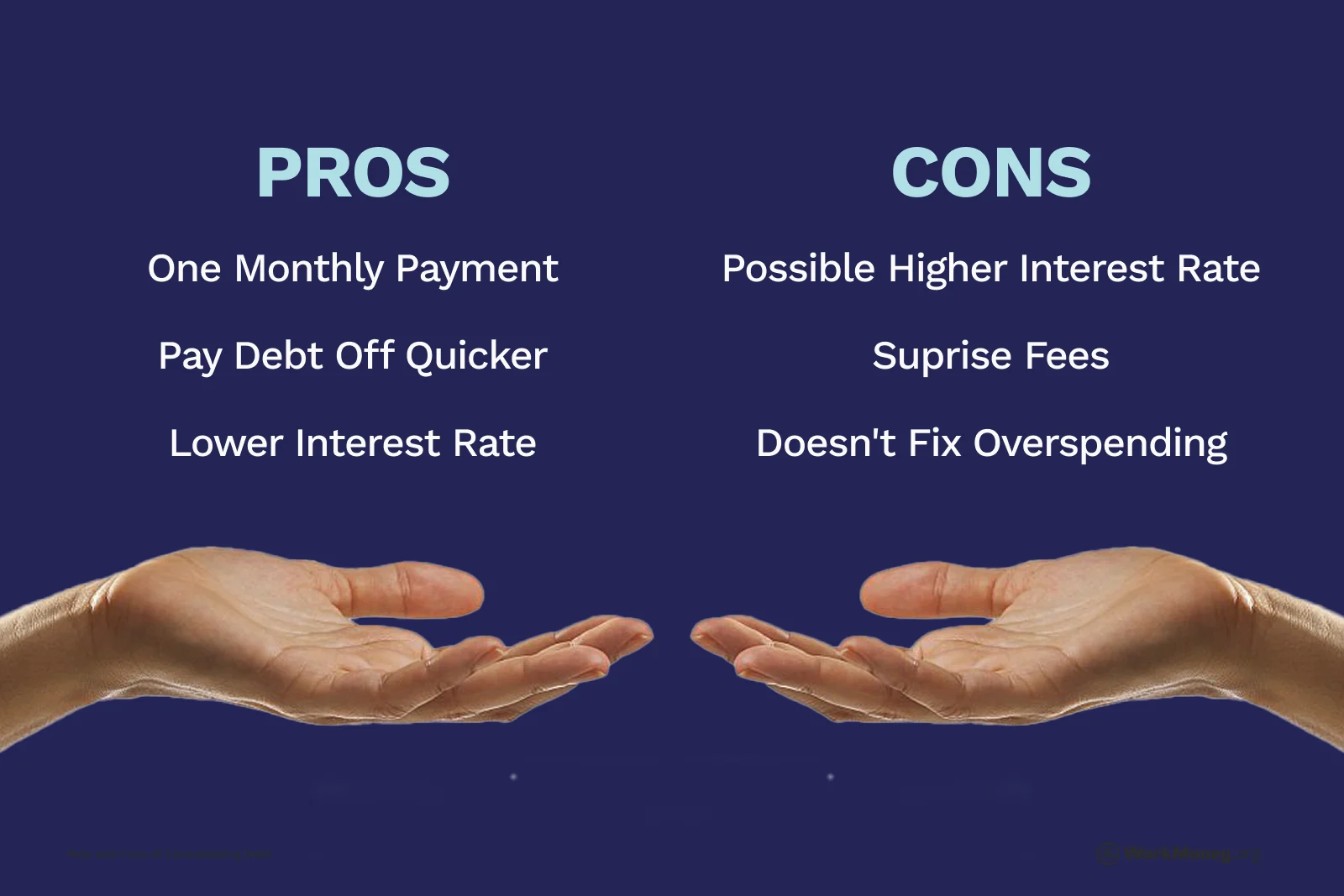
    Pros and cons listed of debt consolidation

  • Potential Pitfalls of Debt Consolidation

    While debt consolidation can make paying your debt easier, it's not quick fix. It’s important to know what you’re getting yourself into so you can make the best decision for your finances. Here’s a few things to watch out for: 

    📈 Higher Interest Rate. Your monthly payments depends on your interest rate. If your credit score is on the low side, a debt consolidation loan may come with a high interest rate, leading to bigger monthly payment.

    💸 Surprise Fees. Most loans, including debt consolidation ones, come with strings attached in the form of fees. Some are common, like origination fees, which can range from 1% to 5% of your loan. And some debt consolidation companies charge a whopping 15% to 25% of your debt to help you negotiate with your creditors and take on your debt.

    👉 Always read the fine print so you know exactly what you’re signing up for.

    Doesn't Fix Overspending. Consolidating your debt doesn’t fix bad financial habits. If you pay off your credit cards but start using them again without a solid budget, you could end up with even more debt—on top of your new loan.

    To really make consolidation work, you need a realistic plan to pay off your loan and avoid falling back into old patterns. It’s not just about getting rid of debt—it’s about building better money habits for the future.

    You'll have a better shot at successfully consolidating your debt if you have a realistic plan to pay back your loan. But using it as a band-aid for overspending or forgetting to budget could dig you into an even deeper hole.

Other Ways to Save Money

Unlock savings opportunities in every corner of life.

Top money-saver

Manage your debt with GreenPath

Let GreenPath help you consolidate credit card debt and negotiate rates

See solution

Wipe out your hospital bills—for free

See if you qualify for full or partial hospital bill forgiveness with DollarFor

See solution

Related Articles

2 people sitting at a desk with a laptop and various papers. One person is looking at the paper while writing on it. The other person is holding a baby while looking at the papers.
Article

10 Budgeting Tips for Families

A pile of money with a sign that says debt on it.
Article

Inside the Session: What Actually Happens During Credit Counseling?