Winterize Your Home for Under $100
Keep your home warm and your wallet full this winter with smart, budget friendly improvements that lower heating costs.
4 min. read
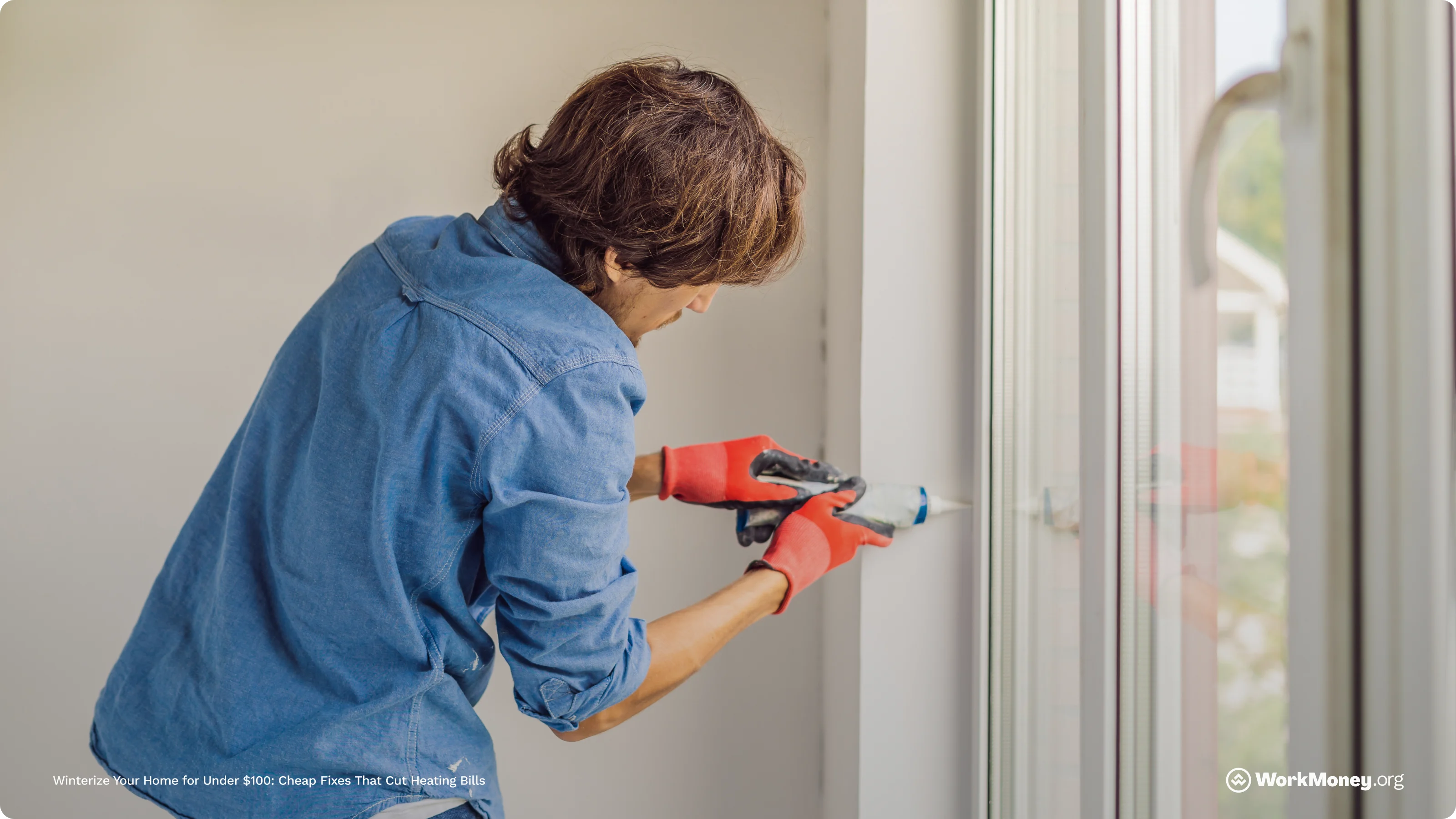
When temperatures drop, your heating bill can soar. The U.S. Department of Energy says heating can account for almost half of a family's winter energy bill. The good news? Winterizing your home doesn't have to mean expensive upgrades.
A few low-cost fixes can stop air drafts, protect pipes, and reduce wasted energy for under $100. Those small fixes can also protect your budget. Think of winterizing as financial self-care: a little time and money now can help you avoid higher bills and costly repairs later.
WorkMoney has a guide on affordable fixes to tackle first, how to protect your home, and where to find extra help with heating costs.
Start With the Winter Fixes That Give You the Most for Your Money
Before buying anything, do a quick draft check. On a cold or windy day, feel around exterior doors and windows for cold air. Look for gaps around frames and around plumbing or utility openings you can safely reach.
The U.S. Department of Energy says reducing air leaks is a cost-effective way to lower heating and cooling costs and make your home more comfortable. Windows and doors are common places for air to leak, but fixing drafts doesn't necessarily mean replacing them. Instead, match the fix to the problem:
Weatherstripping: Use it around doors and windows that open and close.
Caulk: Use it for stationary cracks around window and door frames.
Door sweeps: Use one if there's a gap at the bottom of an exterior door.
Window insulation film: Consider plastic film for especially drafty windows.
Fixes Under $25
If you're choosing just one low-cost weekend project, start with your draftiest exterior door. Weatherstripping is simple, affordable, and can help stop cold air from sneaking in. Many weatherstripping products and door sweeps cost less than $25.
If you rent, check your lease or ask your landlord before making permanent changes. Removable weatherstripping or window film may be easier options.
Protect Your Pipes Before Cold Weather
Winterizing isn't just about saving on utilities. It can also help prevent a small problem from becoming an expensive repair.
The American Red Cross recommends draining outdoor hoses and insulating vulnerable pipes before freezing weather arrives. During very cold weather, opening cabinet doors to let warm air reach plumbing and letting cold water trickle through exposed pipes may also help prevent freezing.
Foam pipe sleeves are one low-cost option. You can generally find six-foot foam pipe-insulation options for around $3 to $12 each, depending on the pipe size.
A little preventive maintenance can pay off beyond this winter, too. Keeping your home in good shape can help you avoid costly repairs and protect its value over time.
Help Your Heating System Work Smarter
A few simple steps can help your heating system work more efficiently.
Start with the filter. The Department of Energy recommends checking central heating filters monthly and replacing them at least every three months. Dirty filters reduce airflow and make the system work harder.
Make sure furniture isn't blocking air registers and vents so warm air can circulate freely.
You can also adjust your thermostat. DOE says turning it back 7°F to 10°F for eight hours a day can save as much as 10% a year on heating and cooling. If you have a heat pump, check the manufacturer's guidance before making large temperature changes.
The goal isn't to sit around shivering to save a few dollars. It's to stop paying for energy you don't need.
Build Your Own Under-$100 Winterization Plan
You don't need every fix in this article. Start with the problems your home actually has and spend where it can make the biggest difference.
Try working through them in this order:
Priority | Fix | Why start here? |
|---|---|---|
1 | Weatherstrip drafty doors | Low-cost way to tackle obvious air leaks |
2 | Caulk stationary gaps | Helps keep heated air from escaping |
3 | Protect vulnerable pipes | May help prevent a costly freeze-related repair |
4 | Add window film where needed | Gives drafty windows another barrier |
5 | Replace a dirty heating-system filter | Helps your existing system work efficiently |
With this approach, you may spend far less than $100. The goal is to tackle the real problems first rather than buying supplies you don't need.
Winterization Savings Tracker
Want to know whether those small fixes are adding up? Start by tracking:
Fix completed
Amount spent
Utility bill or energy use before and after
Estimated or actual savings
Running total spent
Running total saved
When possible, compare energy use and your bill. Weather and utility rates can change from month to month, so the dollar amount alone may not tell the whole story.
Tracking your progress can turn winterizing from another household chore into one more way to take control of where your money goes.
More Help to Keep Heating Costs Down
DIY fixes can help, but they aren't your only option. These resources may help you lower your energy costs even more:
LIHEAP: The Low-Income Home Energy Assistance Program can provide short-term help with heating and cooling costs when money is tight. The average household can save $539 a year through the program. Find out if you qualify here. These are benefits you've earned and can use to keep more money in your budget.
Arbor: If you pay your own electric bill and live in an area with competitive electricity markets, Arbor can compare your current rate with other plans to help you find a lower one—with no change to your utility company or service. See if Arbor can help you save here.
Final Thoughts
You don't have to winterize your whole home in one weekend. Start with the draftiest door, the most vulnerable pipe, or another simple fix that fits your budget. Then build from there.
At WorkMoney, we believe saving money isn't about being perfect. It's about finding practical ways to keep more of what you earn. A small winter fix may not feel life-changing on its own, but several smart choices can add up to a warmer home, and more room in your budget for what matters most.
About the Author

DeShena Woodard
DeShena Woodard is a Financial Freedom Coach, Certified Life Coach, freelance personal finance writer, and podcast host. Her story, advice, and expertise have been featured in prominent outlets such as CNN Underscored, Business Insider, Yahoo Finance, NerdWallet, and more. Through her platform, Extravagantly Broke, she helps women take control of their finances with simple, stress-free strategies—without sacrificing the joy of everyday life. When she’s not writing or coaching, DeShena enjoys traveling, biking, and spending time with her family.
