Target Date Funds: The "Set It and Forget It" Strategy
How to grow your retirement savings automatically without needing to be a stock market expert
4 min. read
If you’ve ever looked at your 401(k) options and felt overwhelmed, you’re not alone.
For many workers, investing can feel confusing, time-consuming, or even risky—especially when you’re juggling everything else in life. And that’s often what stops people from getting started or staying consistent. Target date funds are designed to make things easier.
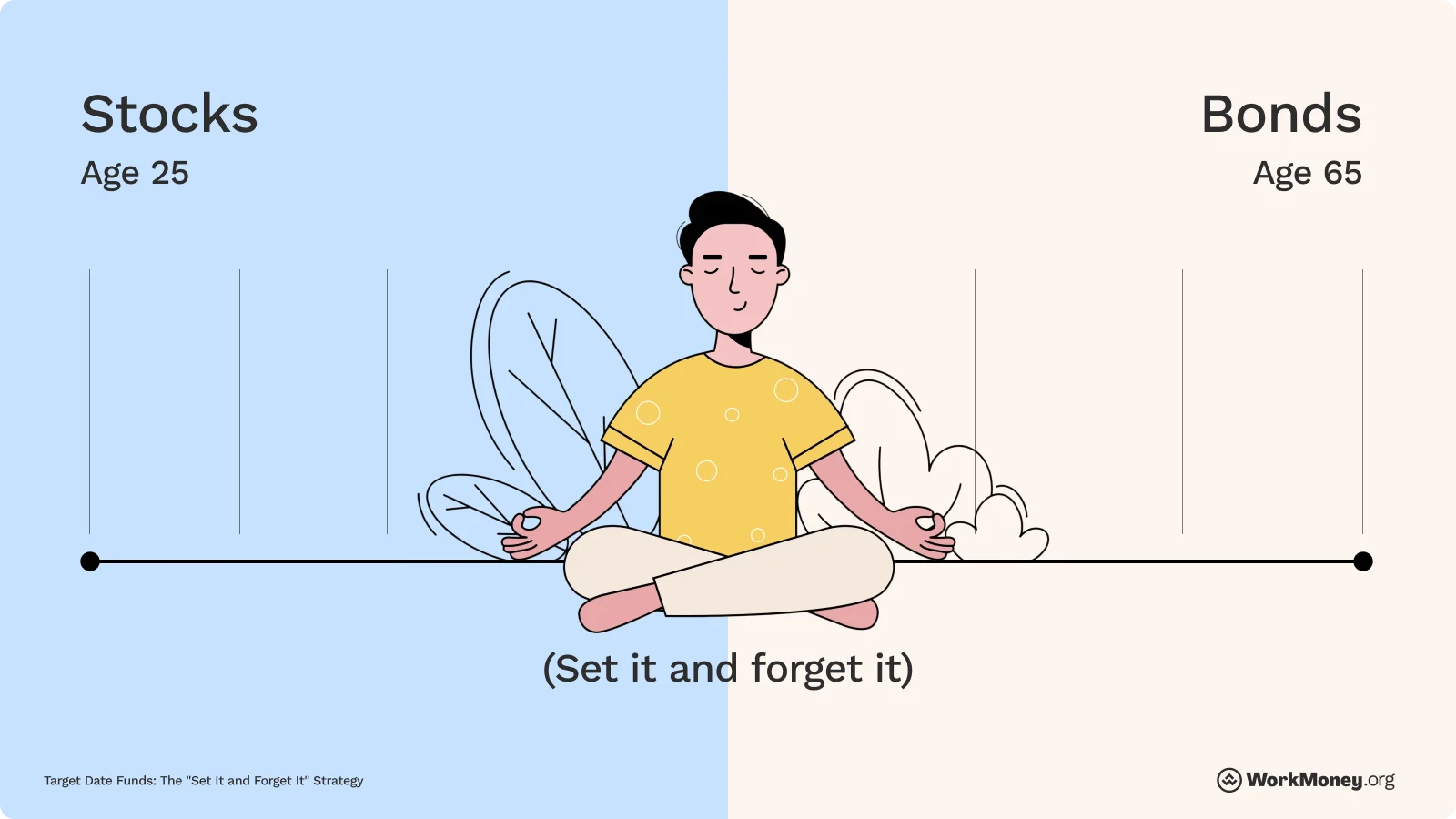
Instead of picking and managing multiple investments, you choose one fund based on when you plan to retire. From there, it automatically adjusts your investments over time—so you don’t have to monitor the market or make constant decisions. It also helps to take emotions out of investing, so you’re not reacting to every market fluctuation.
At WorkMoney, we believe building financial security shouldn’t feel like a full-time job. Tools like this can help you stay on track without added stress.
What Is a Target Date Fund—and What Does the “Date” Mean?
A target date fund is a single investment that holds a mix of stocks, bonds, and other assets—all in one place. The “target date” is the year you expect to retire. For example, if you plan to retire around 2055, you might choose a 2055 fund.
That date doesn’t mean your money is paid out then—it simply guides how the fund is managed over time.
Think of it as a built-in timeline:
Earlier years → focus more on growth (i.e. stocks)
Later years → focus more on protecting what you’ve built (i.e. government bonds)
In other words, you’re getting a diversified portfolio without having to build or manage it yourself.
That’s why target date funds are common in workplace retirement plans like 401(k)s, where they’re often offered as a simple default option.
💡 Quick Definition: A diversified portfolio means spreading your money across different types of investments, like stocks and bonds, to help lower your overall risk.
What’s Your Year? A Simple Way to Choose
If you’re not sure which fund to pick, here’s an example of what that could look like:
If You Were Born Around | Target Date Fund |
|---|---|
1995–2000 | 2060–2065 |
1985–1994 | 2055–2060 |
1975–1984 | 2045–2055 |
1965–1974 | 2035–2045 |
1955–1964 | 2025–2035 |
Most people choose a fund close to the year they turn 65. It doesn’t have to be exact—but it gives you a solid starting point.
How Target Date Funds Work Over Time
One of the biggest benefits of a target date fund is that it automatically adjusts your investments over time. This is often called a “glide path,” but you don’t need to know the term to understand how it works. Here’s a simple way to picture it:
Early on → more aggressive investments (mostly stocks) to help your money grow
Over time → a gradual shift to safer investments (like bonds)
Near retirement → a focus on stability instead of growth
This shift helps reduce the risk of losing money right before you need it—something many people worry about.
“To” vs. “Through” Funds: A Key Detail Most People Miss
Not all target date funds work the same way—and this is one detail that often gets overlooked.
There are two main types:
“To” funds: Reach their most conservative mix at your retirement date
“Through” funds: Continue adjusting after your retirement date
A simple way to think about it:
“To” = the fund stops changing at retirement
“Through” = the fund keeps adjusting during retirement
Why does this matter?
Because it affects how your money is invested when you’re actually living on it. Some people may prefer less risk right at retirement, while others want their money to keep growing for the long term.
Are Target Date Funds Worth It? Pros and Cons
Target date funds can be a great option—but they’re not perfect for everyone. Here’s a quick look at the pros and cons:
What works well | What to watch out for |
|---|---|
Simple and easy to use Automatically rebalanced Built-in diversification No need to actively manage your investments | Fees can vary depending on the fund Not tailored to your personal goals or timeline Some funds may be too aggressive—or too conservative for your needs |
If you want more control over your investments, this approach may feel too limiting.
Even funds with the same target year (like 2050) can have very different strategies depending on the company offering them.
Red Flags Checklist
Before choosing a target date fund, it’s worth taking a closer look at what you’re investing in.
Here are a few things to watch for:
High fees (expense ratios that quietly reduce your returns over time)
A strategy that feels too risky—or too cautious—for your timeline
No clear explanation of whether it’s a “to” or “through” fund
According to the U.S. Securities and Exchange Commission, fees and expenses can significantly impact long-term investment returns, even if they seem small at first.
Taking a few minutes to review your fund now can make a meaningful difference later.
What If Your Retirement Plans Change?
Life doesn’t always go according to plan—and your retirement timeline might shift.
You might:
Retire earlier
Work longer than expected
Change jobs or income levels
The good news is you’re not locked into one choice.
You can move into a different target date fund if your plans change. It’s also a good idea to review your investments every few years to make sure they still align with your goals.
Even small adjustments can help keep you on track.
Other Resources To Help You Get Started
If you’re considering a target date fund, here are a few simple ways to take the next step:
Visit the U.S. Securities and Exchange Commission to learn how funds and fees work.
Check your workplace retirement plan to see which target date funds are available.
You can also log into your retirement account today to compare your options—looking at fees, investment mix, and your estimated retirement year.
Taking that one step can give you more clarity and confidence moving forward.
Final thoughts
You don’t need to be an expert to start investing for your future.
Target date funds offer a simple, structured way to grow your money over time—without the pressure of constantly managing it.
They won’t solve everything. But for many workers, they remove one of the biggest barriers: not knowing where to start.
At WorkMoney, we know the stock market can feel out of reach. That’s why we focus on tools like target date funds—built for everyday people, not just Wall Street pros.
Was this information helpful?
About the Author

DeShena Woodard
DeShena Woodard is a Financial Freedom Coach, Certified Life Coach, freelance personal finance writer, and podcast host. Her story, advice, and expertise have been featured in prominent outlets such as CNN Underscored, Business Insider, Yahoo Finance, NerdWallet, and more. Through her platform, Extravagantly Broke, she helps women take control of their finances with simple, stress-free strategies—without sacrificing the joy of everyday life. When she’s not writing or coaching, DeShena enjoys traveling, biking, and spending time with her family.