Preparing Financially for Natural Disasters: A Step-by-Step Guide
Protect your peace of mind and your wallet: Essential steps for every American family
3 min. read
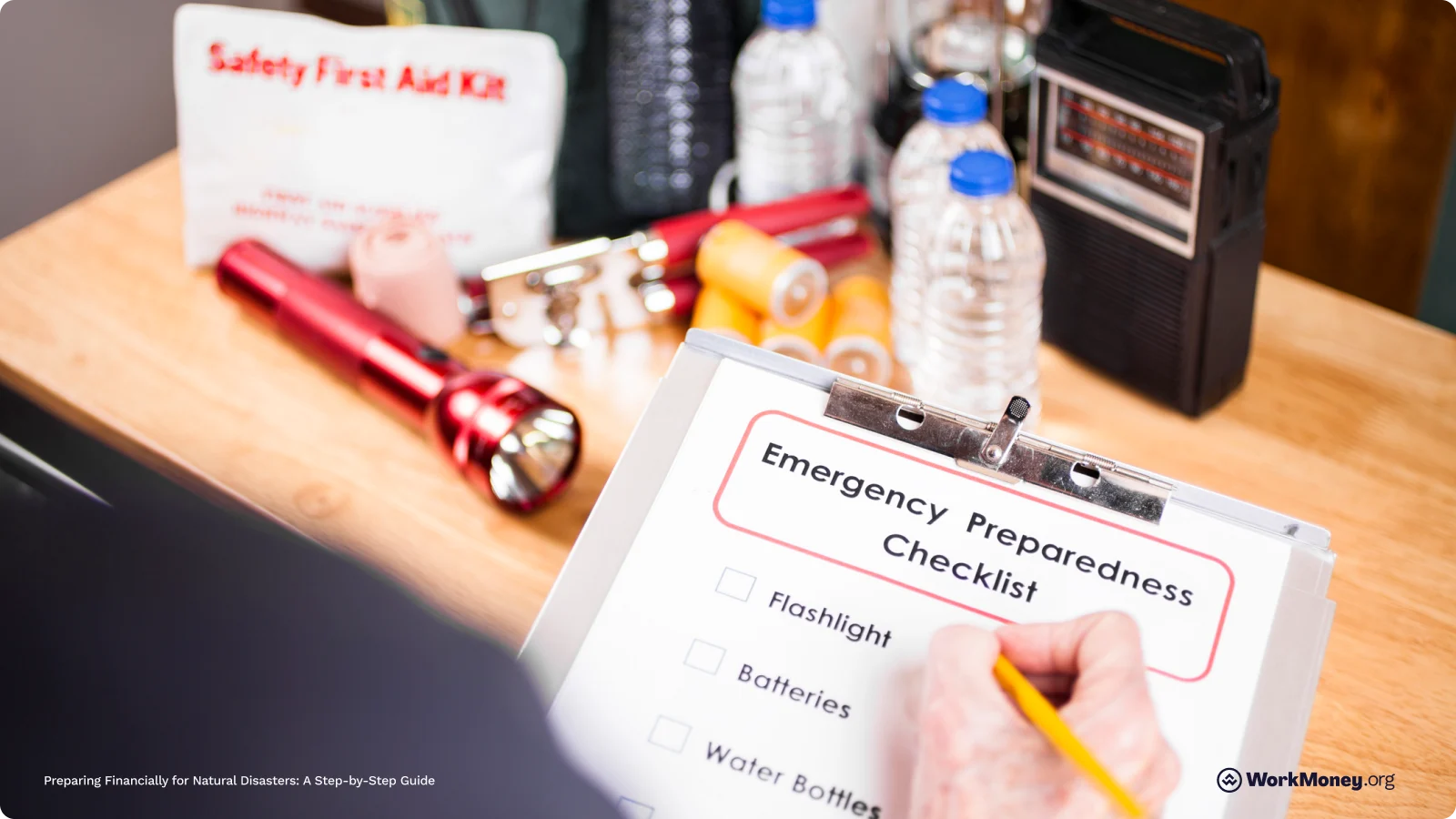
In 2024 alone, there were 27 natural disasters that reached over $1 billion in damages each. While insurance companies and government relief programs help offset some of those losses, families still shoulder quite a financial burden.
Regardless of where you live, natural disasters can affect income, housing, transportation, and access to financial resources. As we enter the warmer months, when most natural disasters occur, it’s vital to have a financial game plan if your city is hit.
Step 1: Build a Disaster Emergency Fund
Create Two Savings Buckets
In The Joy of Money, Carrie Joy discusses how having two emergency-fund buckets is vital for navigating both short- and long-term emergencies. Each natural disaster is different, and you may need different amounts to navigate each one.
For your emergency fund, a good starting target would be $500-$1,000, enough to cover immediate needs like housing. This can be directed towards anything, including immediate needs such as housing, food, fuel, and other life essentials.
The second is a “life happens” fund, where you can dip into if the disaster brings in higher, extended costs. For example, if your job is impacted and you aren’t able to work. Or, if you’re a homeowner and you need to fund essential repairs.
After the disaster subsides, you can come back to filling these buckets once you’re back on your feet and normal life resumes.
Start Small
Putting money away in an emergency fund can be a dull financial task, but incredibly necessary. The average family doesn’t have $1,000 set aside for emergencies. This could mean that one natural disaster could quickly turn into a financial disaster.
Automating your money is a great option. Most banks offer a tool to have money moved on a fixed schedule. Even if it's a small amount, consistently putting money aside is an essential part of building a solid financial foundation.
Step 2: Free Up Money for Preparedness
Budget Power-Up
If you’re thinking about potential natural disasters in the near future, it’s a perfect time to focus on your monthly budget.
Here are a few things you can do today:
Audit subscriptions: The average family now pays for five different subscription services. While they are typically small, they're easy targets to cut back on and save on the ones you may not use regularly.
Negotiate recurring bills: Talk to your provider about your options. You may find that some companies would rather give you a discount than lose you as a customer to a competitor. It may take some phone calls, but it could be time well spent. Additionally, you may qualify for Lifeline to receive heavily discounted phone and internet service.
Shop around for insurance: Your homeowners insurance will likely come into play during a natural disaster. If you’re unsure if you have enough coverage or may be paying more than you should, Insurify can help you shop around.
Reduce Debt Costs
Paying off debt, such as credit card or student loan debt, can be taxing on your monthly budget. If this is you, here are some options to consider:
Balance transfer credit card: Try to find a credit card with a 0% APR promotion on balance transfers. These are typically for a specific period, but they can save you hundreds in interest costs.
Consolidate your debt: If you have debt across several accounts, it may make sense to consolidate it into a personal loan or something similar.
Redirect savings toward emergency preparedness: If you’re able to find savings, be sure to redirect those funds into one of your emergency fund buckets mentioned above.
Step 3: Protect Documents and Create a Home Inventory
Fixing and replacing damaged belongings is only part of the challenge after a disaster. You'll need documentation to file insurance claims, apply for assistance programs, and access your bank account. Taking a few minutes to organize these records now can save significant stress later.
Secure Important Records
You will need copies of your most important financial and personal documents, including:
Driver's licenses and passports
Insurance policy documents
Bank account and credit card information
Mortgage, lease, or property ownership records
Medical and prescription information
Birth certificates and Social Security cards
Create Digital Backups
Physical documents can be lost, damaged, or inaccessible after a disaster. That's why digital backups are equally important.
You can store these in a secure cloud storage account like Google Drive, or even having pictures or screenshots on your phone can be a good start.
Build a Home Inventory
If you were to lose everything during a disaster, trying to remember everything would be nearly impossible.
The easiest method is to walk through your home with your smartphone and record a video of each room. Open closets, cabinets, and storage areas, and take photos of valuable items. Save receipts for major purchases when possible.
Spending 30 minutes documenting your property and possessions today could save hours of frustration if you need to file a claim.
Step 4: Make Sure You Can Access Money During a Disaster
Natural disasters can disrupt power, internet service, cell phone networks, and even local bank branches. You may not have access to your money, so having a backup plan is essential.
Prepare for Banking Disruptions
Make sure you have digital access to your bank account. Download your bank's mobile app, enroll in online banking, and verify that your contact information is up to date.
Additionally, keep a small amount of emergency cash on hand. Having enough to cover a few days of essentials like food, fuel, or medications can be helpful if electronic payments aren't available.
Have Multiple Payment Methods
Relying on a single payment method can create problems during an emergency. If possible, keep access to several options, including:
Cash for situations where card payments aren't accepted.
A debit card linked to your primary bank account.
A credit card that can serve as a backup if unexpected expenses arise.
The last thing you should be worrying about during a natural disaster is if you will be able to access the money you need.
Step 5: Know Where Help Comes From
You don't have to navigate disaster recovery alone. While savings and insurance are your first lines of defense, government and community programs may also provide support before and after a disaster.
Before a Disaster
Local governments, utilities, and nonprofits may offer home-hardening grants such as Home Owner Managing Energy Savings (HOMES) Rebate Program HOMES, or incentives such as LIHEAP to prepare your home for a disaster. These programs can help reduce future damage and lower out-of-pocket repair costs.
After a Disaster
If a major disaster occurs, financial assistance may be available through several sources.
FEMA assistance may help cover temporary housing, home repairs, and other disaster-related expenses not covered by insurance.
SBA disaster loans can provide low-interest financing to eligible homeowners, renters, and businesses recovering from disaster damage.
Many states and local governments also offer recovery programs, grants, and emergency resources following declared disasters.
If assistance becomes available, apply as soon as possible. Funding and application windows can be limited, and early action may speed up the recovery process.
Disaster-Specific Financial Considerations
While many preparedness steps apply to every household, some disasters create unique financial challenges. Taking a few precautions based on the risks in your area can help reduce both stress and out-of-pocket costs.
Hurricanes
Consider setting aside a dedicated emergency fund to cover several days or even weeks away from home if you live in a hurricane-prone area. Evacuation costs, hotel stays, fuel, food, and emergency supplies can quickly add up.
Think about what you would need if your area lost electricity for a week or longer. This could include backup phone chargers, extra food, or extra fuel.
Flooding
Only 4% of homeowners have flood insurance. For many, they choose to take the risk of not having it because they don’t think it will happen, or it’s simply too expensive. Review your flood risk and understand whether separate flood insurance is necessary for your property.
Wildfires and House Fires
For wildfire-prone areas, verify that your insurance policy includes adequate replacement-cost coverage. Construction costs often rise after major disasters, and being underinsured can leave homeowners responsible for a significant portion of rebuilding expenses.
Tornadoes and Severe Storms
Wind, hail, and falling trees can cause substantial damage to roofs, vehicles, and other property. Review your insurance policy to understand deductibles, coverage limits, and any exclusions related to storm damage.
Be sure to keep receipts and photos of any home improvements. These records can help support insurance claims after a severe weather event.
Final thoughts
Preparing for a natural disaster doesn’t happen as quickly as the disaster does. Building savings, reviewing insurance policies, backing up important documents, and having essentials in place takes time.
Your natural disaster plan can also work right alongside your broader financial goals. As long as you're financially prepared, you can take on the next storm with confidence.
Take the next step
Save hundreds on home insurance in under 5 minutes
Comparing premiums on Insurify can now save you up to $1,100 annually.
Was this information helpful?
About the Author

Brett Holzhauer
Brett Holzhauer is a Certified Personal Finance Counselor (CPFC) who has reported for outlets like CNBC Select, Forbes Advisor, LendingTree, UpgradedPoints, MoneyGeek and more throughout his career. He is an alum of the Walter Cronkite School of Journalism at Arizona State. When he is not reporting, Brett is likely watching college football or traveling.