Opening a Custodial Account: A Step-by-Step Guide
Give a financial head start to a child in your life. Here is how you can get started today
4 min. read

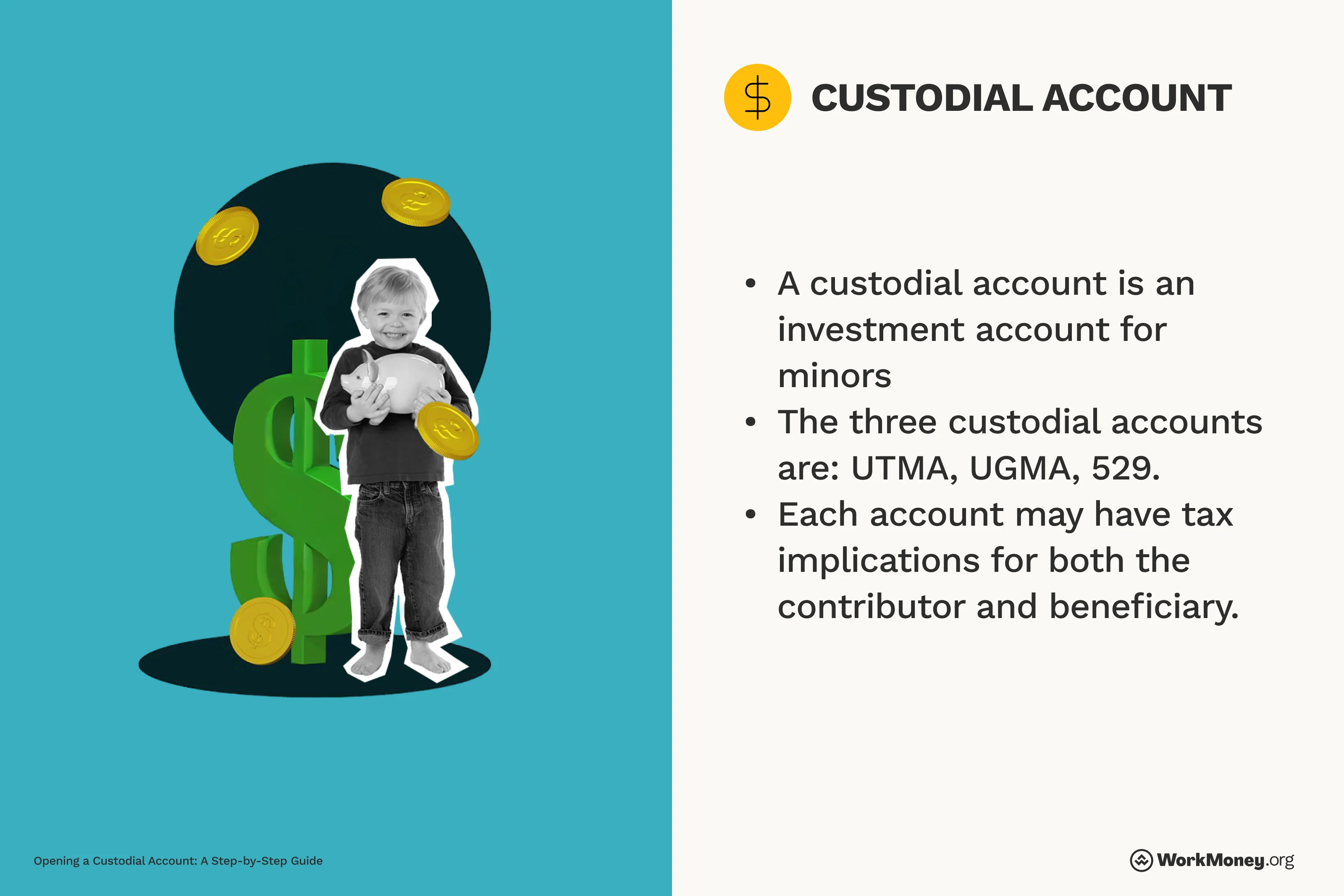
A custodial account is a type of investment account, specifically designed to save for a child’s future. There are three different types of custodial accounts, each with its own specific purpose: UGMA (Uniform Gifts to Minors Act), UTMA (Uniform Transfers to Minors Act), and 529.
Each account offers different benefits and has use cases where one approach may be more suitable than others. These accounts can be used for a variety of goals, including saving for a child’s college education, purchasing a vehicle, or as part of an inheritance.
However, there are several aspects and features of each account to note before selecting one over the others. The WorkMoney team put together a comprehensive guide on how custodial accounts work, including the pros and cons of each, when your child can access the assets, and how to open one.
What is a Custodial Account?
A custodial account is an investment account held in control by an adult until a minor reaches the age of majority. In most states, it’s 18. However, with a UTMA account, the age can be up to 25. All of this depends on your state of residence, so be sure to look into this as you choose the right account.
One significant advantage of a custodial plan is that anyone can open a custodial account on behalf of a child. This includes parents, grandparents, relatives, or even family friends. All the person needs to do is list the child as the beneficiary of the account.
Additionally, each one has its own set of tax benefits and legal protections to ensure the beneficiary receives the assets when they hit the required age.
What is a UTMA?
A UTMA is a custodial account that allows an adult to transfer assets to a child without a formal trust. This includes investments like stocks, bonds, mutual funds, physical property like real estate, and even intellectual property. This account is typically used for education costs, but isn’t restricted to only that.
Keep in mind that the earnings—such as interest, dividends, and capital gains—are considered the child’s income, not the custodian’s. So be sure to communicate with the child about any potential tax implications they may face.
Once the child reaches the age of majority, they will inherit full control of the assets.
You can open a UTMA account at most banks and online brokerages in just a few minutes.
What is a UGMA?
A UGMA is a simpler version of a UTMA. You can only place financial assets inside the account, such as cash, stock, bonds, and ETFs.
Again, the child becomes the legal owner of the account once they reach the age of majority, and the assets can be used for any purpose.
What is a 529 Plan?
A 529 plan is a tax-advantaged account designed to help save for future education expenses. The money that is contributed is invested, grows tax-free, and withdrawals are tax-free as long as the funds are used for education purposes. Beyond traditional college costs, 529 plans have become more flexible over the years. Funds can now be used for K–12 tuition (up to $10,000 per year), vocational or trade schools, and even student loan repayment (up to $10,000 lifetime per beneficiary).
Many states offer their own versions of 529 plans, but you aren’t restricted to only using your state’s 529 plan. Some popular state 529 plans are Utah, Pennsylvania, Alaska, and Illinois, as they have low fees.
The best part about a 529 is that you can adjust the beneficiary at any time, and even make it yourself if you decide to enroll in classes. You can open a plan for anyone — your child, grandchild, or even yourself — and if one beneficiary doesn’t need the funds, you can transfer the balance to another family member without penalty.
Full Comparison of the Three Accounts
Feature | UGMA (Uniform Gifts to Minors Act) | UTMA (Uniform Transfers to Minors Act) | 529 College Savings Plan |
|---|---|---|---|
What it can hold | Cash, stocks, bonds, mutual funds, insurance policies | Everything UGMA allows plus real estate, art, patents, other property | Investments only (mutual funds, ETFs, target-date funds offered by the plan) |
Who owns the account | Child (minor is the legal owner) | Child (minor is the legal owner) | Parent (or other adult) as account owner; child is beneficiary |
Who controls it | Custodian until age of majority (18 in most states) | Custodian until age of majority (18–21, sometimes up to 25 depending on state) | Parent/account owner always controls; child never automatically gains control |
Use of funds | Any expense that benefits the child (not limited to education) | Any expense that benefits the child (broader asset types possible) | Qualified education expenses only (college, K–12 tuition up to $10k/year, student loans up to $10k) |
Tax treatment | Earnings taxed at child’s rate (subject to “kiddie tax”) | Same as UGMA | Tax-deferred growth; tax-free withdrawals for qualified education expenses |
Contribution limits | No formal federal limit; gifts above $18,000/year (2024) may trigger gift tax rules | Same as UGMA | Very high limits ($300k–$500k+ depending on state); can “superfund” 5 years at once ($90k in 2024 without gift tax) |
Impact on financial aid | Counted as child’s asset (heavily reduces aid eligibility) | Same as UGMA | Counted as parent’s asset if parent-owned (much smaller impact) |
Age when child gains control | 18 (sometimes 21, varies by state) | 18–21 (sometimes 25, depending on state law) | Never; parent keeps control and can change beneficiary |
Flexibility | Medium – useful for general savings but child gets full control at adulthood | Medium – more asset flexibility and extended control age | Low – restricted to education, but best tax benefits |
Best for | Simple custodial investing for minors | Flexible custodial account with broader asset options | Long-term education savings with tax advantages |
Tips for Parents & Custodians
These accounts can be highly beneficial to set up your child (or beneficiary in mind) for financial success once they take control of the funds. However, there are a few things to keep in mind as you’re setting them up:
Potential taxes: Regardless of which account you choose to contribute to, be sure to understand the tax implications of which account you choose. Additionally, there may be tax implications for the beneficiary as well.
Communication is key: These accounts shouldn’t be set up as a surprise. Communicate with the beneficiary to ensure they know how to claim the assets when they hit the necessary age, and the purpose of the funds.
Contribute early: These assets are invested, and the key component needed to grow the funds is time. There’s no guarantee of performance, but funding the account early on will give the investments time to grow.
Final thoughts
Custodial accounts are a great way to invest for the future for someone under 18 years old. It’s essential to research the three accounts to make sure you choose the right one for your goals. And it can be a great time to share with the child in mind a bit about personal finance and how to invest for the future.
Was this information helpful?
About the Author

Brett Holzhauer
Brett Holzhauer is a Certified Personal Finance Counselor (CPFC) who has reported for outlets like CNBC Select, Forbes Advisor, LendingTree, UpgradedPoints, MoneyGeek and more throughout his career. He is an alum of the Walter Cronkite School of Journalism at Arizona State. When he is not reporting, Brett is likely watching college football or traveling.