How Often Should You Really Replace Your Tires?
Know the simple rules for tire age, mileage, and tread depth to save money and stay safe
4 min. read
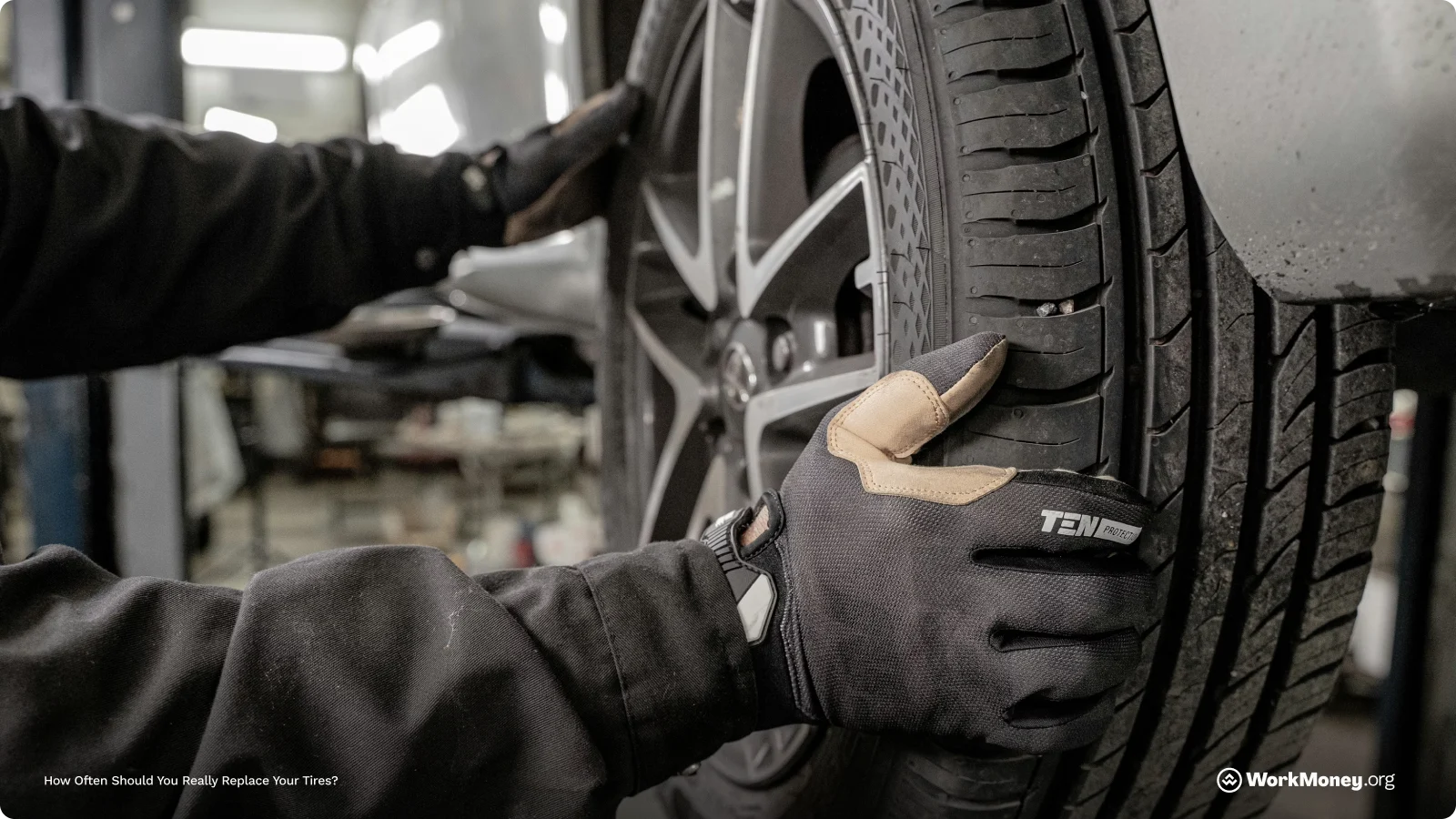
Tires are an expensive part of car ownership, but not an area worth cutting corners on. It’s the one part of your car that touches the ground, and could potentially save your life.
However, that doesn’t mean you need to pay thousands to get a safe and reliable set of tires for your vehicle.
WorkMoney put together a guide on how often you should replace your tires, when you need to replace your current tires, and how to get the best deal.
How Long Do Tires Really Last?
Several variables cause your tires to wear, including age, drive time, climate, maintenance, and level of general wear. Experts recommend that a set of tires be replaced every six years, or every 50,000-75,000 miles.
However, these are only general rules. Your set of tires will wear out at their own unique rate, and should be monitored throughout their lifetime.
Here’s a general maintenance schedule of a set of tires to keep in mind:
Monthly:
Check tire pressure (use the PSI on the driver door).
Quick visual check for nails, bulges, cracks, or uneven wear.
Every 5,000–7,500 miles (or every 6 months):
Rotate tires.
Check tread depth.
Balance tires if you notice vibration.
Every 12 months:
Get an alignment check (or sooner if the car pulls or tires wear unevenly).
How to Check If Your Tires Need Replacing Right Now (DIY Tests)
If you’re unsure if your tires need to be replaced, here are a few ways to find out:
The Penny Test
All you need is a penny for this one. Here are the steps:
Take a regular U.S. penny.
Insert it head-first (Lincoln’s head) into the tread groove.
Look at how much of Lincoln’s head is visible.
If you can see the top of Lincoln’s head, your tread is 2/32" or less. You should replace your tires immediately. If part of his head is covered, your tread is deeper than 2/32", and the tire still has some life left.
Damage or Wear Patterns
Take a look at the tread and the outside-facing portion of your tire. If there are visible issues like bulging or cracking, it could be a sign to replace it.
If you get the pesky nail in your tire, there are ways to repair the tire and keep it on the road.
The “Feel” While Driving
The ultimate test is if someone feels “off” when you’re driving. If you feel your steering wheel is vibrating or pulling you either left or right, this could be another sign that your tires need replacing.
Additionally, if you feel like your car is sliding when you brake, your tread could be so worn down that it doesn’t grip the road.
How to Make Your Tires Last Longer (And Save Hundreds)
A set of tires can be a pricey investment, so getting the most miles from them should be the goal. Here are a few ways to maximize the life of your tires:
Keep your tires properly inflated — show how under-inflation kills tire life.
Rotate every 5,000–7,500 miles — why this matters more than people think.
Get alignments checked yearly or when you hit potholes.
Avoid hard braking and fast cornering (especially for city drivers).
Store seasonal tires properly if applicable.
How Much Tire Replacement Really Costs — and How to Save
Car tire costs are wide-ranging. There are different sizes, purposes, brands, warranties, and more. However, a general rule to follow for the everyday car is approximately $200–$223 per tire, not including potential installation, disposal, and alignment fees. So for a new set of tires, after taxes, you’re looking at roughly $1,000.
However, there are several ways to cut that cost down:
Look for deals: Many tire retailers run holiday specials that may help you score some savings.
Shop around: Find out the size of your tire, and begin shopping around at local retailers. If you have a warehouse membership like Costco, you can get your tires for less. Additionally, if you find an online store selling the right pair, you can have them shipped to your home, and take them to your local tire store to be installed (likely for an additional cost).
Final thoughts
There are options to buy lightly used tires or off-brand tires. However, there are certain areas in life where you shouldn’t cut corners, and car tires are one of them. The right set of tires can make the difference between being involved in an accident and not. 11,000 accidents per year are caused by tire-related malfunctions, according to the National Highway Traffic Safety Administration.
Be sure to inspect your tires often, and when the time comes to replace them, find the best price on the right set of tires that will give you the safest driving experience.
Take the next step
How Often Should You Really Replace Your Tires?
Know the simple rules for tire age, mileage, and tread depth to save money and stay safe
Was this information helpful?
About the Author

Brett Holzhauer
Brett Holzhauer is a Certified Personal Finance Counselor (CPFC) who has reported for outlets like CNBC Select, Forbes Advisor, LendingTree, UpgradedPoints, MoneyGeek and more throughout his career. He is an alum of the Walter Cronkite School of Journalism at Arizona State. When he is not reporting, Brett is likely watching college football or traveling.