Envelope Budgeting Made Simple
The low-tech, high-impact way to control spending
By Dori Zinn
5 min. read
If you’ve ever spent more than you thought and didn’t know why, you're not alone. In a NerdWallet survey, nearly three-quarters of Americans (73%) said that realizing they spent more than they thought pushed them to track their money more closely.
Budgeting apps may not help the way you need. They can feel like a chore, which could drive you to start something, only to quickly ignore it.
What is Envelope Budgeting?
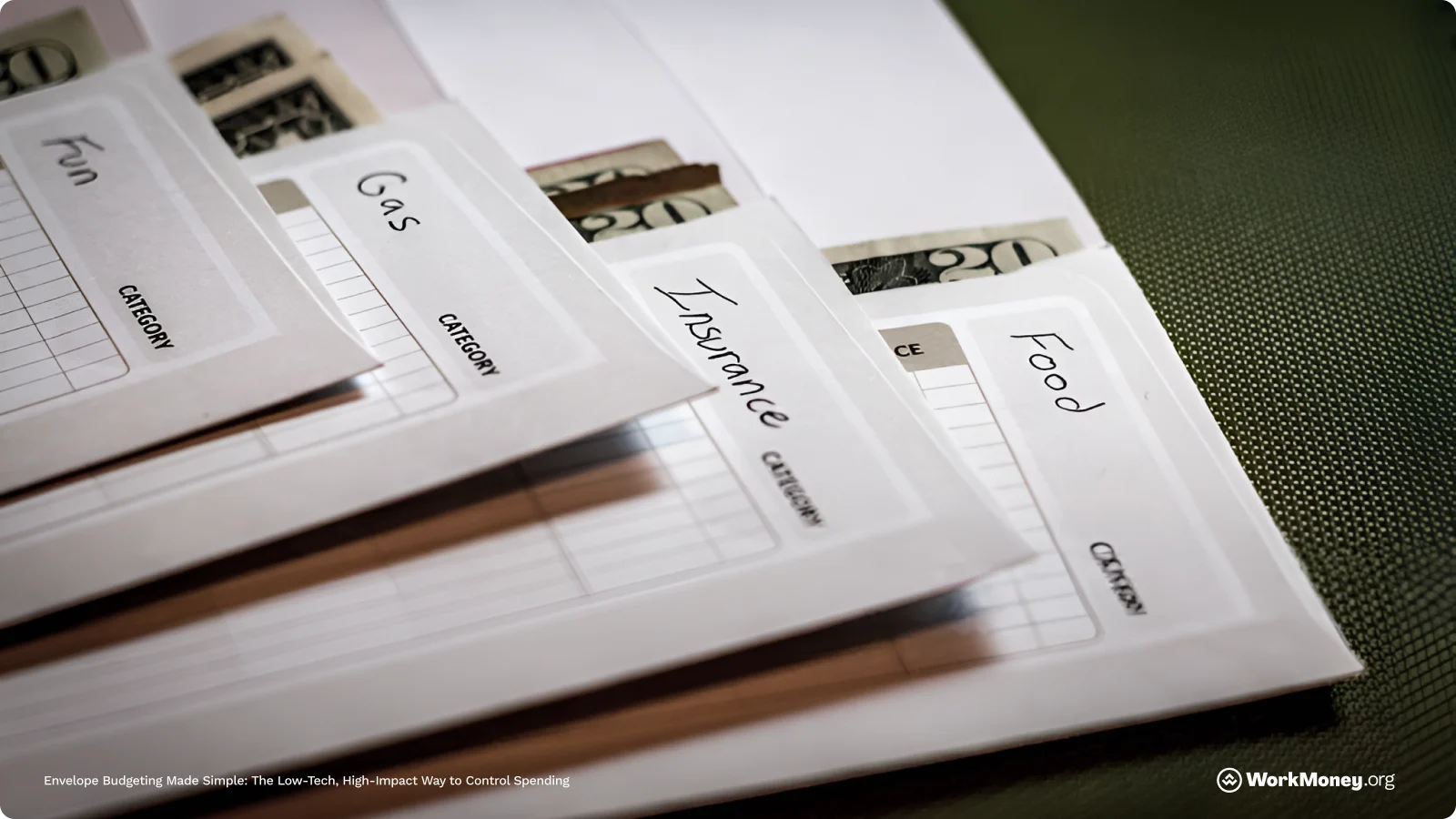
The envelope budgeting method uses envelopes and cash to monitor your spending and savings. Put the allotted amount into each labeled envelope, allowing you only to spend what’s inside.
You get to choose how much money goes into each envelope based on your needs and income. When the money from that envelope is gone, the spending for that category ends. You decide where every dollar goes before you spend it. Instead of hoping money lasts, you give each dollar an upfront job.
Handling cash might seem dated, but it comes with a big benefit. Because cash makes the cost clear and immediate, people feel more of that pain and buy fewer things on impulse. One Cornell study found that shoppers bought more junk food when they paid with plastic. That small sting of paying in cash can protect your budget.
How to Start Envelope Budgeting
You don’t need an app to start using the envelope budgeting method. To get started, you’ll need a few envelopes, a pen, your recent bank or card statements, and cash.
Write down your monthly income. Use your take-home pay, which is the amount you see in your bank account.
Set aside your fixed bills. Rent, car payments, and insurance tend to stay the same each month. Pay those the way you always do. The envelope system works best for spending that changes week to week.
Pick your variable categories. Think of things like groceries, gas, dining out, personal care, and entertainment. You don’t need an envelope for every category, so try to focus on the ones that fit your life.
Give each category a dollar amount. Look at your statement to see what you usually spend in each category, then set a fair limit. Label one envelope per category.
Fill the envelopes with cash. Withdraw the total and split it among your envelopes.
Spend only from the matching envelope. Buying groceries? Pay from the grocery envelope. When it’s empty, pause spending in that category until you refill it with your next paycheck.
You can also add another envelope for “buffer” spending. This can include small surprises, last-minute gifts, or school fees. That way you don’t have to pull money from other envelopes to cover unexpected costs.
What to Do When an Envelope Runs Out
Don’t look at an empty envelope as a sign that you failed. Really, it means the system is working.
Sometimes, you realize a cost can wait. If your gas envelope is empty but you need to get to work, move money from a lower-priority envelope, like dining out. Avoid pulling money from savings, and try to avoid using a credit card. Borrowing from another envelope keeps you in control, but borrowing from a card can start a new cycle of debt.
Overspending can happen. When it does, don’t look at it like a failure. Instead, treat it as a lesson. Maybe there wasn’t enough money going towards your groceries, or a new bill unexpectedly came up. Take a breath, adjust the numbers for next month, and keep going.
Envelope Budgeting for Card Use
Not everyone can pay for everything in cash, and not every merchant accepts it. Online payments, gas pumps, and many stores expect a card payment. The good news is that you can keep the same discipline without the paper envelopes. Try these digital versions:
Separate bank accounts. Open a second checking or savings account and treat it as a single envelope, such as one just for groceries.
Prepaid or reloadable cards. Load a set amount for one category. When the balance hits zero, spending stops.
A simple tracker. Use your notes app or a notebook to log each envelope's balance so you know where the money is going each month.
Think less of the tool and more about the rule. Assign every dollar a job before you spend it, and stop when a category runs out. That principle works with cash, cards, or both.
How to Stay with the Envelope Method
Try to keep building small and steady habits. Remember that a budget is only as effective as how much you work on it.
Check your envelopes weekly. After the first month, adjust any amounts that fell short or ran over. Pay attention to your quick wins, like the first time you had grocery money left over. They may seem small, but they help build confidence to keep going.
Stretch Your Envelopes Further
You can make your envelope money go further with help you may already have earned. Government assistance programs exist to help people build stability, and they pair well with envelope budgeting.
SNAP helps cover food. Use it alongside a grocery envelope method to stretch your food budget across the whole month. LIHEAP helps with home heating and cooling costs. As you track utilities in an envelope, you may see that LIHEAP could ease your bills during the hottest or coldest months.
AccessPerks offers discounts on everyday and recurring purchases, so your food and entertainment envelopes go further. Upside gives cash back on gas and groceries, which adds real value to the money in those envelopes.
Final thoughts
Envelope budgeting isn’t for everyone, but it can give you necessary limits, few surprises, and real control over your finances. Pick a category, label one envelope, and fill it with cash. Only spend from that envelope, and watch how it changes the way you think about money.
But envelope budgeting is different. You split your money into labeled envelopes, one for each type of spending. When an envelope’s empty, you stop spending in that category until next month. WorkMoney has your guide to the envelope budgeting method and how to make it work for you.
Was this information helpful?
About the Author

Dori Zinn
Dori Zinn is a longtime personal finance journalist with nearly 20 years of experience in digital media. Her work has been featured in the New York Times, Wall Street Journal, CBS News, Yahoo, CNN, USA Today, and more. She loves helping folks learn about money. If she isn’t writing, she’s reading, baking, or watching football.