Compound Interest and Retirement Saving: Saving Now is Your Smartest Move
How time transforms small contributions into significant wealth for your future
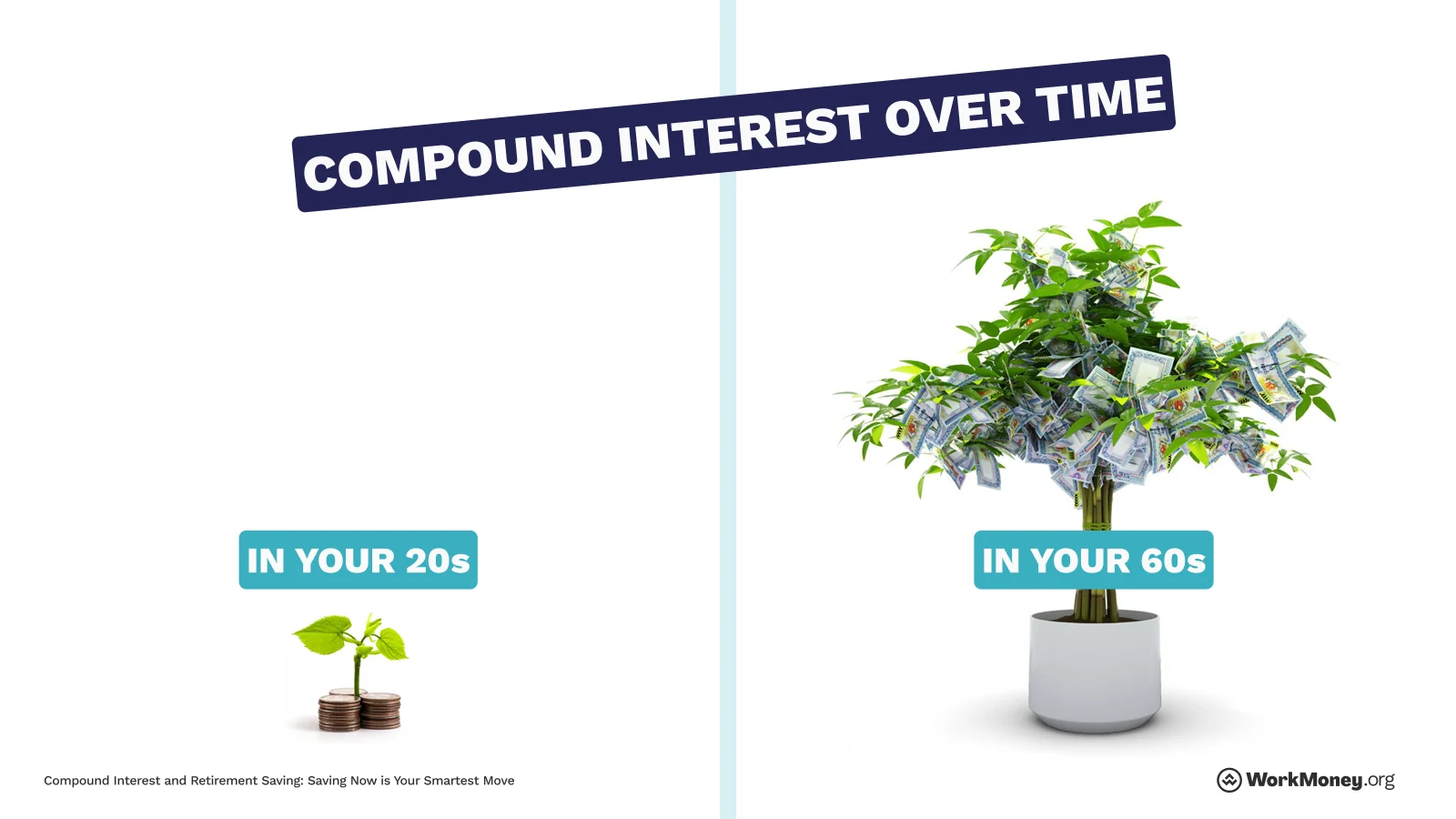
If saving for retirement feels out of reach, you’re not alone. Many people assume you need a high income or a large lump sum to get started. Others worry they’ve already waited too long and missed their chance.
But here’s the part that often gets overlooked: it’s not just about how much you save—it’s about how long your money has to grow. That’s where compound interest comes in.
Compound interest is one of the simplest and most reliable ways to build wealth over time. It’s not a trick or a shortcut. It’s a steady process that rewards consistency and patience. Even small amounts can grow into something meaningful with enough time.
What Is Compound Interest (and Why It Matters for You)
Compound interest means your money earns interest—and that interest earns interest, too. Over time, that creates a snowball effect.
To see why this matters, it helps to compare it to how simple interest works.
Simple vs. Compound Interest (Quick Breakdown)
Simple interest: You earn interest only on your original amount
Compound interest: You earn interest on the money you put in and interest on the interest your money has earned
A Real Example
Let’s say you invest $1,000 that earns 5% annually:
With simple interest, you earn $50 each year.
→ After 10 years, you’d have $1,500.With compound interest, your interest builds on itself.
→ After 10 years, you’d have about $1,647.01.
That extra growth didn’t come from adding more money—it came from your money working on your behalf. The longer your money keeps compounding, the bigger that gap becomes.
Quick tip: Want to see how your money could grow over time? Try a simple interest calculator here and a compound interest calculator here.
Why Starting Early Beats Starting Big
One of the biggest advantages you can give yourself is time.
Even small contributions can grow significantly over time. Waiting—even if you plan to contribute more later—can limit how much your money grows. This is often called the “cost of waiting.”
Here’s a simple comparison:
Frieda (Starts at 25) | Li (Starts at 45) | |
|---|---|---|
Monthly Savings | $100 | $300 |
Years Invested | 40 years | 20 years |
Total Contributed | $48,000 | $72,000 |
Total Savings | $191,696 | $136,694 |
Even though Li contributed more overall, Frieda ended up with over $55,000 more—simply because she started earlier. That’s the power of time and compounding.
The Hidden Power Most People Don’t Know About
There are a couple of simple ideas that can help you better understand how compounding works.
The Rule of 72
The Rule of 72 is a quick way to estimate how long it takes your money to double.
You divide 72 by your interest rate.
At a 6% return, your money could double in about 12 years
This isn’t exact, but it helps you see how time and growth work together.
Inflation Matters, Too
Inflation slowly erodes the value of your money over time. That’s why simply saving money isn’t always enough—it needs to grow.
According to the U.S. Bureau of Labor Statistics, prices for consumer goods tend to rise over time, which can reduce purchasing power if your money isn’t earning returns.
This is another reason compound growth matters—it helps your savings keep up.
How to Start Saving for Retirement (Even on a Tight Budget)
A common concern is, “I don’t have extra money to invest.”
That’s real—and it’s something many people face. But getting started doesn’t require large amounts.
How to Find Your First $5–$20
Some people begin by:
Cutting back on one small expense
Redirecting spare change or cash-back rewards
Saving a small amount weekly instead of monthly
Even $5 a week is a starting point.
Make It Automatic
Setting up automatic transfers can help you stay consistent without thinking about it.
If your employer offers a retirement plan, contributing regularly—even at a low percentage—can help you build momentum.
No Workplace Plan? You Still Have Options
You can open an Individual Retirement Account (IRA) on your own. These accounts are designed for long-term saving and allow your money to grow over time.
Compound Interest for Gig Workers: How to Get Started Without a 401(k)
If you don’t have access to a workplace retirement plan like a 401(k), you’re not behind—you just need a different starting point.
Here’s how to begin:
Open an IRA: A Traditional or Roth IRA helps your money grow over time with tax advantages.
Start small and stay consistent: Even $10–$20 is enough to get started.
Automate your contributions: Set up recurring transfers so you don’t have to think about it.
Use variable income to your advantage: In higher-earning months, contribute a little extra.
The goal isn’t to be perfect—it’s to get started and let your money grow.
More Resources You Can Use
Here are a few tools and programs that can support your progress:
Saver’s Match
You may qualify for a government match of up to $1,000 into a retirement account. See if you qualify here.Social Security: This provides supplemental retirement income alongside your investments and personal savings. Learn more here.
These aren’t handouts—they’re benefits and tools that can help you build a more secure future.
Final thoughts
You don’t need a perfect plan to start saving for retirement—you just need a place to begin.
Even small steps—setting aside a few dollars, opening a retirement account like an IRA, or automating contributions to a 401(k)—can build momentum. Over time, that momentum grows.
At WorkMoney, we believe building financial security should be simple, practical, and within reach. With the right information, you can start using tools like compound interest to your advantage—right where you are today.
Take the next step
The Joy of Money Retirement Calculator
This calculator will make retirement planning seem less mysterious—and more doable.
Build long-term wealth & investing success
Exclusive 20% off Stackwell monthly subscription for WorkMoney members
Was this information helpful?
About the Author

DeShena Woodard
DeShena Woodard is a Financial Freedom Coach, Certified Life Coach, freelance personal finance writer, and podcast host. Her story, advice, and expertise have been featured in prominent outlets such as CNN Underscored, Business Insider, Yahoo Finance, NerdWallet, and more. Through her platform, Extravagantly Broke, she helps women take control of their finances with simple, stress-free strategies—without sacrificing the joy of everyday life. When she’s not writing or coaching, DeShena enjoys traveling, biking, and spending time with her family.