When Can You Start Getting WIC Benefits During Pregnancy?
Know exactly when and how to access WIC support during pregnancy
5 min. read

If your budget is stretched thin during your pregnancy, you may consider looking into WIC (Women, Infants and Children) assistance. WIC is a federal assistance program that provides nutritious foods, nutrition education, breastfeeding support, and healthcare referrals to ensure a healthy pregnancy and early childhood development.
Food costs have soared in recent years, so know you aren’t alone if your household is going through hardship. Nearly 18% of households with children in 2023 were impacted by food insecurity, according to the USDA.
Food and other resources aren’t something to put off, so if you’re pregnant, the good news is you may be able to get help quickly. The WorkMoney team is here to help ensure you get the resources you need to have a safe and healthy pregnancy.
What Is WIC and Who Does It Help?
The grocery benefit is invaluable for pregnant women who need additional nutrients during their pregnancy. However, WIC also provides:
Breastfeeding counseling: New moms often face challenges when it comes to breastfeeding, especially during the first few weeks. WIC provides access to lactation counselors, peer mentors, and even supplies like breast pumps to help mothers feel more confident and supported. Many WIC offices also host breastfeeding classes and support groups.
Nutrition education: WIC recipients can meet with nutritionists who provide one-on-one guidance tailored to their stage of pregnancy or their child’s development. This includes managing pregnancy symptoms, managing potentially difficult eating habits, and addressing weight or growth concerns in young children.
Healthcare referrals: WIC connects families to additional services they may need—including pediatricians, immunization programs, dental care, mental health resources, SNAP, and housing support.
Pro tip: The USDA has a prescreening tool to see if you’re eligible for benefits.
When Can You Start Getting WIC Benefits During Pregnancy?
Once you find out you’re pregnant, you’re able to apply for WIC benefits right away. You don’t need a doctor’s note or other documentation. It’s advised to apply as soon as possible so you can go through the screening process and receive the benefits you need quickly.
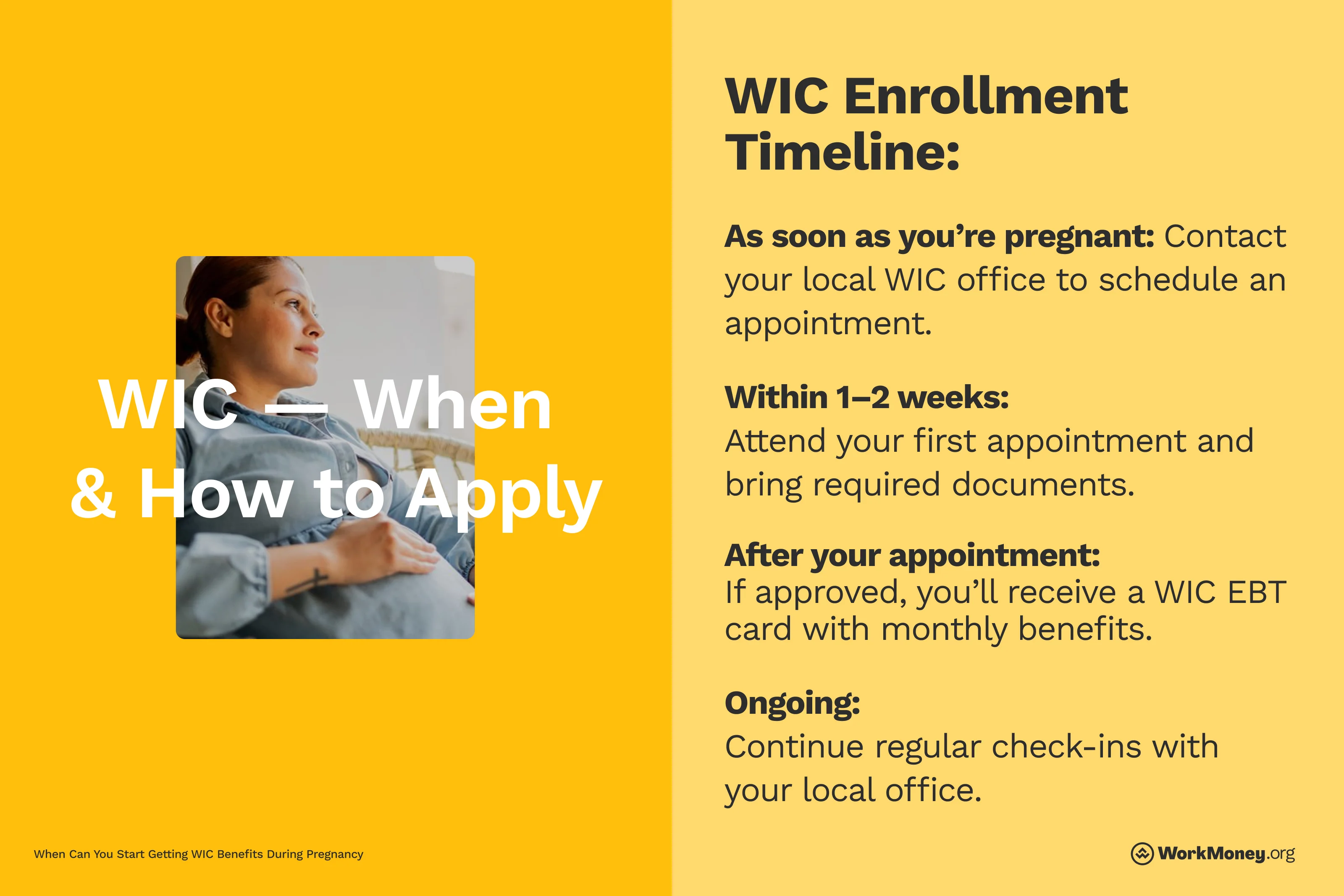
WIC Enrollment Timeline: When and How to Apply
Here’s the rough timeline you can expect once you apply:
As Soon As You Know You’re Pregnant
The first step is to contact your local WIC office. You will likely have to schedule an appointment to visit with a counselor to go over your needs.
You can find the contact information for your local WIC office here.
Within 1–2 Weeks of Contacting WIC
You will have your initial appointment. You will need to bring documents including:
Proof of identity (driver’s license, birth certificate)
Proof of income (pay stub, Medicaid card, etc.)
Proof of residence
Proof of pregnancy (note from doctor or pregnancy test result)
After Your Appointment
If you’re approved for benefits, you’ll receive a WIC EBT card loaded with monthly food benefits, plus a list of approved items and tips for shopping at participating stores.
You can keep track of your EBT card balance easily with the Propel app on your phone.
WIC isn’t a one-and-done program—you’ll be scheduled for regular check-ins to keep your benefits active. These may include simple nutrition assessments, health screenings, or updates to your income and medical information.
You’ll also gain access to free nutrition education and breastfeeding support, including one-on-one counseling, online classes, and breast pumps for eligible moms.
Your enrollment, or certification period, typically lasts 6–12 months. To continue receiving benefits, you’ll need to renew before your certification expires. If your circumstances change—like your income or address—be sure to update your local WIC office right away.
Ongoing
Receiving and using WIC benefits isn’t a one-and-done program. You’ll have regular check-ins with your local office, which may include nutrition assessments, health screenings, and more. Additionally, you will need to continue recertifying your income and contact information to receive benefits in the future.
Why It’s Important to Apply Early
Applying for WIC as soon as you know you’re pregnant ensures you get critical nutritional support during the earliest and most important stages of your baby’s development. During the first trimester, your body starts going through major changes. Access to healthy foods and essential nutrients can help create a healthier pregnancy and baby.
Additionally, any potential delays in the WIC benefits can create negative stress and pressure during an already stressful period. Having extra help can alleviate those extra worries.
Final thoughts
In 2021, only half of those who qualified for WIC benefits applied and received benefits. The reasons for this are varied, but the important takeaway is that if you’re pregnant or have children and need help, consider applying for WIC assistance. Even if you think you may not qualify, there’s no cost to apply.
Food insecurity continues to be a stressful situation millions of households face, and programs like WIC aim to help those who need to feed themselves and their kids, both born and unborn.
Take the next step
Simplify WIC shopping
Lulo helps your family redeem over $1,000 yearly in healthy food
Savings for women, infants & children
WIC helps you get healthy food and formula for your children
Was this information helpful?
About the Author

Brett Holzhauer
Brett Holzhauer is a Certified Personal Finance Counselor (CPFC) who has reported for outlets like CNBC Select, Forbes Advisor, LendingTree, UpgradedPoints, MoneyGeek and more throughout his career. He is an alum of the Walter Cronkite School of Journalism at Arizona State. When he is not reporting, Brett is likely watching college football or traveling.